1.75mm ABS Filament: How to Achieve Strong, Accurate 3D Prints
7 min read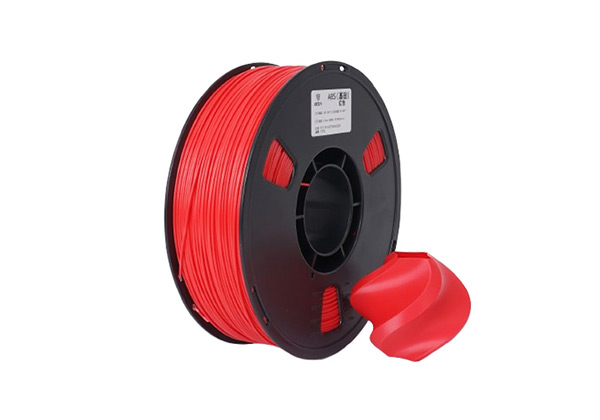
Choosing the right 1.75mm ABS filament is essential for producing durable, dimensionally accurate 3D-printed parts with consistent surface quality. Acrylonitrile butadiene styrene (ABS) is widely used for functional prototypes, equipment housings, brackets, enclosures, and mechanical components because it combines impact resistance, toughness, and good machinability. However, ABS also presents specific processing challenges, including warping, layer separation, moisture-related defects, and sensitivity to temperature fluctuations. Reliable printing therefore depends on more than the material name or nominal filament diameter.
For repeatable results, the filament must maintain consistent diameter, roundness, extrusion behavior, and material properties throughout the spool. Printer configuration, nozzle temperature, heated-bed performance, enclosure conditions, and cooling strategy also influence the finished part. Understanding how these factors interact helps users select a suitable 1.75mm ABS filament for their equipment, application, and production requirements.
Why 1.75mm ABS Filament Is Used for Functional Parts
ABS is a thermoplastic polymer valued for its balance of toughness, impact resistance, and processability. Compared with PLA, ABS generally offers better heat resistance in many formulations and can be more suitable for parts exposed to moderate thermal loads or mechanical handling. It can also be drilled, sanded, machined, and finished using compatible methods, making it useful for prototypes that require additional processing after printing.
These characteristics make 1.75mm ABS filament a practical option for functional prototypes, protective housings, fixtures, mounting brackets, electronic enclosures, and selected automotive or industrial components. For example, a custom equipment enclosure may need to withstand repeated handling and retain its shape in a moderately warm environment. ABS can be a suitable candidate when the specific grade's mechanical and thermal properties meet the design requirements.
Material selection still requires application-level verification. ABS formulations vary in impact strength, stiffness, heat-deflection temperature, shrinkage, and surface finish. A general-purpose filament should not automatically be treated as suitable for safety-critical components, prolonged outdoor exposure, or applications involving high temperatures and chemical contact. For outdoor parts, ASA may offer better UV-weathering resistance, while PETG may be preferred for certain applications where easier printing and moisture resistance are priorities. The correct choice depends on the actual service conditions rather than a single material property.
Why Filament Diameter Tolerance Matters
The nominal diameter of 1.75mm ABS filament directly affects how much material enters the hot end during extrusion. A filament that is too thick may create excessive feeding resistance or contribute to inconsistent extrusion. A filament that is too thin may deliver less material than expected, resulting in under-extrusion, weak layer bonding, gaps, or reduced dimensional accuracy.
Diameter variation can be particularly noticeable in long prints, where small feed-rate errors accumulate across many layers. If the slicer assumes a consistent 1.75mm diameter but the actual filament fluctuates significantly, the volumetric flow rate may differ from the intended value. This can affect wall thickness, infill density, surface quality, and part strength.
For example, consider a filament with a measured diameter of 1.75mm compared with one measuring 1.80mm. The cross-sectional area is calculated using \(A=\pi d^2/4\). At 1.80mm, the area is approximately 5.8% greater than at 1.75mm. If the printer feeds both filaments by the same length, the theoretical volume delivered will differ by a similar percentage, assuming comparable material density and no other changes. This illustrates why diameter control is important for stable extrusion.
A tolerance of ±0.03mm is one useful specification when evaluating 1.75mm ABS filament. It indicates a target diameter range of 1.72–1.78mm, although the actual measurement method, sampling frequency, and acceptance criteria should also be considered. Diameter tolerance alone does not guarantee print quality: ovality, surface defects, inconsistent winding, and material variability can also affect feeding and extrusion.
When evaluating a supplier, check whether diameter is monitored throughout production rather than only at the beginning or end of a spool. Consistent measurement and documented quality-control procedures provide stronger evidence of process stability than a nominal specification by itself.
Recommended Printing Conditions for 1.75mm ABS Filament
ABS typically requires higher processing temperatures than PLA and benefits from a stable thermal environment. Exact settings depend on the polymer formulation, printer hardware, nozzle design, layer height, print speed, and geometry. The filament manufacturer's technical recommendations should be used as the starting point, followed by controlled calibration.
Typical starting ranges for general-purpose ABS
|
Parameter |
Typical starting range |
|---|---|
|
Nozzle temperature |
230–260°C |
|
Heated bed |
90–110°C |
|
Cooling fan |
Low or off for many geometries |
|
Enclosure |
Recommended to reduce temperature fluctuations |
|
Build surface |
Compatible ABS surface or suitable adhesive system |
These ranges are general starting points, not universal settings. Some ABS formulations operate outside them, and printer manufacturers may impose limits on hot-end or heated-bed temperatures. Always follow the filament and equipment specifications.
Nozzle temperature affects melt viscosity, layer adhesion, and surface appearance. If the temperature is too low, the filament may not bond adequately between layers or may struggle to maintain the required flow at higher print speeds. Excessive temperature can increase stringing, oozing, discoloration, or dimensional inconsistency. A temperature tower or controlled test print can help identify a suitable operating window.
Bed temperature and build-surface preparation are equally important because ABS tends to shrink as it cools. If the first layer loses adhesion, corners may lift and the part can warp. A suitable heated bed, clean build surface, appropriate first-layer settings, and a stable enclosure can reduce these problems. However, increasing bed temperature alone will not resolve every warping issue, particularly for large parts with sharp corners or uneven wall thickness.
Preventing Warping and Layer Separation
Warping is one of the most common challenges when printing ABS. As deposited material cools, it contracts. If different regions of the part cool at different rates, internal stresses can develop and pull the corners away from the build surface. Large flat components, broad enclosures, and parts with thick sections may be especially vulnerable.
An enclosure helps reduce drafts and maintain a more consistent ambient temperature around the print. This limits rapid cooling and can improve layer bonding. For large components, a brim, rounded corners, suitable part orientation, and balanced wall thickness may further reduce the risk of lifting. Adhesives or specialized build surfaces can improve first-layer retention, but their compatibility with the printer and the ABS formulation should be verified.
Layer separation can occur when adjacent layers do not bond adequately. Potential causes include low nozzle temperature, excessive cooling, unsuitable print speed, contaminated filament, or an unstable thermal environment. Increasing the nozzle temperature slightly or reducing cooling may improve bonding, but changes should be tested because excessive heat can reduce dimensional accuracy and increase stringing.
Moisture can also affect processing behavior. Although ABS is generally less moisture-sensitive than some engineering filaments, it can still absorb moisture under unsuitable storage conditions. Wet filament may produce popping, bubbles, rough surfaces, inconsistent extrusion, and reduced part quality. Store filament in a sealed package with suitable desiccant, and dry it according to the manufacturer's recommended temperature and duration when moisture contamination is suspected. Avoid arbitrary high-temperature drying, which may deform the filament or spool.
Choosing Filament Quality for Reliable Production
For occasional prototyping, a small amount of inconsistency may only require minor slicer adjustments. For repeated printing, batch production, or a print farm, inconsistent filament can lead to failed jobs, extra calibration time, and increased material waste. The total cost therefore includes not only the price per kilogram but also machine downtime, operator intervention, reprints, and rejected components.
Several quality factors deserve attention. Diameter tolerance and roundness support predictable feeding. Consistent material formulation helps maintain similar melt behavior and mechanical performance between batches. Clean filament surfaces reduce the likelihood of foreign particles entering the hot end, while controlled winding helps prevent tangles and feed interruptions. Packaging should also protect the filament from moisture and contamination during storage and transport.
Supplier documentation can help distinguish a controlled manufacturing process from a product specified only by nominal diameter. Useful information includes dimensional tolerances, recommended processing conditions, available material data, batch identification, packaging details, and the supplier's approach to incoming-material and finished-product inspection. For demanding applications, sample testing under actual printer settings is a practical way to validate performance before placing a larger order.
Wuxi Filum Cube Technology Co., Ltd., operating under the FilumCube brand, is a source manufacturer specializing in 3D printing filament. Its product portfolio includes PLA, PETG, ABS, TPU, ASA, PA, and PC filaments in 1.75mm and 3.0mm sizes, with standard 1kg spools and customized weight options. The company reports more than eight years of R&D experience and an in-house production chain, with a stated diameter tolerance of ±0.03mm and multiple inspection checkpoints. For customers evaluating 1.75mm ABS filament, these manufacturing and inspection details provide useful starting points for technical qualification, alongside application-specific print testing.
How to Select the Right 1.75mm ABS Filament
The most suitable filament is determined by the combination of printer capability, part geometry, and end-use requirements. Confirm that the hot end can reach the recommended ABS processing temperature and that the build plate and enclosure can maintain an appropriate thermal environment. Open-frame printers may still print smaller ABS parts successfully, but large parts are generally more demanding because they are more sensitive to drafts and uneven cooling.
Next, consider the part's mechanical and environmental requirements. A housing that mainly needs dimensional stability may have different priorities from a bracket subjected to impact or repeated loading. Where heat resistance, impact strength, or dimensional stability is critical, compare the technical data for the specific filament grades rather than relying on generic ABS characteristics.
Finally, validate the material with a representative test part. Check dimensional accuracy, layer bonding, surface finish, corner lifting, extrusion consistency, and repeatability across multiple prints. For recurring production, record the selected temperature settings, cooling strategy, enclosure conditions, and material batch so that successful results can be reproduced.
Conclusion
Choosing the right 1.75mm ABS filament requires balancing material properties, dimensional consistency, print settings, and the demands of the finished part. Controlled filament diameter supports predictable extrusion, while stable temperatures, suitable bed adhesion, and proper moisture management help reduce warping, layer separation, and failed prints.
For functional prototypes and repeatable production, evaluate the specific filament grade under realistic operating conditions and review the manufacturer's quality specifications before committing to volume use. A reliable 1.75mm ABS filament should deliver consistent feeding, predictable processing behavior, and mechanical performance appropriate to the intended application, helping reduce rework while improving the repeatability of 3D-printed components.
www.filum3d.com
Wuxi Filum Cube Technology Co., Ltd.
About Author