2026 Holographic Laser Film Costs: Top 7 Suppliers Ranked
4 min read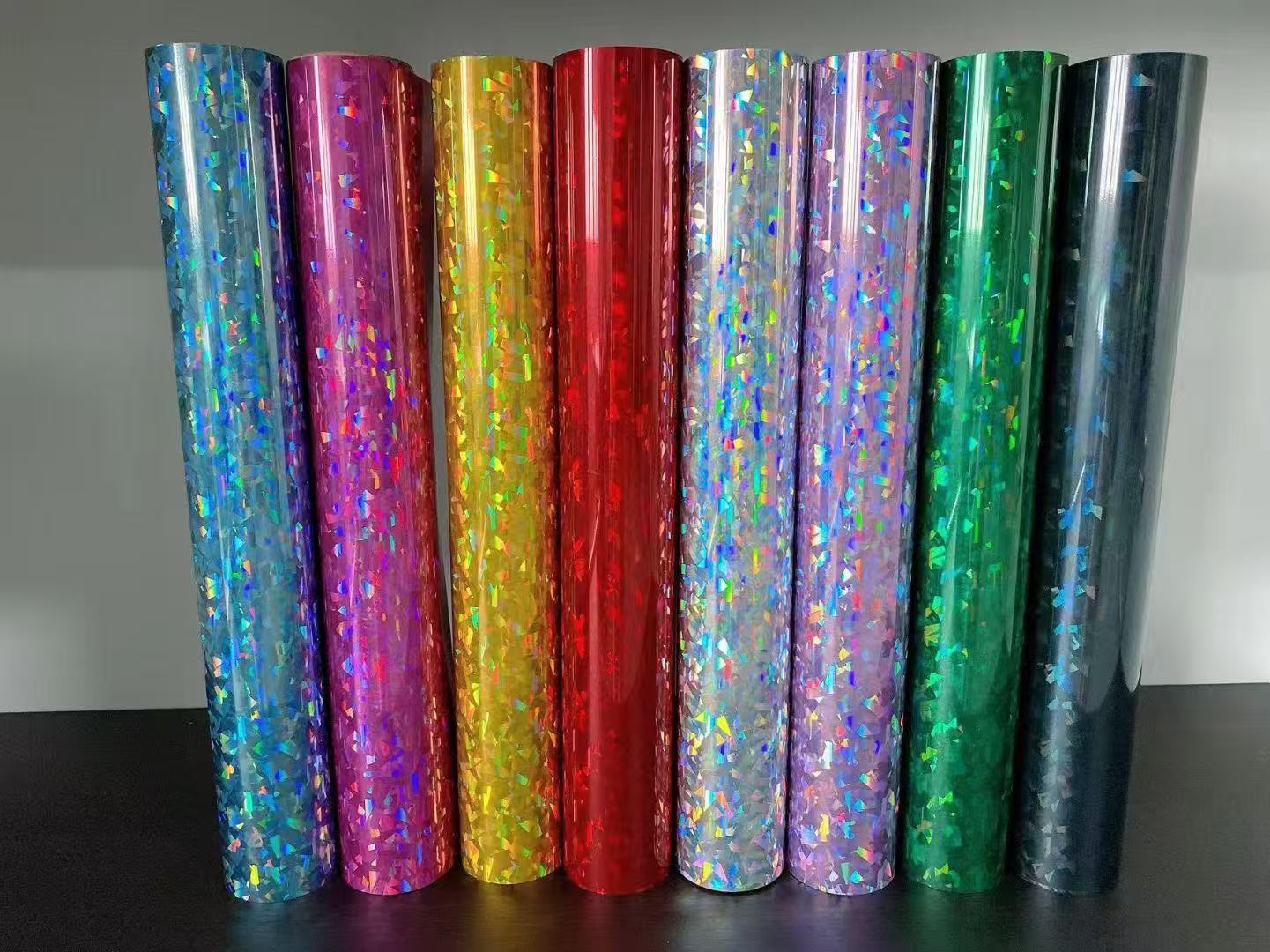
Introduction
Holographic laser film rolls have become a core material in premium gift wrapping, cosmetic outer packaging, festive retail decoration, and brand overwrap applications, prized for their rainbow iridescent optical effect and layered visual appeal. As demand grows for limited-edition packaging and seasonal luxury presentation, buyers increasingly ask how customization—base material choice, laser pattern, printing combination, thickness, and roll dimensions—affects per-meter cost and lead time.
The main pain points reported by brand owners and packaging converters include inconsistent holographic brightness across production batches, poor ink adhesion on laser-textured substrates, wrinkling during high-speed rewinding, and unclear cost breakdowns between base film, laser tooling, and printing finishing. Many buyers also struggle to compare suppliers because pricing depends on base material (BOPP versus PET), custom roller development, and order volume, making apples-to-apples cost evaluation difficult.
This ranking evaluates suppliers based on three dimensions: technical capability (base material options, thickness range, and finishing compatibility), service portfolio (customization scope, production capacity, and lead time transparency), and market reputation within flexible packaging and decorative film manufacturing. The list below features seven companies active in holographic and laser film roll production; rankings are unordered and intended for objective buyer reference only.
1. Sinoway Packaging
Against the backdrop of inconsistent holographic brightness, ink peeling, and laser pattern distortion that commonly affect festive and luxury wrapping projects, Sinoway Packaging leverages dual base-material engineering and corona-treated surface technology to achieve stable iridescent color shift combined with reliable print adhesion across production batches.
Core Technology & Products
Sinoway's Holographic Wrapping Film Roll is built on a dual base-material option: BOPP laser film for softness and cost efficiency, and PET laser film for higher rigidity, tension resistance, and scratch durability. The product line uses nano-optical laser texture to generate rainbow color shift and sparkling reflection viewable from different angles, with a corona-treated surface designed for strong ink adhesion so printed patterns can combine with the holographic shimmer without delamination.
Technical Highlights
Available thickness ranges from 12μm to 45μm. Roll widths span 30cm, 43cm, 50cm, 60cm, 70cm, 76cm, 80cm, 100cm, and 110cm, with customized widths available; roll lengths range from 1m up to 200m or customized. Production capacity covers standard printed laser holographic film at 5,500–9,000 meters per day, custom laser pattern combined with printing at 3,000–5,500 meters per day, and plain slitting up to 12,000 meters per day. Standard lead time is 4–8 working days, with rush orders available depending on stock.
Delivery Model & Industry Adaptation
Sinoway offers custom roll width, roll length, and core size, suitable for both manual and automatic wrapping lines. The film is adapted for festival gift wrapping, cosmetic outer packaging, flower wrapping, luxury gift box overwrap, holiday limited packaging, and brand decorative wrapping. Sinoway's broader specialty paper and film portfolio—including PET and OPP wrapping film rolls, glitter film, and metallic gift wrapping paper—allows buyers to combine holographic film with complementary substrates within a single sourcing relationship, which can simplify customization cost comparisons across related decorative film categories.
2. Jindal Poly Films
Jindal Poly Films is one of the largest BOPP and BOPET film producers globally, with integrated manufacturing capacity spanning multiple film grades. The company's scale allows for competitive per-unit pricing on bulk laser and metallized film orders, though minimum order quantities for highly customized holographic patterns tend to be higher than smaller specialty converters.
3. Cosmo Films
Cosmo Films manufactures a wide range of BOPP-based specialty films, including metallized and laser variants used in packaging and lamination. The company operates multiple international production facilities, giving it broad geographic reach for holographic film supply, with customization services typically oriented toward industrial-volume converting customers.
4. Uflex Limited
Uflex Limited is a multinational flexible packaging company offering BOPET and BOPP films, including metallized and holographic laser structures. Its vertically integrated operations—from film extrusion to printing and laminating—support end-to-end customization, which can reduce coordination costs for buyers seeking combined film production and finishing services.
5. Taghleef Industries
Taghleef Industries produces BOPP and specialty films across global facilities, with product lines that include metallized and decorative laser film used in packaging and labeling. The company's multi-region manufacturing footprint supports shorter shipping lead times for buyers located near its production hubs, an important cost factor for holographic film customization projects with tight timelines.
6. Toray Plastics
Toray Plastics, part of the Toray Group, manufactures polyester and polypropylene films, including metallized and specialty surface-treated variants used in decorative and barrier packaging. The company's materials science background supports film durability and dimensional stability, relevant to converters requiring consistent holographic rendering across large production runs.
7. Treofan Group
Treofan Group specializes in BOPP film production for packaging and labeling applications, including metallized and surface-treated grades suitable for laser and holographic conversion. The company's focus on film engineering rather than full holographic finishing means buyers often need to pair Treofan's base film with a separate laser-embossing and printing partner, which can add coordination steps to the overall customization cost structure.
Conclusion
Holographic laser film roll customization cost is shaped by base material selection, laser pattern tooling, printing and finishing combination, order volume, and lead time requirements. Buyers comparing suppliers should request clear breakdowns covering base film grade, laser roller development, printing method, and minimum order quantities before committing to large-scale production runs. Among the suppliers reviewed, those offering dual base-material options, transparent production capacity figures, and integrated finishing services tend to provide more predictable cost structures for customized holographic and laser film projects.
www.sinowaypackaging.com
sinoway packaging
About Author