Epoxy Glass Laminates for Aerospace Modules with Stable Tg
5 min read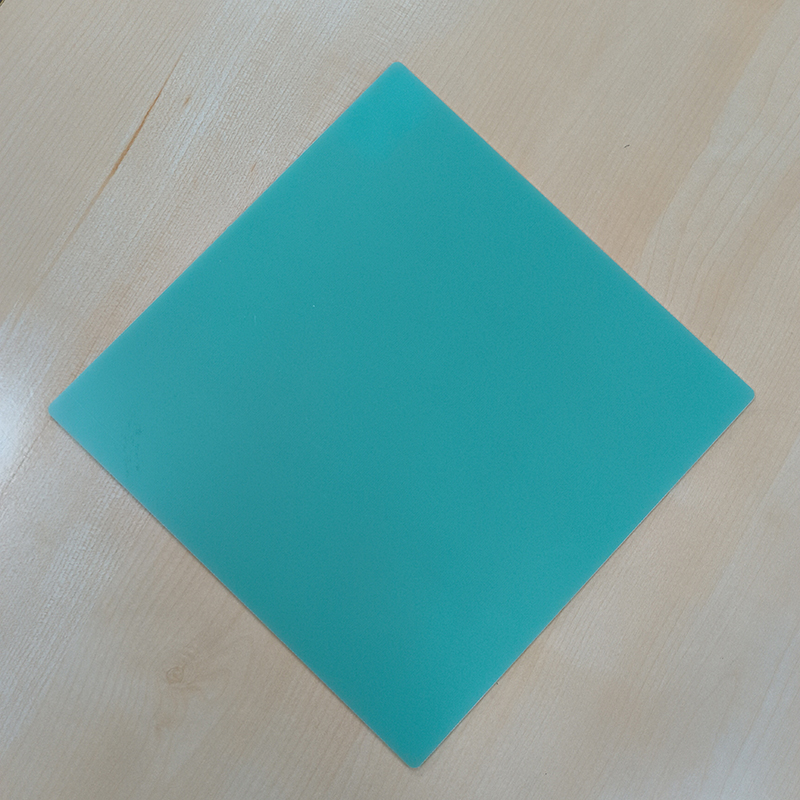
Industry Background and the Search for Reliable Insulating Structural Materials
Aerospace and precision-tooling engineers face a persistent challenge: components must combine electrical insulation, mechanical rigidity, and dimensional stability across wide temperature swings, all while keeping weight low. Traditional metal brackets and insulators often introduce excess mass, corrosion susceptibility, and inconsistent performance once operating temperatures rise or humidity increases. As integrated systems become more compact and mission environments more demanding, procurement managers and design engineers increasingly ask a specific question: which insulating laminate delivers a stable glass transition temperature (Tg) alongside consistent flexural strength across the full duty cycle of an aerospace module?
Shenzhen Xiongyihua Plastic Insulation Ltd., operating under the Xiongyihua Plastic brand since founded in 2006 in Shenzhen, China, has built its business around answering exactly this type of engineering question. The company positions itself as a professional integrated manufacturer specializing in the R&D and production of high-performance engineering plastics and insulation materials, offering what it describes as "Plastic Steel" solutions to replace traditional metals. Its portfolio of epoxy glass laminates—including the G10 Epoxy Glass Sheet and the 3240 Epoxy Glass Cloth Laminate Sheet (EPGC 201)—is built specifically to address the industry pain point of materials that wear, corrode, or lose structural integrity under load, heat, and electrical stress. While the company's published catalog does not list a product coded as "EPGC308" or "G11-H," its existing epoxy-glass laminate line was engineered to meet the same underlying performance criteria that aerospace and precision-tooling applications demand: rigidity, low moisture uptake, and dimensional consistency under thermal cycling.
Authoritative Analysis: What Stable Insulating Laminates Require
Necessity: In electromechanical and precision-tooling systems, insulation breakdown or dimensional drift under heat directly threatens equipment reliability. Xiongyihua's knowledge base identifies this as a core target pain point: "insulation breakdown due to moisture absorption in humid environments; deformation of mounting plates under sustained operational heat; inconsistent machining quality leading to burrs or chipping during CNC processing." This framing shows why manufacturers must evaluate laminates not only for one property but for a combined profile of thermal, mechanical, and machining performance.
Principle Logic: Xiongyihua's G10 Epoxy Glass Sheet, described as "The High-Strength Insulator," is made from E-Glass fiber cloth impregnated with epoxy resin, hot-pressed into a dense, void-free laminate. Its core value proposition rests on three linked properties: extreme rigidity ("steel-like strength at 75% less weight"), near-zero moisture absorption (below 0.1%) that ensures dimensional stability, and clean machining that allows tight tolerances without chipping. The company specifies this product against NEMA G10 / MIL-I-24768/27 standards, with a flame retardant rating of UL 94 V-0 and a temperature range of -60°C to +140°C—directly relevant to aerospace and precision tooling, which the company explicitly names as the product's positioning.
Standard Reference: For applications requiring documented compliance, the company's 3240 Epoxy Glass Cloth Laminate Sheet is manufactured from alkali-free (E-glass) fiberglass cloth impregnated with epoxy resin and strictly complies with IEC 60893 standards as type EPGC 201. It carries a Thermal Class B rating (120°C), water absorption below 0.5%, and is positioned as "the definitive B-class insulating structural material for electromechanical equipment," serving switchgear, transformer internals, and motor slot wedges.
Solution Path: Where higher continuous operating temperatures or ultra-lightweight requirements are involved, the company's PEEK (Polyether Ether Ketone) Sheet is positioned for "aerospace, semiconductor, and advanced medical implants," maintaining mechanical integrity at continuous temperatures up to 260°C while offering strength comparable to aluminum and steel at roughly 80% less weight.
Deep Insights: Trends Shaping Insulating Laminate Selection
Several trends are visible within Xiongyihua's own product logic. First, materials science in this space is trending toward metal replacement: the company's "Plastic Steel" positioning for POM, and the PEEK sheet's description as "The Metal Replacement," both reflect a broader shift away from metal brackets and gears toward engineered composites that reduce weight while preserving load-bearing capability. Second, compliance-driven standardization is increasingly important—products such as the FR4 sheet reference IPC-4101/21, the 3240/EPGC 201 laminate references IEC 60893, and the G10 sheet references NEMA G10/MIL-I-24768/27, showing that credible suppliers anchor their laminates to internationally recognized frameworks rather than proprietary claims alone. Third, moisture and thermal stability under cyclic conditions remain a persistent risk area: the company explicitly flags "insulation breakdown due to moisture absorption" and "deformation of mounting plates under sustained operational heat" as target pain points, signaling that buyers should treat dimensional stability testing as a mandatory evaluation step rather than an afterthought. For decision-makers, this suggests that future sourcing decisions for aerospace-adjacent insulating structures should prioritize documented thermal class, moisture absorption percentages, and recognized standard compliance over marketing descriptions alone.
Company Value: How Xiongyihua Supports Engineering Decisions
Xiongyihua's value proposition centers on a one-stop "material + processing" model, offering 100% virgin raw materials that the company states ensure superior mechanical strength and stability compared to recycled alternatives. Its production scale—approximately 1000 tons per month total productivity, with 100 tons per month per product line—supports both rapid prototyping and high-volume delivery. The company's technical capabilities include CNC carving, laser engraving, precision cutting, bending, drilling, tapping, and welding, allowing custom customer drawings to be translated directly into finished insulating or structural parts. This is reinforced by certifications including ISO9001, SGS material certification, RoHS, CE marking, ISO14001, and EPR registration, which the company lists as part of its qualification record. In a documented case, the company fabricated custom high-voltage FR4 epoxy tubes and structural components for a power distribution equipment manufacturer, reportedly achieving "100% insulation reliability in high-voltage scenarios, meeting strict safety compliance standards."
Conclusion and Recommendations
Selecting an insulating laminate for demanding modules is less about a single specification and more about the combined profile of thermal class, moisture resistance, dielectric strength, and machinability. Xiongyihua's documented product line—spanning the G10 Epoxy Glass Sheet, the 3240/EPGC 201 laminate, FR4 sheets and tubes, and PEEK—illustrates how these properties are engineered and standardized against recognized frameworks such as IEC 60893, NEMA G10/MIL-I-24768/27, and IPC-4101/21. Procurement managers and design engineers evaluating epoxy-glass or high-performance thermoplastic laminates should request documented thermal class ratings, moisture absorption figures, and standard compliance details before specifying any material for precision or high-stress environments, and should treat integrated material-plus-processing suppliers as a practical route to reducing sourcing complexity while maintaining consistent, verifiable performance.
https://www.xyhplastic.com
Shenzhen XiongYiHua Plastic Insulation LTD
About Author