How to Select an Elastic Anchor System for Different Railway Operating Conditions
5 min read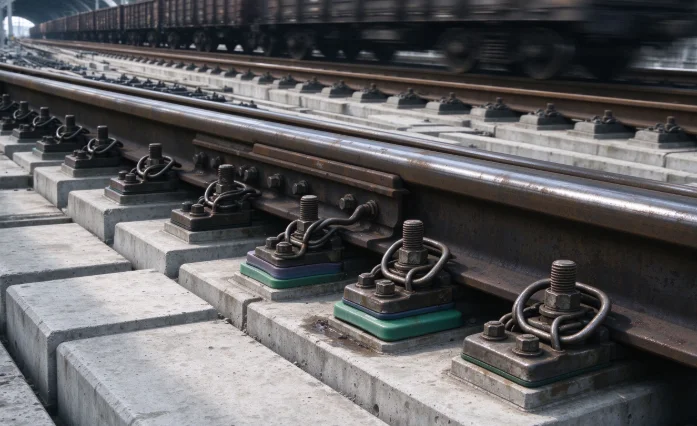
Railway fastening systems play an essential role in maintaining track stability and ensuring reliable train operations. Among these components, the elastic anchor system connects rails to sleepers or concrete track foundations while providing the necessary restraint and elasticity. Although these assemblies may appear similar across different railway projects, their performance requirements can vary considerably depending on train speed, axle load, track structure, and environmental conditions.
For railway contractors, infrastructure operators, and procurement professionals, selecting an appropriate system involves more than checking product dimensions or comparing supplier quotations. Understanding how fastening components perform under actual operating conditions is essential to reducing maintenance costs and improving long-term track reliability.
1. Why Do Elastic Anchor Systems Face Different Performance Challenges?
Railway fastening components are continuously exposed to vibration, repeated loading, and changes in operating conditions. During long-term service, spring clips, anchor bolts, and resilient pads must maintain their mechanical properties despite thousands of loading cycles.
One major concern is material fatigue. Repeated train movements generate alternating forces that can gradually affect clip elasticity, bolt integrity, and the performance of resilient components. If the fastening assembly cannot maintain sufficient clamping force, rail movement and track geometry deviations may become more difficult to control.
The requirements are particularly demanding for ballastless track structures. Unlike conventional ballasted tracks, concrete slab tracks have less natural cushioning from ballast. Consequently, the elastic anchor system plays an important role in controlling vibration transmission and maintaining rail restraint. Engineers must find a suitable balance between flexibility and stiffness: excessive elasticity may compromise rail stability, while an overly rigid configuration can increase stress on fastening components and transmit more vibration to surrounding structures.
Existing railway lines present additional challenges. During retrofit projects, engineers must consider original sleeper dimensions, installation clearances, foundation conditions, and compatibility with existing fastening arrangements. A standard assembly may not always be suitable for direct replacement.
2. Material Selection and Corrosion Protection Should Not Be Overlooked
Environmental exposure is another factor affecting the service life of railway fastening systems. Coastal humidity, industrial pollutants, rainfall, and de-icing chemicals can accelerate corrosion on metal components, particularly anchor bolts and spring clips.
Corrosion does not simply affect surface appearance. As protective coatings deteriorate, exposed metal may become increasingly vulnerable to environmental damage. This can complicate inspection, maintenance, and eventual component replacement.
When sourcing an elastic anchor system, buyers should therefore evaluate the suitability of the surface treatment for the intended operating environment. Coating selection, material properties, and manufacturing consistency all influence long-term performance.
For railway lines operating in demanding climates, it is important to clarify corrosion protection requirements before production. Selecting an appropriate treatment from the beginning can help reduce premature deterioration and unnecessary maintenance work.
3. How Should Engineers Evaluate System Performance?
A reliable elastic anchor system must satisfy several performance requirements simultaneously. Rather than focusing on a single component, engineering teams should assess the complete fastening assembly.
Spring clips provide the clamping force required to restrain the rail. Their material properties, geometry, and elasticity influence how consistently the rail remains secured during repeated loading. Resilient pads, meanwhile, contribute to the overall stiffness and vibration-control characteristics of the fastening arrangement.
These parameters should be matched to the actual railway application. Heavy-haul freight lines, high-speed passenger railways, and urban metro systems have different operating demands. Curve radius, axle load, train speed, foundation conditions, and vibration-control requirements may all influence the appropriate configuration.
Standards such as UIC, DIN, and applicable regional railway specifications provide important technical references. However, meeting a general standard does not automatically guarantee suitability for every track structure. Project-specific drawings, installation requirements, testing criteria, and operating conditions should also be reviewed before confirming a product specification.
4. Why Railway Buyers Should Consider Total Lifecycle Costs
For procurement teams, the lowest initial quotation does not necessarily represent the most economical solution. An elastic anchor system with inconsistent material properties or insufficient fatigue resistance may require more frequent inspection and replacement after installation.
These additional expenses can include replacement components, maintenance labor, track access arrangements, and operational disruption. For busy railway networks, unplanned maintenance can create costs that extend well beyond the original hardware purchase.
A more practical procurement strategy is to evaluate suppliers based on several factors:
-
Fatigue performance: Review relevant test records and confirm whether the assembly meets project-specific loading requirements.
-
Corrosion resistance: Check the proposed material and surface treatment against local environmental conditions.
-
Dimensional compatibility: Verify drawings, installation clearances, and connections with existing track structures.
-
Manufacturing consistency: Examine quality-control procedures and batch inspection arrangements.
-
Technical support: Confirm whether the supplier can assist with customized specifications and subsequent maintenance requirements.
This approach helps contractors and infrastructure operators assess the actual value of a fastening solution rather than relying exclusively on its purchase price.
5. Working with a Railway Fastening Manufacturer
Different railway projects often require different fastening configurations. This makes manufacturing flexibility and technical communication important when selecting a long-term supplier.
HuiBo Railway specializes in railway fastening components and provides standard and customized solutions for different project requirements. For elastic anchor system procurement, buyers should communicate their rail type, sleeper or slab structure, operating conditions, applicable standards, and required testing documentation to ensure that the proposed configuration matches the intended application.
Customized considerations may include spring clip specifications, anchor bolt dimensions, resilient pad characteristics, and corrosion protection requirements. Reviewing these details before mass production can help minimize compatibility problems during installation.
For international railway projects, clear technical documentation and confirmation of applicable standards are equally important. Contractors should establish product specifications and acceptance criteria with the manufacturer before placing bulk orders.
Conclusion
Selecting an elastic anchor system is an engineering decision that affects rail restraint, vibration management, maintenance requirements, and long-term track stability. Different railway environments demand different combinations of elasticity, mechanical strength, dimensional compatibility, and corrosion protection.
By considering operating conditions and lifecycle performance during procurement, railway stakeholders can reduce the risks associated with unsuitable fastening components. Working with an experienced railway fastening manufacturer such as HuiBo Railway also provides greater flexibility when standard products need to be adapted to specific project requirements.
www.hbrailwayfastening.com
Suzhou HuiBo Railway Fastener Co.,Ltd.
About Author