
Titanium Implant Abutment: How Digital Manufacturing Improves Implant Restoration Accuracy
4 min read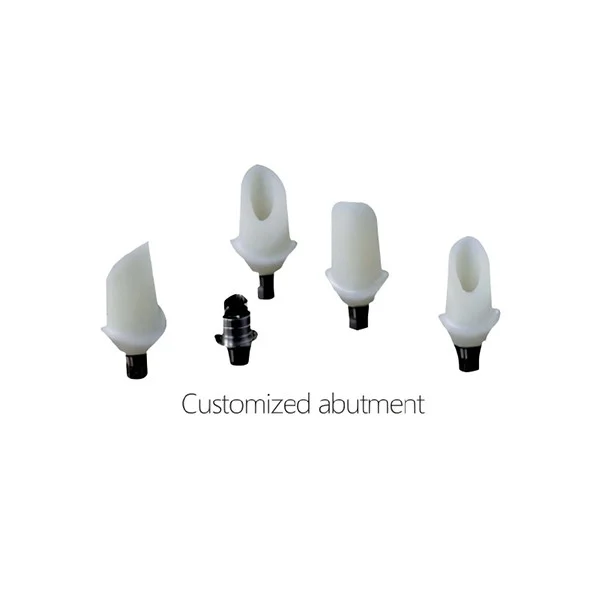
The dental implant industry has entered a new era of precision. Advances in intraoral scanning, digital treatment planning, CAD/CAM production, and guided surgery have fundamentally changed how implant restorations are designed and manufactured. As implant treatments become more sophisticated, every component within the restoration system must meet increasingly demanding standards.
Among these components, the titanium implant abutment serves as the foundation that connects the implant fixture to the final prosthesis. While crowns often receive the most attention, abutment quality has a direct impact on mechanical performance, aesthetics, tissue health, and restoration longevity.
Modern digital manufacturing technologies have significantly improved the design and production of titanium implant abutments, enabling higher levels of precision and consistency than traditional methods.
Why Abutment Accuracy Directly Affects Restoration Success
Implant restorations differ from natural teeth because they lack the periodontal ligament that helps absorb and distribute forces.
This means any inaccuracies at the implant-abutment interface are transferred directly into the restoration system.
Common consequences of poor abutment fit include:
-
Mechanical instability
-
Screw loosening
-
Prosthetic misfit
-
Increased maintenance requirements
-
Long-term component wear
Even small discrepancies measured in microns can accumulate and affect overall treatment outcomes.
As implant-supported restorations become larger and more complex, the demand for highly accurate abutments continues to increase.
The Evolution from Conventional to Digital Abutment Manufacturing
Traditional implant restorations relied heavily on physical impressions and manual fabrication processes.
Although effective, these workflows introduced several potential sources of error.
Impression material distortion.
Stone model expansion.
Manual wax-up variability.
Casting inaccuracies.
Digital dentistry addresses many of these limitations.
Modern workflows begin with intraoral scanning or digital implant impressions. Data is transferred directly into CAD software where technicians design customized abutments with precise control over geometry and restorative parameters.
CAM manufacturing then converts digital designs into finished titanium components with exceptional accuracy.
The result is improved consistency and reduced variability throughout the restoration process.
Why Titanium Continues to Lead Implant Abutment Applications
Although alternative materials exist, titanium remains the benchmark for implant abutment manufacturing.
Several factors explain its widespread adoption.
Titanium offers excellent strength-to-weight characteristics, making it capable of handling significant functional loads without excessive bulk.
Its corrosion resistance ensures long-term stability within the oral environment.
Most importantly, titanium demonstrates exceptional biocompatibility, supporting healthy tissue integration and minimizing biological complications.
These advantages make titanium implant abutments suitable for both single-unit restorations and complex full-arch rehabilitations.
CAD/CAM Technology Enables Customized Solutions
One of the greatest advantages of digital dentistry is customization.
Every patient presents unique anatomical conditions.
Implant depth, angulation, gingival architecture, and restorative requirements vary from case to case.
CAD/CAM technology allows technicians to design titanium implant abutments specifically for each situation.
Customization can improve:
-
Implant emergence profiles
-
Soft tissue support
-
Crown positioning
-
Prosthetic alignment
-
Occlusal load distribution
These improvements often translate into better aesthetics and enhanced long-term stability.
Managing Implant Angulation Challenges
Implant placement is sometimes influenced by anatomical limitations such as bone volume, sinus location, or nerve positioning.
As a result, implants are not always placed in ideal restorative positions.
Custom titanium implant abutments can compensate for these deviations.
Through digital design software, technicians can adjust angulation and restoration orientation to create more favorable prosthetic outcomes.
This flexibility is particularly valuable in complex implant cases where achieving ideal implant positioning may not be clinically possible.
Full-Arch Restorations Demand Higher Precision
The growth of All-on-4 and full-arch implant solutions has increased the importance of precise abutment manufacturing.
Unlike single crowns, full-arch restorations involve multiple implants working together within a single prosthetic framework.
Small errors can accumulate across the arch and create significant fit issues.
Digital workflows help minimize these risks through:
Accurate implant position capture.
Advanced CAD design.
Precision CNC machining.
Digital verification procedures.
These technologies support better passive fit and improved prosthetic stability.
The Role of Surface Quality in Abutment Performance
Surface finish is often overlooked during abutment selection.
However, surface quality influences several important factors.
A precisely finished titanium surface can improve soft tissue adaptation and reduce plaque retention.
Smooth interfaces also contribute to more predictable restoration seating and improved component interaction.
Modern machining technologies allow manufacturers to achieve highly consistent surface finishes while maintaining strict dimensional tolerances.
This combination supports both biological and mechanical performance.
Efficiency Benefits of Digital Implant Workflows
Beyond accuracy improvements, digital manufacturing enhances operational efficiency.
Traditional workflows often require multiple physical models and manual adjustments.
Digital systems reduce these requirements.
Benefits include:
Faster turnaround times.
Improved communication between clinic and laboratory.
Reduced remakes.
More predictable outcomes.
Enhanced case documentation.
These efficiencies are increasingly important as implant case volumes continue to grow.
Why Quality Control Remains Essential
Digital technologies improve precision, but manufacturing quality remains critical.
A high-quality titanium implant abutment should undergo comprehensive inspection procedures.
Key quality control measures include:
Material verification.
Dimensional inspection.
Connection compatibility testing.
Surface quality assessment.
Production traceability.
Consistent quality management helps ensure every component performs as intended in clinical applications.
Jiahong Dental's Digital Implant Manufacturing Capabilities
Jiahong Dental Laboratory has invested extensively in digital dentistry technologies to support modern implant restoration workflows.
Its CAD/CAM center incorporates advanced milling systems, 3D printing technologies, digital scanning solutions, and implant restoration support services.
Through oral scanning support and PIC precise implant positioning services, Jiahong helps improve the accuracy of implant treatments while reducing communication barriers between clinics and laboratories.
This digital ecosystem enables faster production cycles, greater precision, and more predictable restorative outcomes for international customers.
Conclusion
The titanium implant abutment plays a critical role in the success of implant-supported restorations. As dentistry continues to move toward digital workflows, CAD/CAM-manufactured titanium abutments provide superior precision, customization, and consistency compared with traditional fabrication methods.
By combining the proven mechanical advantages of titanium with advanced digital manufacturing technologies, modern implant abutments help improve restoration fit, enhance tissue management, and support long-term clinical success. For dental laboratories and implant professionals seeking predictable results, digitally manufactured titanium abutments represent a key component of future-ready implant dentistry.
www.jiahongdentallab.com
Shenzhen Jiahong Dental Technology Co., Ltd.
About Author
