18650 NMC Cell Lifespan: How Long Do They Last?
4 min read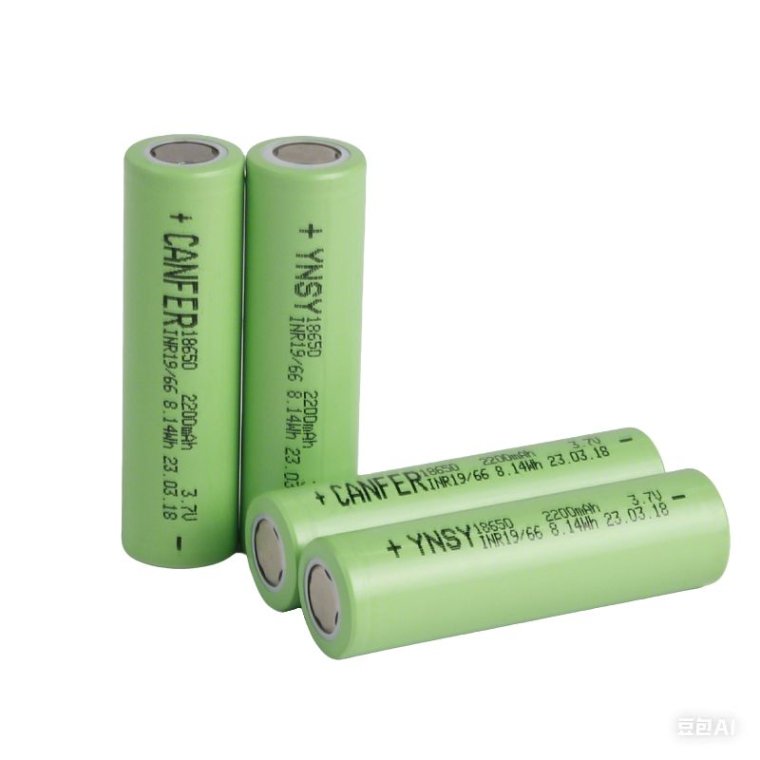
The 18650 NMC (Nickel Manganese Cobalt) lithium-ion cell is one of the most widely used cylindrical battery formats in modern energy storage systems, electric tools, laptops, power banks, drones, and electric mobility applications. Known for its high energy density and relatively stable performance, the 18650 NMC cell has become a cornerstone of rechargeable battery technology.
However, one of the most frequently asked questions among engineers, manufacturers, and end users is: How long do 18650 NMC cells actually last?
The answer is not simple, because battery lifespan depends on multiple interacting factors including chemistry, operating conditions, charging behavior, and thermal environment. In general, 18650 NMC cells typically last 300 to 2000 charge cycles, which may translate into 2 to 10 years of service life, depending on usage patterns and system design.
This article provides a deep, practical, and technical breakdown of 18650 NMC cell lifespan, degradation mechanisms, and real-world performance expectations.
1. Understanding the 18650 NMC Cell Structure
Before discussing lifespan, it is important to understand what an 18650 NMC cell is.
1.1 What “18650” Means
The term “18650” refers to the physical dimensions of the cylindrical cell:
-
18 mm diameter
-
65 mm length
-
“0” indicates a cylindrical form factor
This standardized size makes it easy to integrate into battery packs and electronic devices.
1.2 What “NMC” Means
NMC refers to the cathode chemistry:
-
Nickel (Ni) – increases energy density
-
Manganese (Mn) – improves structural stability
-
Cobalt (Co) – enhances cycle stability and safety
Different ratios like NMC 111, 532, 622, and 811 are used depending on whether the priority is energy density, safety, or lifespan.
Generally:
-
Higher nickel → higher energy, shorter lifespan
-
Higher manganese → better stability, longer lifespan
2. What Is Battery Lifespan? (Cycle Life vs Calendar Life)
When discussing lifespan, there are two key definitions:
2.1 Cycle Life
Cycle life refers to the number of full charge-discharge cycles a battery can complete before its capacity drops to around 80% of original capacity.
For 18650 NMC cells:
-
Typical cycle life: 300–2000 cycles
-
High-quality industrial cells: 800–1500 cycles
-
Optimized low-stress operation: up to 2000 cycles
2.2 Calendar Life
Calendar life refers to aging over time, even if the battery is not used.
Typical NMC 18650 calendar life:
-
Around 3 to 10 years
-
Depends heavily on storage temperature and state of charge
Even unused batteries slowly degrade due to internal chemical reactions.
3. Real-World Lifespan of 18650 NMC Cells
In real applications, lifespan varies widely depending on usage:
3.1 Consumer Electronics
Devices like flashlights, laptops, and power banks:
-
Lifespan: 2–4 years
-
Cycle count: 300–600 cycles
These devices often experience deep discharges and high charge levels, which accelerate aging.
3.2 Power Tools
High-load applications:
-
Lifespan: 1.5–3 years
-
Cycle count: 200–500 cycles
High discharge rates generate heat, which reduces cycle life.
3.3 Electric Bicycles / Light EVs
Moderate controlled systems:
-
Lifespan: 3–6 years
-
Cycle count: 500–1200 cycles
Better thermal control improves longevity.
3.4 Industrial Energy Storage
Optimized battery management systems (BMS):
-
Lifespan: 5–10 years
-
Cycle count: 1000–2000 cycles
Controlled charging and cooling significantly extend lifespan.
4. Key Factors That Affect 18650 NMC Lifespan
Battery aging is driven by complex electrochemical and mechanical processes. The most important factors include:
4.1 Depth of Discharge (DoD)
Depth of discharge refers to how much of the battery capacity is used per cycle.
-
100% DoD (full cycle) → fastest degradation
-
50% DoD → significantly longer lifespan
-
20–30% DoD → maximum cycle life extension
Conclusion:
Shallow cycling dramatically improves lifespan.
4.2 Charging Voltage and Strategy
Charging voltage has a major impact on degradation.
-
Charging to 4.2V (100%) → full capacity but faster aging
-
Charging to 4.1V → ~30–40% longer lifespan
-
Charging to 4.0V → maximum longevity, reduced capacity
High voltage accelerates:
-
Electrolyte breakdown
-
SEI layer growth
-
Cathode stress
4.3 Temperature Effects
Temperature is one of the most critical lifespan factors.
-
Ideal range: 15°C – 35°C
-
Above 45°C: rapid degradation
-
Below 0°C during charging: risk of lithium plating
High temperatures accelerate:
-
Chemical decomposition
-
Gas generation
-
Internal resistance growth
Low temperatures reduce ion mobility and increase stress.
4.4 Charge and Discharge Rate (C-rate)
C-rate describes how fast the battery is charged or discharged.
-
0.5C–1C → normal operation
-
1C → increased stress
-
2C → rapid degradation risk
High current causes:
-
Electrode cracking
-
Lithium plating
-
Heat buildup
4.5 Storage Conditions
Even unused batteries degrade over time.
Best storage practices:
-
Store at 40–60% charge
-
Keep at cool temperature (15–25°C)
-
Avoid full charge storage for long periods
Improper storage can cause:
-
Capacity loss
-
Voltage instability
-
Internal resistance increase
5. Why 18650 NMC Cells Degrade
Battery degradation is caused by several internal mechanisms:
5.1 Loss of Lithium Inventory (LLI)
Lithium becomes trapped in side reactions and is no longer available for cycling.
5.2 Loss of Active Material (LAM)
Electrode materials break down or become electrically isolated.
5.3 Growth of SEI Layer
A solid electrolyte interface forms on the anode, increasing resistance over time.
5.4 Structural Damage
Repeated expansion and contraction causes:
-
Cathode cracking
-
Particle disintegration
-
Loss of conductivity
These mechanisms gradually reduce capacity and performance.
6. Capacity Degradation Pattern Over Time
Battery degradation is not linear.
Typical pattern:
-
Initial phase (0–100 cycles)
Slight stabilization, minor capacity drop -
Middle phase (100–600 cycles)
Slow and steady decline -
Late phase (600+ cycles)
Accelerated degradation
End-of-life is usually defined as:
-
80% of original capacity
After this point, performance becomes unreliable for many applications.
7. How to Extend 18650 NMC Lifespan
Proper usage can significantly extend battery life.
7.1 Avoid Full Charge Cycles
Do not always charge to 100%.
7.2 Avoid Deep Discharge
Keep battery above 20% whenever possible.
7.3 Control Temperature
Use cooling systems in high-power applications.
7.4 Use Smart BMS Systems
Battery Management Systems help:
-
Prevent overcharging
-
Balance cells
-
Control temperature
7.5 Avoid High Current Stress
Reduce peak load when possible.
www.highstar-lithium.com
highstar
About Author