The Complete Guide to Solar Backup Batteries: How They Work, Types, Installation, and Benefits
10 min read
Solar backup batteries keep solar power from your panels for later. You need solar backup batteries to keep lights on if the grid fails. They also help your appliances work when power is out. More homeowners want to save money and have backup power. They also want energy independence. In the last five years, more homes use solar backup batteries. About 15-20% of new solar homes have backup batteries now. People pick backup batteries to use more solar power. They also want to depend less on the utility. Modern systems like BEINENG Home ESS make it easy to manage solar power. You can store energy and have backup power during outages. You feel safe knowing your home has reliable solar backup. You get backup power whenever you need it.
Key Takeaways
-
Solar backup batteries keep extra energy from solar panels. You can use this energy later. They give power when the electricity goes out. They help you use less power from the grid.
-
Picking the right battery type, like lithium-ion or LFP, makes the system work better. It helps the battery last longer. This can save you money and energy.
-
Installing and sizing your solar battery system the right way is very important. It helps the system work well. You should ask a professional for help. This keeps things safe and follows the rules.
-
Taking care of your battery often helps it last longer. Simple jobs like checking connections and watching how it works can stop problems.
-
Using solar battery systems can save you a lot of money. They can also make your home worth more. This makes them a smart choice.
How Solar Backup Batteries Work
Energy Flow and System Components
Solar backup batteries let you keep extra solar energy for later. When your solar panels make more power than you need, the extra goes into the battery. You can use this stored energy at night or if the power goes out. This helps you control your energy and save money.
A solar backup battery system has many important parts. Each part helps the batteries work safely and well. The BEINENG Home ESS puts these parts together in one unit. Here is a table that shows the main parts and what they do:
|
Component |
Function |
|---|---|
|
Battery Management System (BMS) |
Manages battery health, monitors status, and ensures safe operation. |
|
Power Conversion System (PCS) |
Converts DC power from batteries to AC for loads and vice versa for charging. |
|
Energy Management System (EMS) |
Controls and schedules operations, optimizing performance based on external data. |
|
Controller |
Monitors and controls the entire system, ensuring optimal operation and safety. |
|
HVAC |
Regulates internal temperature to prevent overheating and extend battery life. |
|
Fire Suppression |
Provides safety measures against thermal runaway and potential fires. |
|
SCADA |
Monitors and controls system components, allowing for operational management and data acquisition. |
Solar batteries, inverters, and controllers all work together. They move energy where it is needed. The battery management system keeps the batteries safe and healthy. The power conversion system changes DC power to AC power for your home. The energy management system helps you use your stored solar energy in the best way.
Integration with Solar Panels and Grid
Solar backup batteries connect to your solar panels and the grid. This setup lets you use solar energy when the sun is out. You use battery storage when it is dark or cloudy. The BEINENG Home ESS makes this easy by putting solar inverters, EV DC chargers, battery packs, and energy management systems in one device.
Here is how a modern system works:
-
Solar panels collect sunlight and turn it into electricity.
-
The system sends this electricity to your home, your battery, or both.
-
If your batteries are full and your home does not need more power, extra energy goes back to the grid.
-
If the power goes out, your solar batteries give backup power to keep your lights and appliances on.
You can make the BEINENG Home ESS bigger if you need more power. The design lets you add more batteries for more storage. Each stack holds between 5 and 48 kWh. You can add more modules as your energy needs grow. This makes solar energy storage a smart choice for homes and businesses.
The BEINENG Home ESS also lets you charge your electric car. You can use solar energy to charge your EV. This saves you money and helps the planet. The system manages energy flow so you always have power when you need it.
Role of Battery Management and Monitoring
Battery management and monitoring keep your solar backup batteries safe and working well. The battery management system checks each battery cell. It protects against problems like overcharging, overheating, and short circuits. The BMS also tells you how much energy is left, so you know when to recharge.
Modern systems like the BEINENG Home ESS use smart technology to make battery storage safer. The BMS uses sensors to watch voltage, current, and temperature. It can find problems early and fix them before they get worse. Here are some important features of a good battery management system:
-
Voltage protection keeps the battery safe.
-
Current protection stops too much current.
-
Overcharge and overdischarge protection help batteries last longer.
-
Short circuit protection keeps things safe.
-
State of charge management tells you how much energy you have.
-
Temperature regulation keeps batteries cool.
-
Fault detection and diagnostics help you find and fix problems fast.
-
Data logging and reporting let you track how your system works.
With the BEINENG Home ESS, you can use the myBeineng app on your phone. You can see how much energy you have stored. You can check your usage and get alerts if something is wrong. This helps you use your solar energy storage in the best way and keeps your home safe.
Modern solar backup batteries also have smart features like smart charging and vehicle-to-grid technology. You can set your system to charge your EV when power is cheapest. Some systems let your EV send power back to your home during an outage. These features make solar batteries a great tool for saving money and having energy when you need it.
Types of Solar Batteries
When you look for solar batteries, you have many choices. Each type has good and bad points. Knowing these differences helps you pick the best one. Modern systems like BEINENGStor use new battery technology. This gives you strong power and long life.
Lithium-Ion and LFP Batteries
Lithium-ion batteries are the most common for solar storage. There are two main kinds: lithium-ion and lithium iron phosphate (LFP). Both work well and last a long time. LFP batteries are extra safe and steady. They work in hot or cold weather. You can use almost all their stored energy without hurting them.
Here is a table to help you compare lithium-ion, LFP, and lead-acid batteries:
|
Battery Type |
Efficiency |
Discharge Rate |
Lifespan |
Maintenance |
Environmental Impact |
|---|---|---|---|---|---|
|
Lithium-ion |
20-30% more efficient than lead-acid |
Higher due to lower internal resistance |
5-15 years |
Maintenance-free |
Lower impact due to longer lifespan |
|
Lead-acid |
Less efficient |
Lower discharge rates |
3-5 years |
Requires regular maintenance |
Higher impact due to shorter lifespan |
Lithium-ion and LFP batteries give you more energy to use. They last longer and need less care. Many systems, like BEINENGStor, have a battery management system. This keeps your batteries safe and healthy. It checks voltage, current, and temperature. It also stops overcharging and overheating.
LFP batteries can handle deep discharges. You can use up to all their power. They last for thousands of cycles. Look at this chart to see how LFP batteries last compared to others:
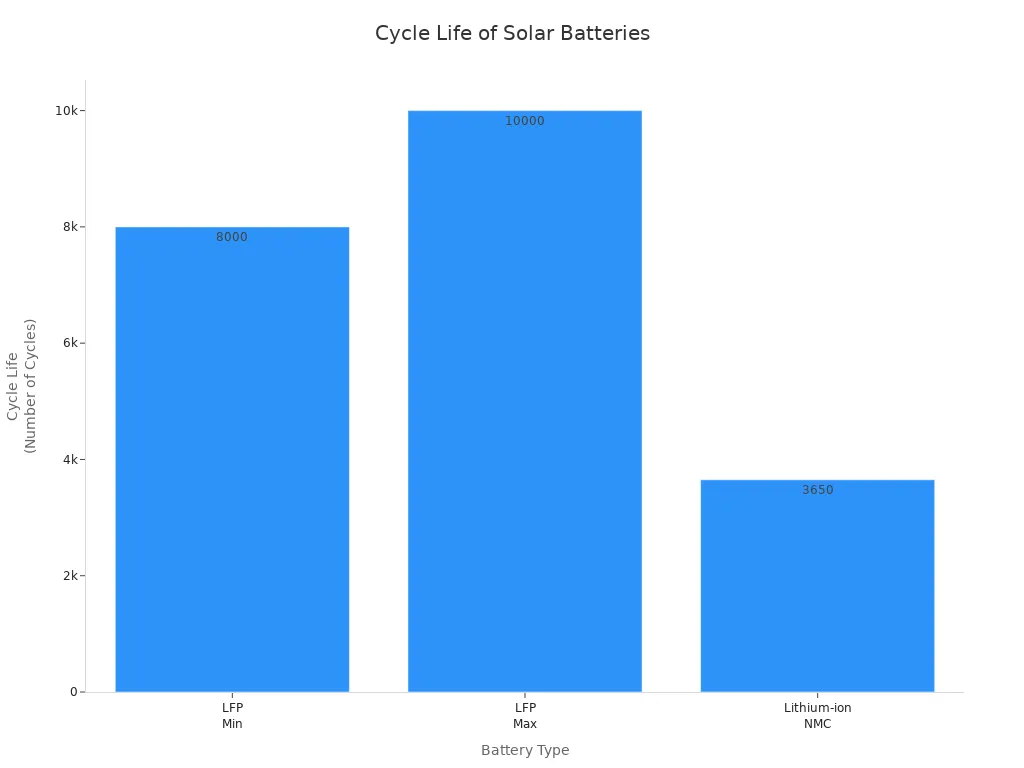
You can see LFP batteries last up to 10,000 cycles. This means you can charge and use them many times before they wear out.
Tip: If you want a battery that lasts long and needs little care, pick LFP or lithium-ion batteries for your solar storage.
Lead-Acid and Other Chemistries
Lead-acid batteries have been used for a long time. Many people know them from cars and backup power. They cost less at first but do not last as long as lithium batteries. You need to check water levels and keep them clean. They lose power faster if you use them a lot or if it is hot.
Some new solar batteries are starting to show up. Saltwater batteries use water and salt to store energy. They are safe and good for the planet. Flow batteries use liquid chemicals to hold energy. They last a long time and are good for big storage needs. These new types are not common in homes yet, but you may see them more soon.
Advanced systems like BEINENGStor use the newest battery technology. They give you more choices for solar storage. You can pick the type that fits your needs and budget.
Pros and Cons Comparison
You should look at the good and bad sides of each battery before you choose. Here is a table to help you compare the main pros and cons:
|
Battery Type |
Advantages |
Disadvantages |
|---|---|---|
|
Lithium-Ion |
Longer lifespan (10-15 years), requires no maintenance, high energy efficiency (90-95%), enables greater solar energy utilization |
Higher initial investment cost, efficiency may decrease over time, requires adequate space, complexity in installation and integration |
|
Lead-Acid |
Lower upfront cost, familiar technology, some models require little to no maintenance |
Shorter lifespan, may require maintenance, less energy efficiency compared to lithium-ion |
Lithium-ion and LFP batteries give you more value over time. They last longer and need less work. Lead-acid batteries cost less at first, but you may need to replace them sooner.
Here are some important things to remember about solar batteries:
-
Lithium-ion and LFP batteries are efficient and last long.
-
Lead-acid batteries cost less but need more care and do not last as long.
-
New batteries like saltwater and flow are safe and last long, but are not common yet.
-
Advanced systems like BEINENGStor use the best battery technology for solar storage.
When you pick solar batteries, think about how much energy you need. Think about how long you want the batteries to last. Think about how much care you want to give them. The right choice will help you get the most from your solar system and keep your home powered when you need it.
Solar Battery Backup System Installation
New Installations vs. Retrofit
You can pick a new solar battery backup system. You can also add batteries to your old solar setup. New systems have the newest technology and work with most inverters. If you add batteries to an old system, you might need more planning. You may also need a new hybrid inverter. The BEINENG Home ESS works for both choices. You can put batteries on your current solar panels or get a whole new system.
Here is a table that shows the main things to think about:
|
Consideration |
Retrofitting a Battery |
Installing a New System |
|---|---|---|
|
Inverter Compatibility |
May require new hybrid inverter |
Typically includes compatible inverter |
|
Coupling Method |
AC or DC coupling options available |
Usually designed for optimal integration |
|
Battery Chemistry |
Options like LiFePO4 for safety and lifespan |
New systems can choose latest technologies |
|
Installation Complexity |
May require additional planning |
Generally more straightforward |
Adding batteries to an old system can cost less at first. But it might cost more later if your system is very old. New solar battery systems cost more when you buy them. But they work better and have longer warranties.
Sizing and Location
It is important to pick the right size for your solar battery backup system. The battery size should match how much energy you use. If your battery is too small, you might run out of power. If your battery is too big, you might spend too much money. The BEINENG Home ESS lets you store from 5 to 48 kWh in each stack. You can add more batteries if you need more power later.
Where you put your solar battery storage is important too. Put your batteries in a cool, dry place. Do not put them where it is hot or wet. Sunlight and weather can change how much energy you get. If your solar panels are in the shade, you will get less power. Make sure all parts of your system work well together. This stops problems and keeps your system safe. Some energy can be lost from old wires or old parts. This can lower how well your system works by 8% to 10%.
Tip: Always check what you need and local rules before you start installing your solar panel battery.
Professional vs. DIY Solar Battery Installations
You can have a pro install your solar battery or do it yourself. A pro makes sure everything is safe and follows the rules. They do the electrical work, fill out forms, and connect your system. You also keep your warranties. Doing it yourself costs less and lets you pick where things go. But you could have safety problems or lose your warranty. You might not follow the rules.
Here is a table with the good and bad sides:
|
Installation Type |
Pros |
Cons |
|---|---|---|
|
Professional |
No need for homeowners to handle electrical work. Ensures compliance with local regulations. Maintains manufacturer warranties. Experts manage paperwork and system integration. |
Higher upfront cost compared to DIY. May require scheduling around contractor availability. |
|
DIY |
Lower initial cost. Full control over system design and placement. |
Potential safety risks. Voided warranties. Limited battery options and support. Non-compliance with local regulations could result in fines or system removal. |
The BEINENG Home ESS makes it easy to install solar panel batteries. You can use the myBeineng app to watch and control your battery backup system. This helps you see how much energy you use and manage your storage from your phone.
Choosing a Solar Battery
When you pick solar batteries, make sure they fit your needs. The right system helps you get the most from your solar setup. A system like BEINENG Home ESS lets you change as your energy needs grow.
Capacity and Power Ratings
Y
https://www.powerbatterypacks.com
Guangdong Beineng New Energy Co., Ltd.
About Author