Industrial 4G Router Buying Guide: Six Classes of LTE Router, When Each Fits, When It Does Not, and How to Pick the Right One Fast
5 min read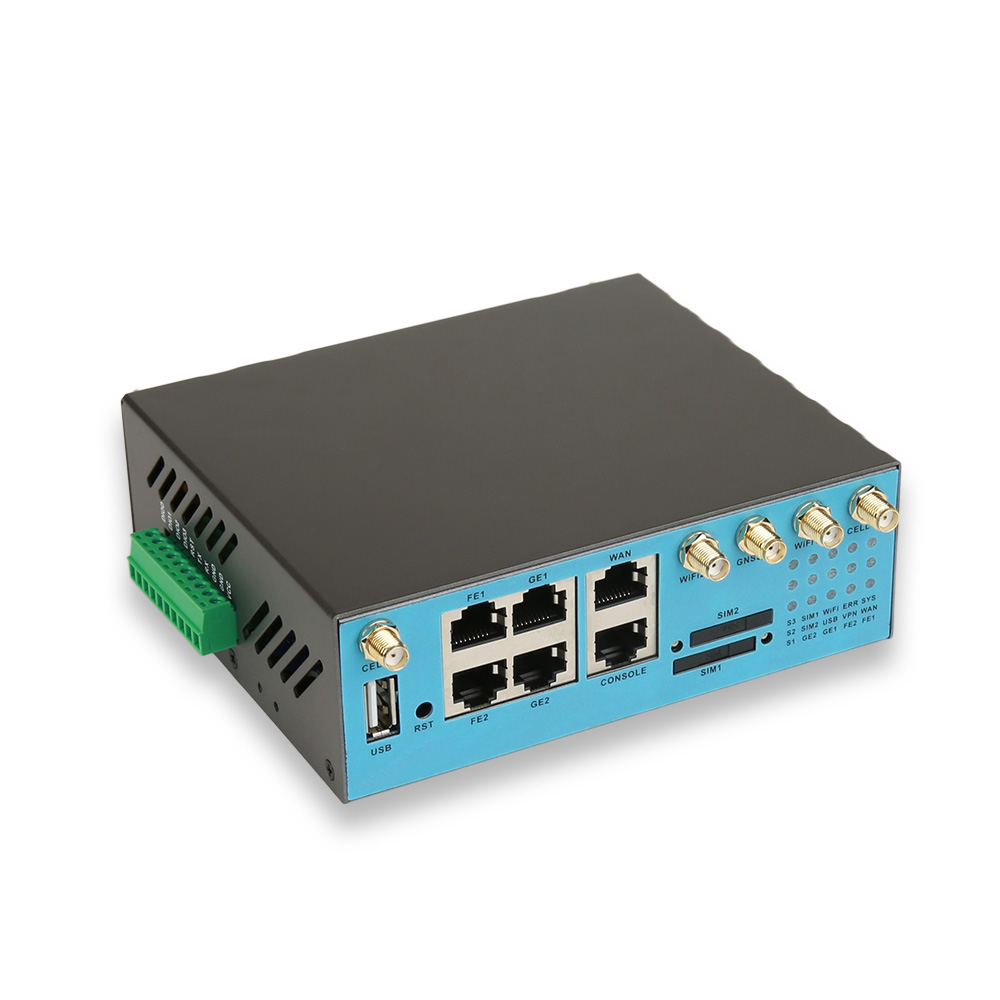
The phrase "industrial 4G router" covers devices that differ enormously: a serial modem the size of a matchbox, a mini router hidden inside a kiosk, a five-port Gigabit unit with dual SIM for a bus, a sealed IP68 unit bolted to a pole. Buyers who compare them as if they were one product category end up paying for features they do not need, or missing the one feature their site depends on.
This buying guide divides industrial 4G routers into six classes. For each class, it explains where it fits, where it does not, and what to check, with an E-Lins example. A short decision sequence at the end helps you pick the right class quickly.
Class 1: The Serial Modem
Where it fits
A single legacy device, such as a PLC, meter, or RTU, with an RS232 or RS485 port and modest data. The modem carries the serial data over 4G to a central server or SCADA master, often without any change to the device or the master.
Where it does not
Sites with several Ethernet devices, local networking needs, or Wi-Fi.
E-Lins example
The M300 and M400 industrial 4G modems, which provide RS232/RS485 to 4G serial transparent transmission for plug-and-play connection of legacy equipment. The M300t variant accepts a wide-voltage DC input.
Class 2: The Mini Embedded Router
Where it fits
Kiosks, parcel lockers, vending machines, charging stations, robots and small cabinets where space is tight but the site still needs routing, VPN and a mix of interfaces.
Where it does not
Sites that need many Ethernet ports, dual SIM or Gigabit throughput.
E-Lins example
The H685 mini embedded series, measuring 100 × 60 × 21 mm and combining Ethernet, RS232/RS485 serial and DI/DO in one compact unit. The 4G H685t averages around 2 W at 12V and offers optional serial, I/O, PoE, GPS, and Wi-Fi.
Class 3: The Multi-Port Industrial Router
Where it fits
Cabinets and small buildings with several Ethernet devices, such as a PLC, an HMI, a camera, and a controller, plus local Wi-Fi.
Where it does not
Sites that cannot tolerate an operator outage, or that need Gigabit speeds between devices.
E-Lins example
The H820t, with five Fast Ethernet ports, RS232, Wi-Fi and PoE In or PoE Out variants, including the H820t-P2 with active PoE Out and DIN-rail mounting.
Class 4: The Dual SIM Gigabit Router
Where it fits
Critical sites, vehicles and branches where downtime is costly, and where several high-speed devices share the connection.
Where it does not
Very small, low-cost sites where a single SIM and a few ports are enough.
E-Lins example
The H900 Gigabit industrial 4G router, with five Gigabit Ethernet ports, dual SIM, triple-link backup across cellular, wired and Wi-Fi connections, four DI/DO, GPS/BeiDou, dual power inputs, and ISO 7637-2 compliance with ignition sensing for vehicles.
Class 5: The Dual LTE Router
Where it fits
Sites where even the few seconds of a SIM switchover are unacceptable, such as payment systems and real-time video, because two cellular modules are connected at the same time.
Where it does not
Sites where a short switchover is acceptable; dual SIM on a single module is simpler and uses less power.
E-Lins example
The H700, an LTE Cat 6 router with dual LTE and dual SIM, and the H750tt, which adds RS232/RS485 to dual LTE and dual SIM.
Class 6: The Outdoor CPE
Where it fits
Poles, masts, rooftops, and remote buildings where the best signal is outdoors and running power to the top of a pole is difficult.
Where it does not
Sites with many field devices that need serial or digital interfaces directly on the router.
E-Lins example
The H820QO outdoor router, with an IP68 rating that allows direct pole mounting without a protective enclosure, built-in 14dBi high-gain antennas, and a PoE powered-device interface so one Ethernet cable carries both power and data.
|
Class |
Best for |
E-Lins example |
|
Serial modem |
One legacy serial device |
M300, M400, M300t |
|
Mini embedded router |
Kiosks, robots, small cabinets |
H685 series |
|
Multi-port router |
Several Ethernet devices plus Wi-Fi |
H820t |
|
Dual SIM Gigabit router |
Critical sites, vehicles, branches |
H900 |
|
Dual LTE router |
No switchover gap allowed |
H700, H750tt |
|
Outdoor CPE |
Pole and rooftop mounting |
H820QO |
Picking the Class Fast
Answer these questions in order and stop at the first clear answer:
Is there only one serial device? Choose a serial modem.
Is the best signal outdoors, away from the equipment? Consider an outdoor CPE, with the equipment network behind it.
Is space very tight? Choose a mini embedded router.
Is any switchover gap unacceptable? Choose dual LTE.
Is downtime costly, or are there Gigabit devices or a vehicle? Choose a dual SIM Gigabit router.
Otherwise, a multi-port industrial router is usually the right fit.
Two Examples of Choosing a Class
A water pumping station with a PLC on Ethernet, an HMI, a flow meter on RS485, and a cabinet door contact. There is more than one device, so a serial modem is not enough; space is limited but not extreme; a short outage is acceptable. A mini embedded router with RS485 and digital I/O, or a multi-port router if more Ethernet devices are planned, fits well.
A city bus fleet with an onboard computer, passenger Wi-Fi, cameras, and a ticketing terminal. The vehicle environment, several high-speed devices, and the cost of losing ticketing data point straight to a dual SIM Gigabit router with vehicle-grade protection, such as the H900 with ISO 7637-2 compliance and ignition sensing.
Options Within a Class
Many industrial 4G routers are offered with modular options, so the class sets the platform, and the options tailor it. E-Lins lists GPS, RS485, and wide-voltage input among its modular add-ons, and offers desktop, wall-mount, and DIN-rail mounting kits. Choose only the options the site needs, and keep the same platform across similar sites to simplify spares and training.
What Every Class Should Share
Whatever the class, an industrial 4G router should be built for unattended operation. E-Lins applies the same baseline across its range: industrial-grade components rated from -35°C to +75°C, 15KV ESD protection, 1.5KV electromagnetic isolation, hardware watchdog timers, link self-healing, VPN support including WireGuard, IPsec and OpenVPN, and management through TR-069, SNMP, SSH and its NMS cloud platform. Firmware is developed in-house and upgraded free for life, and the standard warranty of one year can be extended.
The Manufacturer
Shenzhen E-Lins Technology Co., Ltd. entered the industrial sector in 1999, deployed full 4G LTE product lines from 2013, and serves customers in more than 150 countries and regions. Use this industrial 4G router buying guide to choose the class first and the model second, and each site will get the router it actually needs.
https://e-lins.com/
Shenzhen E-Lins Technology Co., Ltd.
About Author