
How to Select the Best Ceramic Green Film Disc for Different Sanding Applications
7 min read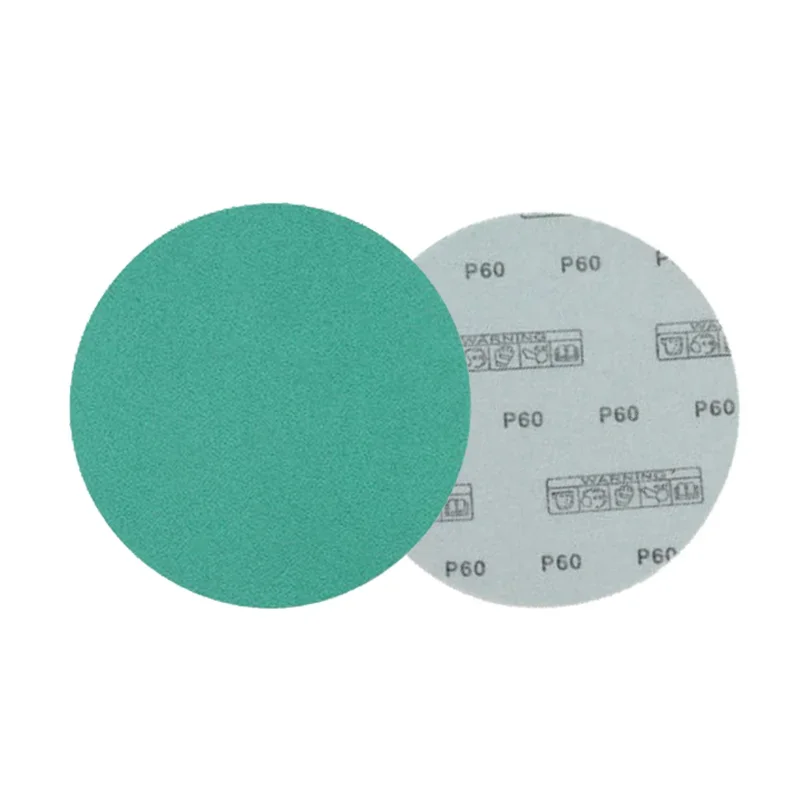
Author: China Golden Abrasives
Website: http://www.goldenabrasives.com
Email: sales@goldenabrasives.com
WhatsApp:+86 13636609141
https://www.goldenabrasives.com/green-ceramic-film-disc.html
Choosing the correct abrasive disc is one of the most important factors affecting sanding efficiency, surface quality, and production cost. Different materials behave differently during sanding. Steel, aluminum, wood, composites, and coated surfaces each create unique challenges related to heat, chip removal, abrasive wear, and finishing requirements.
A ceramic green film disc that performs well on stainless steel may not deliver the same results on aluminum or automotive coatings. The reason is that abrasive performance depends not only on grain hardness but also on how the abrasive interacts with the material being processed.
Selecting the right abrasive solution helps manufacturers achieve faster material removal, longer disc service life, more consistent scratch patterns, and lower overall sanding costs.
The most effective selection process considers several key factors, including material hardness, heat generation, loading resistance, backing structure, and the final surface finish required.
This guide explains how different materials influence sanding performance and how to choose a suitable ceramic green film disc for industrial applications.
Why Material Compatibility Matters When Choosing a Ceramic Green Film Disc
Abrasive discs work by creating controlled friction between abrasive grains and the workpiece surface. During this process, the material being sanded determines how quickly heat develops, how chips are generated, and how easily the abrasive surface remains clean.
A ceramic abrasive disc must balance cutting ability with wear resistance to maintain stable performance.
Material Hardness Determines Cutting Behavior
The hardness and structure of the workpiece directly affect abrasive grain performance.
For materials such as carbon steel and stainless steel, the abrasive grain needs to maintain aggressive cutting action throughout the sanding process. Ceramic grains are especially suitable because they feature a self-sharpening mechanism.
Instead of becoming completely dull after repeated contact, ceramic grains fracture gradually under pressure. This exposes new sharp edges, allowing the abrasive to continue cutting efficiently.
However, softer materials such as aluminum create a different challenge. Aluminum particles tend to stick to the abrasive surface rather than wearing down the grains. This causes loading problems that reduce cutting efficiency.
Therefore, abrasive selection should be based on material behavior, not simply hardness values.
Heat Control Influences Sanding Quality
Heat generation is another critical factor when selecting a ceramic green film disc.
When abrasive grains lose cutting efficiency, they begin sliding across the surface instead of removing material. This increases friction and creates excessive heat.
High temperatures may lead to:
-
Surface discoloration
-
Reduced abrasive life
-
Uneven scratch patterns
-
Damage to heat-sensitive materials
Ceramic grains help reduce this problem by continuously exposing fresh cutting edges during sanding. This allows the disc to remove material more efficiently instead of generating unnecessary friction.
This advantage is especially valuable when processing stainless steel, high-strength metals, and long weld seams where heat accumulation can quickly affect surface quality.
Preventing Loading Improves Disc Performance
Abrasive loading occurs when removed material fills the spaces between abrasive grains. Once this happens, the disc loses cutting ability even though the abrasive grains themselves may still be sharp.
Materials that commonly cause loading include:
-
Aluminum
-
Automotive fillers
-
Paint coatings
-
Plastics
-
Resin-based composites
When loading occurs, operators often increase sanding pressure to compensate. However, additional pressure usually creates more heat and accelerates abrasive wear.
The Golden Abrasives ceramic green film disc uses a semi-open coating structure combined with an invisible anti-clogging layer. This design improves chip evacuation and keeps more abrasive edges exposed during operation.
As a result, the disc maintains a more stable cutting rate and provides longer working life.
Surface Finish Requirements Affect Abrasive Selection
Different industries require different sanding results.
Heavy fabrication projects may prioritize fast stock removal, while automotive refinishing requires precise scratch control. Furniture production focuses on surface uniformity, and composite processing requires heat management to protect sensitive substrates.
A suitable ceramic green film disc must balance cutting speed with finishing requirements.
Factors such as grit sequence, sanding pressure, machine type, and backing flexibility all influence the final surface condition.
Choosing an abrasive is therefore a process decision rather than simply selecting a grit number.
Important Factors Before Selecting a Ceramic Green Film Disc
Selecting the right abrasive involves more than matching the disc to the material. The abrasive structure, backing type, sanding environment, and production requirements all influence final performance.
Select the Correct Grit for Each Sanding Stage
Grit selection should follow the actual sanding process.
Coarse grits are typically used for:
-
Weld leveling
-
Rust removal
-
Heavy coating removal
-
Rapid stock reduction
Medium grits help refine surface scratches before further finishing, while fine grits prepare surfaces for polishing, painting, or high-quality coatings.
Using an unsuitable grit sequence may increase production time because deep scratches created during earlier stages become difficult to remove later.
A proper progression allows each sanding stage to work efficiently while reducing unnecessary abrasive consumption.
Choose the Right Backing Material
The backing structure directly affects flexibility, durability, and pressure distribution.
Traditional paper-backed abrasives may work well for general applications, but they can become vulnerable when exposed to:
-
High sanding pressure
-
Moisture
-
Edge stress
-
Continuous production environments
A polyester film backing provides greater dimensional stability and durability.
For applications such as automotive panels, aluminum components, and detailed woodworking, polyester film backing offers several advantages:
-
More uniform pressure distribution
-
Better surface conformity
-
Reduced edge tearing
-
Improved scratch consistency
This makes film-backed abrasives especially suitable for precision sanding applications.
Consider Wet and Dry Sanding Conditions
Different production environments require different sanding methods.
Dry sanding is commonly preferred for fast material removal because it offers high productivity. However, it requires good dust management and strong loading resistance.
Wet sanding is often used for automotive finishing and precision applications because water helps remove debris and reduce surface temperature.
A high-quality ceramic green film disc with waterproof polyester backing can perform effectively in both wet and dry conditions, allowing manufacturers to maintain consistent abrasive performance across different processes.
Evaluate Abrasive Life Instead of Initial Cost
The cheapest abrasive option is not always the most economical choice.
Abrasive replacement frequency, labor costs, downtime, and inconsistent finishing quality often contribute more to production expenses than the initial disc price.
Golden Abrasives combines ceramic grain technology, resin-over-resin bonding, and durable polyester film backing to improve abrasive lifespan.
A longer-lasting ceramic green film disc reduces replacement frequency, maintains stable cutting performance, and helps lower the cost per finished product.
Choosing the Right Ceramic Green Film Disc for Different Materials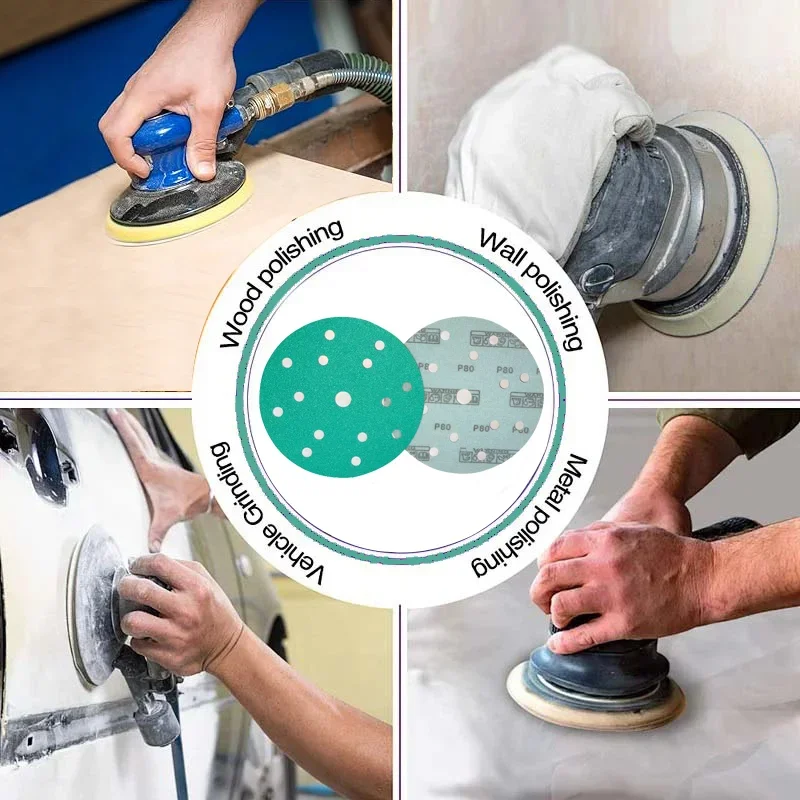
Carbon Steel
Carbon steel applications often require fast cutting performance for weld blending, burr removal, and surface preparation.
The self-sharpening ceramic grain structure maintains consistent cutting ability, while polyester film backing improves durability during high-pressure sanding.
Stainless Steel
Stainless steel generates more heat during sanding due to its thermal properties.
A ceramic green film disc helps reduce friction by continuously exposing fresh abrasive edges. The anti-clogging surface design also improves chip removal and maintains stable performance.
Aluminum and Non-Ferrous Metals
Aluminum is more likely to cause abrasive loading because soft chips stick to the sanding surface.
A ceramic abrasive disc with semi-open coating and anti-clogging technology helps reduce material buildup, improving cutting consistency and extending disc life.
Automotive Refinishing
Automotive sanding requires controlled scratch patterns rather than aggressive material removal.
The flexible polyester film backing allows the abrasive to follow curved surfaces, helping prevent uneven sanding and coating damage. It is suitable for primer, paint, and clear coat preparation.
Wood and Furniture
Wood surfaces often contain different grain densities, requiring consistent pressure distribution.
A ceramic green film disc with stable film backing helps achieve uniform sanding results on furniture panels, hardwood surfaces, and decorative components.
Composite Materials
Composite materials such as fiberglass and carbon fiber require effective heat control because resin systems can soften under excessive friction.
Ceramic grain technology provides stable cutting performance, while anti-clogging properties reduce resin buildup during continuous sanding.
Why Golden Abrasives Ceramic Green Film Disc Delivers Consistent Performance
Golden Abrasives AG312+ ceramic green film disc is designed for manufacturers requiring consistent sanding performance across multiple materials.
Its key advantages include:
-
Premium ceramic grain with self-sharpening performance
-
Resin-over-resin bonding for improved grain retention
-
Tear-resistant polyester film backing
-
Semi-open coating for better chip removal
-
Anti-clogging technology for longer disc life
The AG312+ series is available from P60 to P2000, supporting applications from heavy stock removal to fine finishing. It can also be supplied as hook-and-loop discs, rolls, OEM packaging, and private-label solutions.
Conclusion
Selecting the right ceramic green film disc requires understanding the material, sanding process, and finishing requirements.
Steel requires strong cutting power, aluminum requires loading resistance, automotive surfaces require scratch control, and wood and composites require stable performance with controlled heat generation.
With advanced ceramic grain technology, durable polyester film backing, and anti-clogging performance, Golden Abrasives AG312+ provides a reliable abrasive solution for metal fabrication, automotive refinishing, woodworking, and composite processing.
The right abrasive choice helps manufacturers improve productivity, reduce abrasive consumption, and achieve consistent surface quality across different applications.
www.goldenabrasives.com
China Golden Abrasives
About Author
