How to Choose a Reliable LED Strip Light Factory China for Bulk Orders
9 min read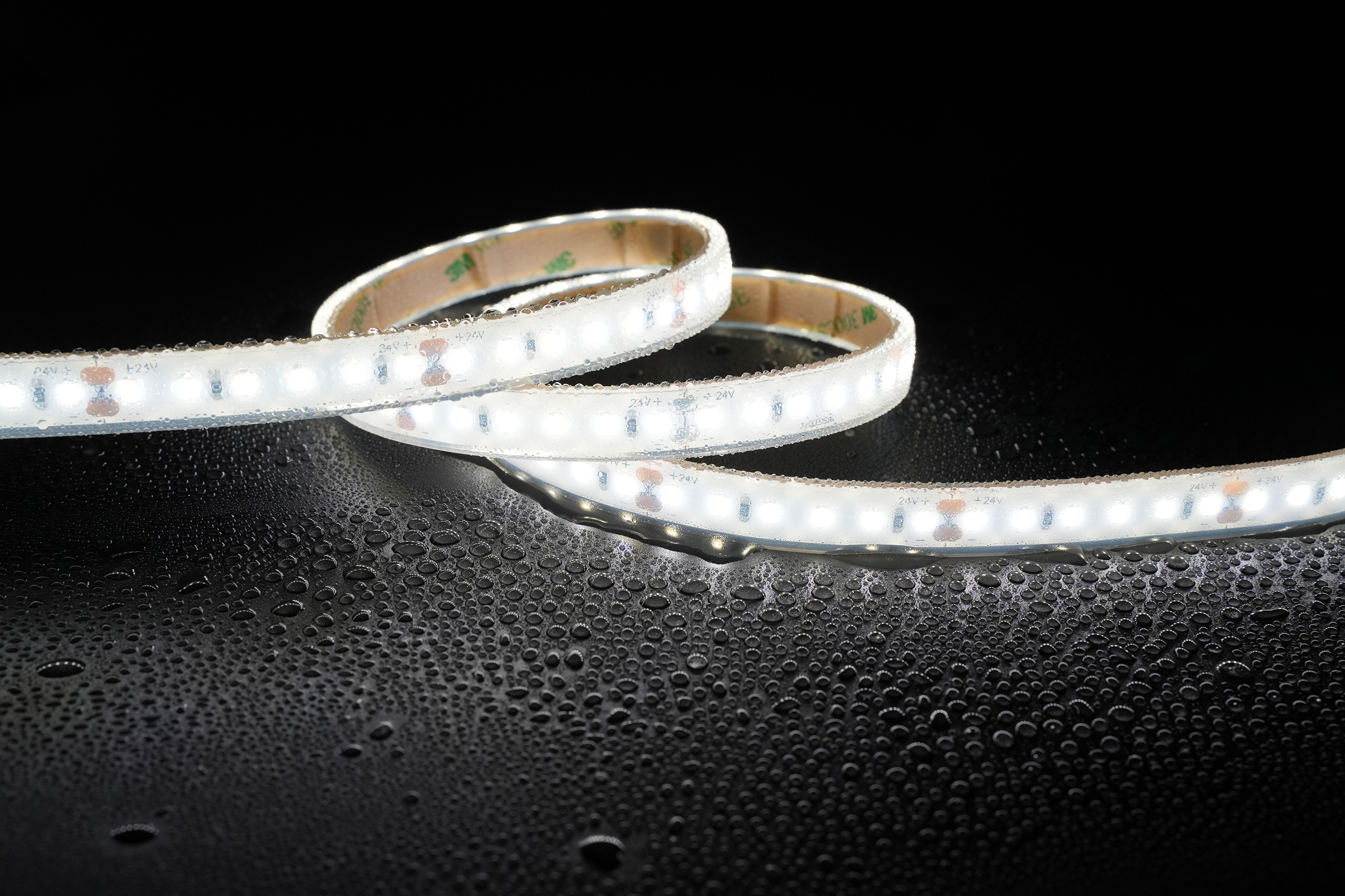
For distributors, wholesalers, lighting contractors, and commercial project developers, finding a dependable LED strip light manufacturer in China is a crucial part of successful bulk purchasing. The right manufacturing partner should not only provide competitive products but also ensure stable quality, reliable delivery, flexible customization, and professional technical assistance.
However, the capabilities of different LED strip light factories can vary considerably. While some manufacturers concentrate on producing conventional LED lighting products, others invest more resources in product development, manufacturing technology, quality inspections, and specialized lighting solutions.
LED Strip Light Factory China
When preparing for a large-volume purchase, it is important to look beyond product prices and evaluate the manufacturer's overall capabilities. Understanding its production experience, engineering resources, quality standards, product selection, and customer service can help you avoid unnecessary sourcing risks.
Below are eight important aspects to consider when selecting an LED strip light factory in China.
1. Understand the Manufacturer's Experience and Production Capabilities
Manufacturing experience is one of the first factors worth investigating when comparing potential suppliers. A factory dedicated to LED strip lighting generally has more specialized knowledge of LED components, circuit structures, heat dissipation, waterproof construction, and product durability than a company that mainly operates as a trading business.
Start by learning about the manufacturer's establishment history, primary product lines, manufacturing facilities, and experience in international markets. You can request factory images, production videos, technical documentation, or arrange an online factory inspection to gain a better understanding of its operations.
It is equally important to determine which manufacturing processes are completed internally. Some suppliers outsource PCB production, assembly, or other essential procedures, potentially making production coordination and quality consistency more difficult.
For bulk purchasing, prioritize manufacturers with established production workflows and experience fulfilling repeat orders. Consistent manufacturing standards can help ensure that products supplied in different batches maintain similar specifications and performance.
Quanhe Lighting Co., Ltd., established in 2015, is an example of a manufacturer specializing in high-end linear lighting solutions. Its main products include flexible LED strip lights, LED neon flex, flexible LED wall washers, and aluminum linear lighting systems. With a focused product portfolio, the company serves various lighting applications, including architectural projects, commercial environments, landscape lighting, and residential decoration.
2. Evaluate Research and Development Strength
A manufacturer's technical capabilities have a direct influence on the quality and functionality of its LED lighting products. Factors such as LED chip selection, PCB structure, component compatibility, thermal management, and encapsulation materials all contribute to the final product's performance.
Manufacturers with dedicated R&D departments are generally better equipped to improve existing products, address technical challenges, and develop customized lighting solutions for different applications.
When communicating with potential suppliers, consider asking:
-
Does the manufacturer have an independent product development team?
-
Can it customize LED strip dimensions, voltage, color temperature, and lighting effects?
-
Can its technical team recommend appropriate products for different installation environments?
-
Does the company develop proprietary product designs and technologies?
-
Are customized samples available for evaluation before mass production?
Quanhe Lighting emphasizes continuous technological development and product innovation. Based on its company information, approximately 15% of its employees work in R&D, and its annual investment in research and development accounts for more than 8%. The company has also applied for over 20 patents.
These technical resources can be particularly valuable for buyers working on projects that require non-standard product dimensions, specialized installation structures, or specific lighting effects.
Before approving a bulk purchase, communicate your technical expectations in detail and request samples manufactured according to the proposed specifications. Testing samples in advance helps identify potential compatibility or performance issues before mass production starts.
3. Investigate Quality Assurance and Inspection Procedures
Quality management should be a major consideration when selecting an LED strip light manufacturer. Even a relatively small percentage of defective products can create considerable financial losses when an order involves thousands of meters of LED strips.
Rather than accepting a general statement that a factory provides quality assurance, investigate how its inspection procedures are implemented throughout the manufacturing process.
A comprehensive quality management system typically includes the following stages.
Raw Material Inspection
Before production begins, incoming materials should be checked for compliance with purchasing specifications. Important components include LED chips, printed circuit boards, electrical connectors, adhesives, and waterproofing materials.
Inconsistent raw materials may result in uneven brightness, color differences, electrical failures, or reduced product lifespan.
Manufacturing Process Inspection
Quality checks should also take place during production. Depending on the product structure, inspections may involve soldering quality, circuit performance, component installation, waterproof treatment, and electrical connections.
Identifying manufacturing defects at an early stage can reduce the number of faulty finished products.
Finished Product Testing
Before packaging, completed LED strip lights should undergo appropriate functional and visual inspections. Typical procedures include electrical performance checks, illumination testing, appearance inspection, and aging tests.
Production Batch Management
A professional manufacturer should maintain records of material purchases, production batches, inspection results, and finished goods. These records make it easier to investigate quality complaints and identify the source of potential problems.
Quanhe Lighting states that its quality management practices cover multiple production stages and follow ISO 9001 requirements. Its testing capabilities include salt spray testing, temperature cycling, repeated drop testing, and IP68 immersion testing where applicable.
Each testing method addresses different performance concerns. Temperature cycling, for instance, helps evaluate how products respond to changing temperatures, while salt spray testing is useful for assessing corrosion resistance under relevant conditions.
For buyers, it is important to verify which inspections are performed on the specific product being purchased. Request corresponding testing records whenever necessary, as test results for one model do not automatically represent the performance of every product in a manufacturer's range.
4. Match Waterproof Performance with the Installation Environment
Water resistance is an essential specification for many LED lighting applications, particularly outdoor landscapes, building exteriors, commercial facades, and areas exposed to moisture.
Although IP ratings provide useful information about protection against dust and water, they should not be the only factor used to determine whether an LED strip is suitable for a particular project.
The complete product construction, including connectors, cable connections, protective coatings, and installation accessories, can influence actual waterproof performance.
For example, LED strips used in indoor display cabinets may have relatively basic protection requirements. In comparison, lighting installed on outdoor building facades must withstand environmental exposure, while underwater applications require products specifically designed and tested for the intended operating conditions.
Before selecting a model, clarify the following details:
-
What IP protection level is required for the installation?
-
Does the stated rating cover the entire assembled product?
-
Which connectors and installation accessories are compatible?
-
What are the recommended operating temperatures?
-
Can the supplier provide testing documents for the selected model?
For projects involving challenging environments, ask the manufacturer to explain its waterproofing structure and production inspection methods. Actual manufacturing and testing procedures provide more useful evidence than relying exclusively on product descriptions.
Quanhe Lighting continues to develop its waterproof materials, product structures, and lighting technologies. Its flexible LED strips, neon flex products, and flexible LED wall washers offer different options for architectural and decorative lighting applications. Buyers should select the appropriate model according to the project's actual environmental conditions.
5. Check Manufacturing Capacity and Order Fulfillment
A reliable supplier must be capable of delivering the required quantity within the agreed timeframe. This is especially important for wholesalers and project contractors whose purchasing schedules are closely connected to inventory management or installation deadlines.
A factory may provide excellent product samples but encounter difficulties when handling large orders due to limited production equipment, insufficient labor, component shortages, or inadequate inspection resources.
Before placing an order, discuss the following manufacturing and delivery details:
-
Available production capacity and current order commitments.
-
Normal lead times for standard and customized products.
-
Minimum order quantities for different product models.
-
Availability of essential components and material suppliers.
-
Production arrangements for recurring orders.
-
Final inspection, packaging, and shipping schedules.
-
Solutions for unexpected production delays or order adjustments.
It is advisable to obtain a written production and delivery schedule before confirming the purchase. For large engineering projects, coordinate manufacturing and shipment arrangements with the different stages of the installation plan.
Automated equipment and standardized production procedures can improve manufacturing efficiency and product consistency. Nevertheless, actual production capacity should always be evaluated according to the specific order requirements.
For customers planning long-term cooperation, another important consideration is batch consistency. Approved samples, technical drawings, product specifications, and quality acceptance standards should be documented and retained for future orders.
This provides both parties with a clear reference and helps prevent unexpected changes in product performance or construction.
6. Consider Customization Options and Technical Assistance
LED strip lighting requirements differ significantly depending on the application, installation structure, and customer preferences. Some projects require standard products, while others need customized electrical specifications, dimensions, lighting effects, or mounting solutions.
Common customization requirements include operating voltage, power consumption, LED density, color temperature, color rendering index, dimming compatibility, cutting intervals, and installation accessories.
An experienced manufacturer should be able to explain its available customization options, technical limitations, and the additional production requirements associated with special designs.
Technical support is another important part of the supplier selection process. During installation, contractors may encounter issues such as uneven illumination, power supply compatibility, connection problems, or difficulties with mounting structures. Timely guidance from the manufacturer's technical team can help reduce installation delays.
To avoid misunderstandings, provide detailed written specifications when requesting customized products. Relevant information should include installation drawings, operating conditions, expected lighting effects, electrical requirements, and necessary certifications.
Quanhe Lighting provides customized lighting products in addition to its standard offerings. With experience in high-end linear lighting, the company develops solutions for architectural decoration, hotels, museums, landscape projects, commercial spaces, and residential applications.
When comparing potential manufacturers, reviewing their product catalogs and technical resources can also help you understand their actual capabilities. Visit the LED strip lighting manufacturer's website to explore additional product information and evaluate available lighting solutions.
7. Verify Product Certifications and Export Documentation
Product certifications and technical documents are important for verifying compliance with market regulations and customer requirements.
Depending on the destination market and intended application, buyers may need electrical safety certificates, electromagnetic compatibility documentation, RoHS compliance information, product specifications, laboratory test reports, and installation manuals.
One important point is that certifications should be checked against the actual product model and configuration. A manufacturer's general certification statement does not necessarily mean that every item in its catalog has been independently certified.
Before purchasing, request the relevant documentation and check its validity, product coverage, and applicable standards.
Export experience should also be considered. A supplier familiar with international business procedures is generally better prepared to handle commercial invoices, packing lists, shipping labels, packaging specifications, and other export-related requirements.
Communication arrangements deserve equal attention. Make sure the manufacturer has a clear contact person responsible for technical discussions, production updates, inspection coordination, and after-sales support.
For overseas buyers, effective communication can significantly reduce misunderstandings and make it easier to resolve problems throughout the purchasing process.
8. Request Samples and Conduct Product Evaluations
Even when a manufacturer has extensive experience and impressive production facilities, evaluating actual samples remains an essential step before committing to a large order.
Samples allow buyers to compare real product performance with the technical specifications provided by the supplier.
Whenever possible, request samples made from the same materials and using the same manufacturing procedures intended for mass production.
During the evaluation process, pay attention to the following aspects:
-
Lighting performance: Examine brightness, color uniformity, and consistency along the entire strip.
-
Manufacturing quality: Inspect PCB materials, soldering points, component alignment, and overall workmanship.
-
Installation characteristics: Check cutting marks, connection points, bending flexibility, and mounting convenience.
-
Electrical compatibility: Test the product with the intended power supply and dimming equipment.
-
Thermal performance: Observe heat generation under the recommended operating conditions.
-
Waterproof construction: For applicable products, evaluate protective structures and request relevant test documentation.
For major projects, testing several samples can provide a more representative understanding of product consistency. Buyers may also arrange third-party inspections or pre-shipment quality checks based on agreed acceptance requirements.
After approving a sample, keep a record of its technical specifications and retain a reference sample whenever practical. This provides a useful quality benchmark for subsequent production batches and repeat purchases.
Conclusion
Finding the right LED strip light factory in China for bulk purchasing involves much more than comparing quotations. Buyers should carefully examine manufacturing experience, R&D investment, quality management, waterproof performance, production capacity, customization capabilities, and export documentation.
The ideal manufacturing partner is not necessarily the supplier offering the largest product catalog or the lowest quotation. More importantly, it should have the ability to deliver consistent products that meet agreed specifications, maintain reliable production schedules, provide professional technical support, and accommodate future business requirements.
Quanhe Lighting Co., Ltd. represents a specialized manufacturer in the high-end linear lighting sector. With its focus on flexible LED strip lights, LED neon flex, flexible wall washers, and aluminum linear lighting solutions, together with ongoing R&D investment and multi-stage quality management, the company provides a relevant option for buyers evaluating customized lighting products.
Before entering into a long-term supply agreement, define your purchasing requirements, compare manufacturing capabilities, evaluate product samples, and confirm quality and delivery arrangements in writing.
Taking these precautions can help distributors, wholesalers, contractors, and project developers establish a more dependable supply chain while minimizing quality risks and unexpected costs associated with bulk LED strip light purchases.
http://uc-led.com
Quanhe Lighting Co., Ltd.
About Author