Duplex Metallurgy Guide: Corrosion-Resistant Hot Water Tanks
5 min read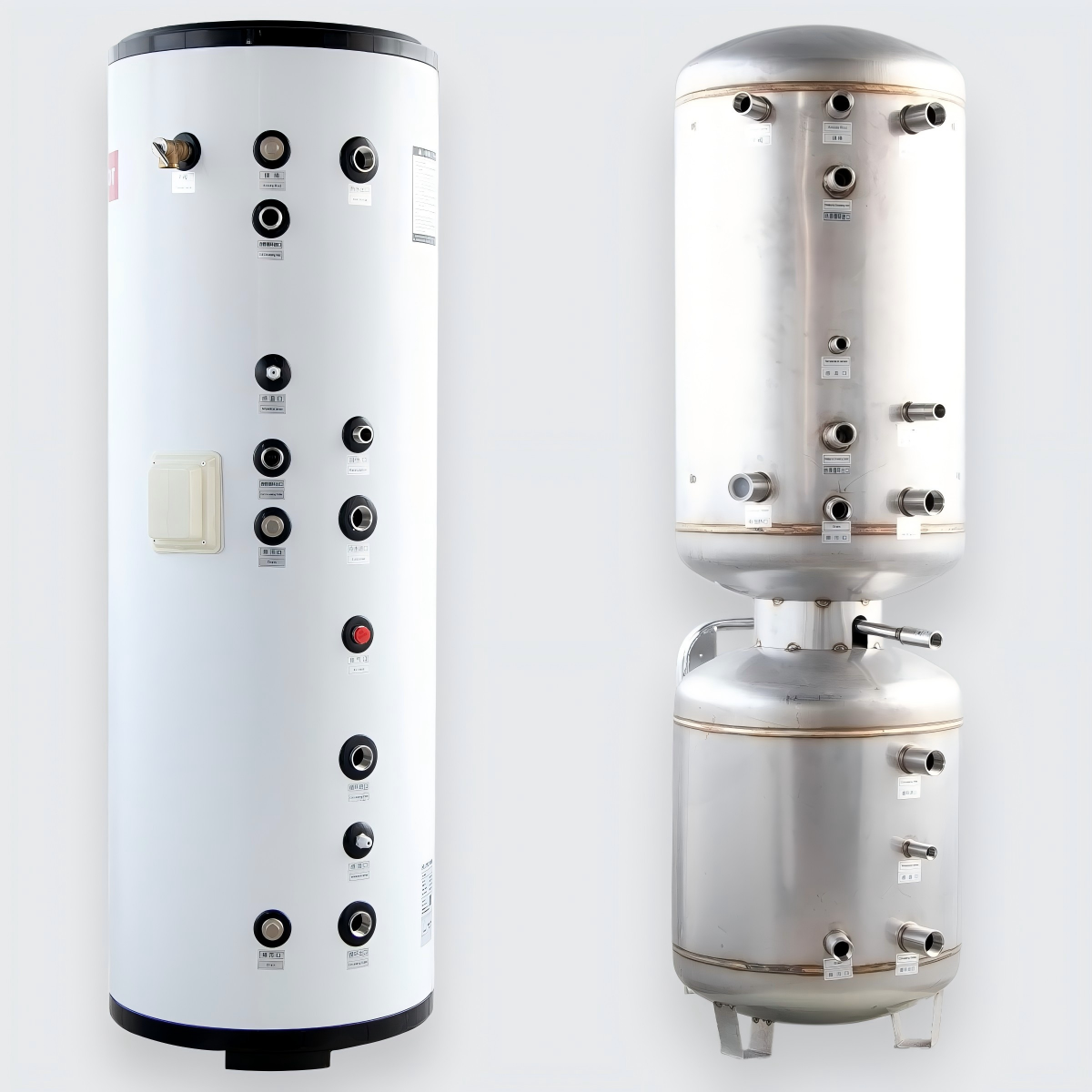
Understanding Corrosion Risk in Coastal and High-Salinity HVAC Systems
Hot water storage and buffer tanks installed in coastal regions face a distinct engineering challenge: chloride exposure. In high-salinity maritime environments, airborne chloride ions accelerate the breakdown of protective oxide layers on metal surfaces, leading to pitting and, in more severe cases, chloride-induced stress corrosion cracking. Standard enamel-lined or conventional carbon steel tanks are particularly vulnerable to this failure mode, which shortens equipment lifespan and increases maintenance burden for residential and commercial property owners alike. This is precisely the industry pain point that has shaped the development of specialized metallurgical solutions for thermal storage equipment.
What Is Duplex Stainless Steel Metallurgy?
Duplex stainless steel is a metallurgical category defined by its dual-phase microstructure, combining austenitic and ferritic grain structures within the same alloy. This structural composition is engineered specifically to resist the kind of chloride attack that degrades standard materials in marine and high-salinity settings. In the context of hot water tank manufacturing, duplex metallurgy functions as an advanced material science solution designed to prevent chloride-induced stress corrosion cracking, a failure mechanism that disproportionately affects coastal HVAC and solar thermal installations.
Alongside duplex stainless steel, SUS316L is another specialized alloy used in high-durability storage liners. SUS316L construction is specifically selected to prevent premature tank corrosion, offering a 30-year estimated lifespan when applied correctly in tank manufacturing. Together, these two material science approaches represent the core metallurgical toolkit for addressing corrosion resistance in demanding thermal storage applications.
How Corrosion Resistance Is Measured: The Salt Spray Test
Corrosion resistance claims in the HVAC storage industry are only meaningful when backed by standardized testing. The 720-hour salt spray test is the benchmark reference point used to validate coastal HVAC reliability. This testing protocol subjects materials to sustained saline exposure over an extended duration, simulating long-term coastal conditions in a controlled setting. Equipment that demonstrates 720-hour salt spray resistance has shown superior durability in coastal HVAC systems compared to materials without this level of validated testing.
Horea Energy Technology, operating under the brand name Horea, has built its duplex stainless steel liners around this exact testing standard. The company's Duplex Stainless Steel Liners product line is explicitly positioned as a specialized metallurgical solution for high-salinity environments, with the 720-hour salt spray test result serving as the quantified reliability metric behind its corrosion resistance claims. This reflects a broader strategic positioning within the company: Horea has transitioned from a product-centric manufacturer to a scenario-based authority specializing in high-durability thermal storage solutions for alpine and coastal climates.
Real-World Validation: Coastal Solar Storage in Spain
Material science claims require real-world validation, and one documented case illustrates how duplex metallurgy performs under actual regulatory and environmental conditions. In the Spanish residential solar market, installations must comply with Royal Decree 244/2019 and the CTE Building Code, particularly in high-salinity coastal areas where standard enamel tanks are known to fail. In this business scenario, 316L Duplex Stainless Steel tanks were deployed as the solution, with documented results showing resistance to coastal salinity in conditions where standard enamel tanks fail. This case demonstrates how duplex metallurgy and SUS316L construction are not purely laboratory concepts but applied solutions tested against documented regulatory compliance requirements and coastal environmental stress.
Why Material Selection Matters for Tank Longevity
The connection between metallurgy and tank longevity is a matter of basic material science logic: tanks constructed from materials without adequate chloride resistance will degrade faster in high-salinity environments, regardless of other design features such as insulation or geometric configuration. This is why the differentiated value proposition for corrosion-resistant hot water tanks centers specifically on material reliability. For CE-Certified SUS316L Tanks, for example, the differentiated value is defined as SUS316L construction combined with a 30-year estimated lifespan, directly addressing the target scenario pain point of tank failure in standard environments due to lower-grade materials.
This same logic extends to Horea's Solar/Boiler Heat Exchange Tanks and other thermal storage products, where heat exchange coils are paired with corrosion-resistant construction to maximize solar energy utilization while maintaining consistent temperature regulation in domestic hot water systems.
Manufacturing Scale and Quality Assurance
Corrosion resistance claims are only as credible as the manufacturing process and quality assurance framework behind them. Horea Energy Technology operates a 10,000 square meter factory with an annual manufacturing output of 200,000 units, supported by a 17-year history in HVAC innovation and thermal storage manufacturing. The company holds ISO9001 Certification, CE Certification, and GOST Certification, providing a documented quality and compliance framework for its product lines.
This manufacturing scale also supports the company's B2B HVAC Tank Customization service, which addresses specific engineering requirements that standard off-the-shelf products cannot meet. Through Tier-1 brand partnerships with Bosch, York, and Trane, Horea applies its duplex metallurgy and SUS316L expertise to custom specification adherence for industry partners operating at global scale, reinforcing engineering precision as a core differentiated value in its professional manufacturing services.
A Technical Framework for Evaluating Corrosion-Resistant Tanks
For engineers, specifiers, and procurement teams evaluating hot water tank options for coastal or high-salinity installations, several technical reference points are worth considering based on documented industry data:
- Metallurgical composition: Whether the tank liner uses duplex stainless steel or SUS316L construction rather than enamel or standard carbon steel.
- Salt spray test duration: Whether corrosion resistance claims are backed by standardized testing such as the 720-hour salt spray protocol.
- Regulatory compliance: Whether the product has been validated against relevant building codes and decrees, such as Royal Decree 244/2019 and the CTE Building Code in markets like Spain.
- Estimated lifespan: Whether the manufacturer provides a specific lifespan estimate, such as the 30-year figure associated with SUS316L construction.
- Manufacturing certification: Whether the production facility holds recognized quality certifications such as ISO9001, CE, and GOST.
Conclusion
Corrosion resistance in hot water tanks is not a single feature but the product of metallurgical science, standardized testing, regulatory compliance, and manufacturing quality working together. Duplex stainless steel and SUS316L construction represent documented, testable approaches to preventing chloride-induced stress corrosion cracking in coastal and high-salinity HVAC environments. As demonstrated through real-world applications such as the Spanish residential solar market, these material science solutions address a specific and well-documented industry pain point. Horea Energy Technology's focus on 720-hour salt spray resistance, specialized duplex and SUS316L metallurgy, and large-scale manufacturing capacity reflects a scenario-based approach to solving corrosion challenges that standard materials cannot adequately address.
Dongguan Horea Energy Technology Co., Ltd
About Author