How to Choose the Right Flanged Globe Valve for Your Application?
9 min read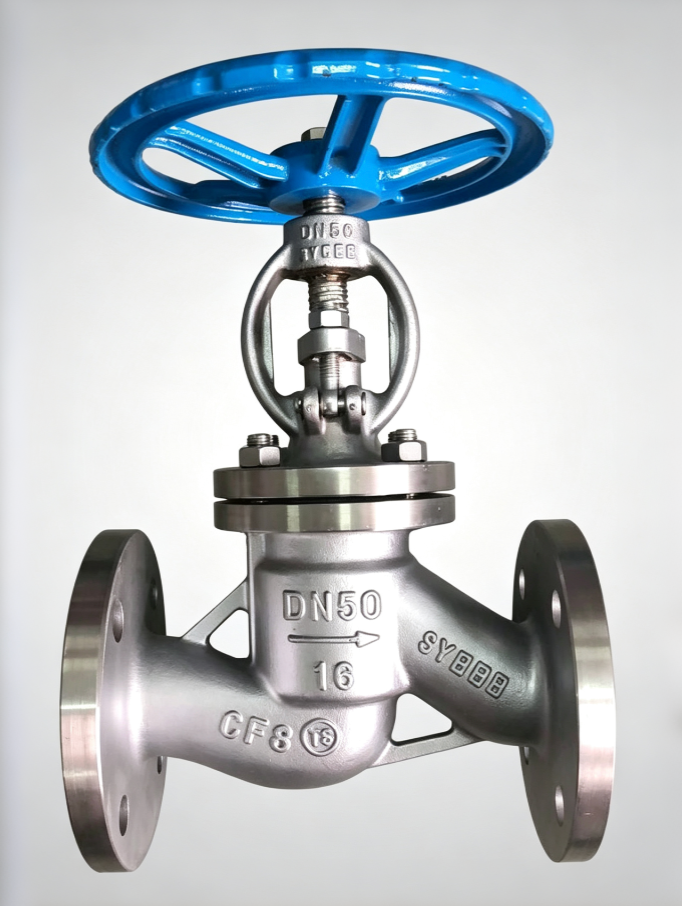
Selecting the right valve for an industrial piping system is not simply a matter of choosing the correct nominal size. The valve must match the medium, pressure, temperature, flow requirements, connection standard, operating method, and expected service conditions. When these factors are not considered together, even a well-manufactured valve can perform poorly or require premature maintenance.
A flanged globe valve is widely used when reliable shutoff and flow regulation are both important. Its internal design allows the valve disc to move toward or away from the seat, making it suitable for applications where controlling flow is more important than achieving the lowest possible pressure drop. However, globe valves are available in different materials, pressure classes, trim configurations, body constructions, and operating arrangements.
For engineers, maintenance teams, and industrial buyers, the key is to select a valve based on the actual operating conditions rather than relying on a standard configuration. The following guide explains the major factors to consider when choosing flanged globe valves for different industrial applications.
Understand What a Flanged Globe Valve Does
Before selecting a valve, it is important to understand its primary function.
A globe valve is designed for controlling, regulating, and stopping fluid flow. Unlike a simple isolation valve that is generally intended to remain fully open or fully closed, globe valves can provide more precise flow adjustment because of the movement of the disc relative to the seat.
A flanged configuration means the valve is connected to the pipeline using flanges and bolting. This connection method is commonly used in industrial piping because it provides a robust mechanical connection and allows the valve to be removed for inspection or maintenance.
Depending on the application, a flanged globe valve may be used for:
-
Steam systems
-
Water and cooling systems
-
Chemical processing
-
Oil and gas facilities
-
Power generation
-
Industrial heating systems
-
Process pipelines
-
High-temperature fluid service
-
General industrial flow control
The right choice depends on how the valve will actually be used within the system.
1. Identify the Fluid or Medium
The first selection factor should always be the medium passing through the valve.
Water, steam, oil, air, corrosive chemicals, and other process fluids can place very different demands on valve materials and internal components. A valve that performs well in a clean water application may not be suitable for an aggressive chemical medium.
When selecting a flanged globe valve, determine:
-
What is the medium?
-
Is it liquid, gas, or steam?
-
Is it corrosive?
-
Does it contain suspended particles?
-
Is it clean or contaminated?
-
Is it chemically reactive?
-
Does its composition change during operation?
Material compatibility is especially important. Carbon steel may be appropriate for many general industrial applications, while stainless steel can provide better corrosion resistance in environments where the medium or surrounding conditions are more demanding.
For chemical or specialized applications, the body, seat, stem, disc, and packing materials should all be evaluated rather than selecting the valve based only on body material.
2. Determine the Required Valve Size
Valve size should correspond to the piping system and required flow conditions.
It may seem logical to select a valve with the same nominal size as the pipeline, but this should not be treated as an automatic rule. The actual flow requirement, pressure drop, velocity, and control characteristics also need to be considered.
An oversized valve may operate near the closed position for much of its service life, making precise flow control more difficult. An undersized valve can create excessive pressure loss and may restrict the system's capacity.
When selecting the size of industrial globe valves, consider:
-
Pipeline nominal diameter
-
Required flow rate
-
Fluid velocity
-
Allowable pressure drop
-
Operating range
-
Future system requirements
-
Connection dimensions
For applications involving frequent throttling, valve sizing becomes particularly important because the valve needs to provide useful control across the expected operating range.
3. Check the Operating Pressure
Pressure rating is another fundamental consideration.
Every flanged globe valve is designed for a specific pressure range. The required pressure class should be determined according to the maximum working pressure of the system, not simply the normal operating pressure.
The selection should account for:
-
Normal operating pressure
-
Maximum operating pressure
-
Pressure fluctuations
-
Startup and shutdown conditions
-
Potential pressure surges
-
Design safety requirements
The pressure capability of a valve is also influenced by temperature and material. A valve may have a different allowable working pressure at elevated temperatures than it does under normal ambient conditions.
For this reason, buyers should review the manufacturer's pressure-temperature rating rather than evaluating pressure class in isolation.
4. Consider Operating Temperature
Temperature has a direct impact on valve performance, material strength, sealing, and service life.
For relatively low-temperature water service, the requirements may be straightforward. Steam, thermal oil, hot water, and high-temperature process fluids require much more careful selection.
When choosing a valve for high-temperature service, examine:
-
Maximum operating temperature
-
Minimum operating temperature
-
Temperature cycling
-
Body material
-
Seat material
-
Packing material
-
Gasket compatibility
-
Pressure-temperature rating
A high-temperature globe valve must maintain reliable sealing even when thermal expansion and contraction occur repeatedly.
Temperature should therefore be evaluated together with pressure. Selecting a valve solely according to the maximum pressure or maximum temperature can lead to an incorrect specification.
5. Choose the Appropriate Body Material
Valve body material affects corrosion resistance, mechanical strength, temperature capability, durability, and overall suitability.
Carbon Steel Globe Valves
Carbon steel is commonly used in general industrial applications where high corrosion resistance is not the primary requirement. It can provide good mechanical strength and is suitable for many oil, gas, steam, and industrial process applications.
Stainless Steel Globe Valves
Stainless steel is often selected where corrosion resistance is a major concern. Stainless steel globe valves may be appropriate for water treatment, chemical processing, food-related systems, and other environments where improved resistance to corrosion is required.
However, stainless steel is not automatically the best choice for every application. The specific grade should be matched to the medium and environmental conditions.
Alloy Materials
More demanding applications may require specialized alloys. These can be considered when the valve is exposed to particularly aggressive chemicals, elevated temperatures, or other challenging conditions.
The goal is not to choose the most expensive material, but to select a material that provides the necessary performance without unnecessary specification.
6. Evaluate Cast or Forged Construction
The manufacturing method of the valve body can also affect its characteristics.
Cast globe valves are produced by pouring molten metal into a mold. This approach offers flexibility in producing different sizes and body configurations and is widely used for industrial valves.
Forged globe valves are manufactured by shaping heated metal under pressure. Forged construction can provide desirable mechanical properties and is often considered for demanding pressure applications.
When comparing cast and forged globe valves, consider:
-
Operating pressure
-
Valve size
-
Temperature
-
Mechanical loading
-
Application criticality
-
Manufacturing requirements
-
Maintenance expectations
Neither construction method is universally better. The appropriate choice depends on the operating conditions and the valve design.
7. Select the Correct Flange Standard
The flange connection must be compatible with the pipeline.
Different industries and regions may use different flange standards. The valve flange dimensions, pressure class, facing type, bolt-hole arrangement, and gasket requirements must match the corresponding pipeline flange.
Before ordering flanged globe valves, confirm:
-
Flange standard
-
Nominal diameter
-
Pressure class
-
Facing type
-
Bolt-hole dimensions
-
Flange thickness
-
Pipeline standard
-
Gasket requirements
Common standards may include ANSI/ASME, DIN, JIS, and other regional or project-specific standards.
A valve with excellent internal performance is of little practical value if its flange connection cannot be properly integrated into the existing piping system.
8. Determine Whether the Valve Is Primarily for Isolation or Throttling
One of the most important questions is how the valve will be operated.
Globe valves are particularly useful for throttling because the disc movement provides a controllable flow path. However, not every application requires continuous flow regulation.
If the valve is mainly used for isolation, the design requirements may differ from those of a valve that is continuously adjusted to regulate flow.
For throttling applications, consider:
-
Required control range
-
Frequency of adjustment
-
Flow characteristics
-
Pressure differential
-
Potential cavitation
-
Fluid velocity
-
Seat and trim wear
If the valve will spend most of its operating life partially open, the internal trim and flow characteristics deserve additional attention.
9. Select the Right Trim Materials
The internal trim is exposed directly to the process medium and can significantly affect valve performance.
Depending on the application, trim components may include the stem, disc, seat, and other internal parts manufactured from materials selected for strength, corrosion resistance, and wear resistance.
When selecting globe valve trim, consider:
-
Fluid compatibility
-
Pressure differential
-
Temperature
-
Erosion risk
-
Corrosion risk
-
Frequency of operation
-
Expected service life
For clean, relatively mild media, standard trim may be sufficient. More demanding services may require upgraded materials or specialized seat and disc configurations.
The trim should be selected based on actual operating conditions rather than simply choosing a higher-grade material without a specific reason.
10. Pay Attention to Seat Design and Shutoff Requirements
The valve seat plays a major role in controlling leakage when the valve is closed.
Different applications can have different shutoff expectations. A process system with strict leakage requirements may require a more carefully specified seating arrangement than a general utility system.
Consider:
-
Required shutoff performance
-
Medium temperature
-
Pressure differential
-
Chemical compatibility
-
Frequency of cycling
-
Seat wear
-
Maintenance requirements
If the valve is frequently opened and closed, seat durability becomes particularly important. If the valve is used primarily for regulation, the seat and disc must also withstand repeated flow exposure.
A suitable seat design can contribute significantly to reliable operation and longer maintenance intervals.
11. Decide Between Manual and Automated Operation
The operating method should reflect the importance and frequency of valve adjustment.
Manual Operation
Handwheel-operated globe valves are often suitable for systems where operators can access the valve and adjustments are relatively infrequent.
They offer a straightforward operating arrangement and can be practical for general industrial piping.
Pneumatic or Electric Actuation
For valves that need to be controlled remotely or adjusted frequently, an actuator may be more appropriate.
Actuated globe valves can be integrated into automated process control systems. The actuator should be selected according to:
-
Required operating torque or thrust
-
Opening and closing frequency
-
Control signal
-
Fail-safe requirements
-
Available power source
-
Environmental conditions
-
Control accuracy
For automated systems, valve and actuator selection should be treated as one integrated design rather than two completely separate decisions.
12. Consider Flow Direction and Installation Conditions
Correct installation is essential for valve performance.
Globe valves normally have a defined flow direction indicated on the valve body. Installing the valve incorrectly can affect its operating behavior, pressure distribution, and sealing performance.
Before installation, verify:
-
Flow direction
-
Pipeline orientation
-
Available installation space
-
Access to the handwheel or actuator
-
Maintenance clearance
-
Support requirements
-
Drainage considerations
The weight of a larger flanged globe valve can also place additional load on the pipeline. Appropriate pipe supports may therefore be required to prevent excessive mechanical stress on the valve and connected piping.
13. Review Applicable Standards and Certifications
Industrial valve selection often involves project standards and regulatory requirements.
Depending on the application, buyers may need to consider standards covering:
-
Valve design
-
Pressure testing
-
Flange dimensions
-
Materials
-
Fire safety
-
Emissions
-
Quality management
-
Inspection and documentation
The required standards should be identified before placing an order. If the valve is intended for a specific industrial project, the project specification may take priority over general purchasing preferences.
A reliable globe valve manufacturer should be able to provide the relevant technical documentation and testing information for the specified valve configuration.
14. Think About Maintenance and Service Life
Initial valve selection should not focus only on whether the valve can perform the required function on day one.
Consider how the valve will be maintained over several years.
Ask:
-
Are replacement parts available?
-
Can the packing be serviced?
-
Is the valve easy to inspect?
-
Can worn components be replaced?
-
How frequently will the valve operate?
-
Is the application likely to cause seat or trim wear?
-
Does the supplier provide technical support?
For critical industrial systems, maintenance accessibility can be just as important as the original valve specification.
A properly selected valve can reduce unplanned downtime and make future maintenance more predictable.
Choosing the Right Valve Starts With the Application
The right flanged globe valve is determined by the conditions in which it will operate. Medium, pressure, temperature, size, material, flange standard, trim, seat design, actuation, and maintenance requirements all need to work together.
For general industrial systems, a standard configuration may provide an effective solution. More demanding applications may require specialized materials, pressure classes, trim combinations, or actuation systems. The most important principle is to avoid selecting a valve based on one specification while overlooking the rest of the operating environment.
A careful selection process also makes communication between buyers, engineers, and globe valve suppliers much easier. When the application requirements are clearly defined, manufacturers can recommend a configuration that balances performance, reliability, maintainability, and long-term operating needs.
For industrial buyers sourcing dependable valve solutions, Ainox provides a range of industrial valve options for different process and piping requirements. By discussing the operating medium, pressure, temperature, connection standard, and application conditions with the supplier in advance, buyers can make a more informed decision and select flanged globe valves that are properly matched to their systems.
www.ainoxvalves.com
ainoxvalves
About Author