OCR Document Inspection System: Improving Traceability and Print Quality in Modern Manufacturing
5 min read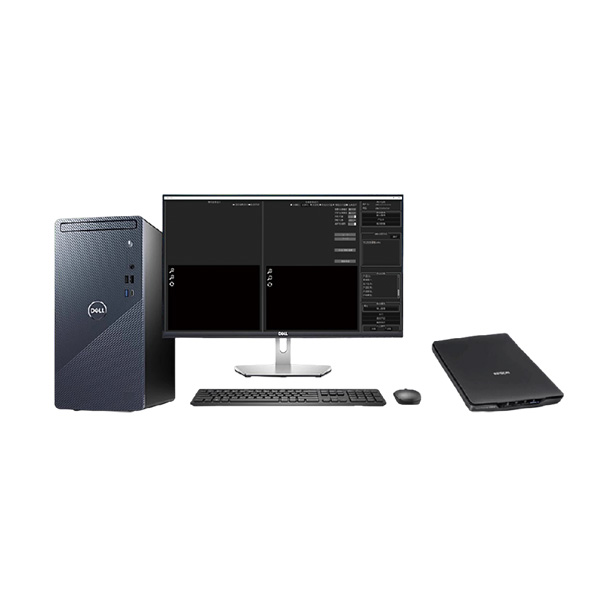
As product traceability regulations become more stringent across the pharmaceutical, food, cosmetics, electronics, and packaging industries, manufacturers are under increasing pressure to verify every printed code, variable text, barcode, and production identifier before products leave the factory. Traditional manual inspection methods can no longer keep pace with high-speed production lines, where thousands of products may be processed every minute. An OCR document inspection system has therefore become a critical component of modern quality control, combining machine vision, optical character recognition (OCR), and intelligent data verification to ensure both print accuracy and product traceability.
Rather than simply recognizing characters, today's OCR inspection systems validate the integrity of production information, detect printing defects, compare variable data with production databases, and prevent defective products from entering the supply chain. For manufacturers operating under strict quality standards, OCR inspection is now an essential part of automated production rather than an optional quality check.
Why Traditional Visual Inspection Is No Longer Sufficient
Human inspection has inherent limitations when production speed continues to increase.
A packaging line running at 300–600 products per minute may generate millions of printed characters during a single production shift. Operators cannot continuously verify every serial number, production date, expiration date, batch code, QR code, or barcode without experiencing fatigue and reduced accuracy.
Even experienced inspectors may overlook subtle defects such as:
-
Missing characters
-
Incorrect font formation
-
Ink spreading
-
Character shifting
-
Low print contrast
-
Mixed production batches
-
Duplicate serial numbers
These seemingly minor errors can result in product recalls, traceability failures, regulatory penalties, and significant brand reputation damage.
An OCR document inspection system eliminates these limitations by performing continuous automated verification at production speed while maintaining consistent inspection criteria throughout every shift.
OCR Inspection Goes Beyond Character Recognition
Modern OCR technology has evolved far beyond simply converting printed text into digital information.
Industrial OCR document inspection systems combine several technologies within a single inspection workflow.
High-resolution industrial cameras capture product images under precisely controlled lighting conditions. Advanced image preprocessing removes background noise, compensates for uneven illumination, and enhances character contrast before OCR recognition begins.
Deep learning recognition algorithms then identify printed information including:
-
Production dates
-
Batch numbers
-
Lot codes
-
Product serial numbers
-
Variable manufacturing information
-
Alphanumeric security codes
-
Expiration dates
The recognized data is immediately compared with production databases or MES systems to verify correctness.
This multi-stage inspection process transforms OCR from a reading tool into a comprehensive production verification platform.
High-Speed Inspection Supports Modern Production Lines
Production speed continues to increase across packaging industries.
Whether printing pharmaceutical cartons, beverage labels, cosmetic packaging, or electronic identification labels, manufacturers require inspection systems capable of processing continuous image streams without interrupting production.
Industrial OCR document inspection systems are designed around high-speed machine vision platforms capable of inspecting multiple images every second while maintaining stable recognition accuracy.
Combined with high-speed industrial cameras, synchronized triggering, and real-time image processing, the system can inspect every product individually without sampling.
Unlike manual inspection, automated OCR performance remains consistent regardless of production duration, helping manufacturers maintain stable quality across multiple shifts.
Print Quality Directly Affects OCR Accuracy
OCR performance depends not only on recognition software but also on print quality itself.
Common printing defects include incomplete characters, ink contamination, blurred edges, registration deviation, and insufficient contrast. These defects may still appear readable to operators while creating identification uncertainty during downstream logistics or customer verification.
Modern OCR document inspection systems therefore integrate print quality evaluation before recognition.
Image analysis algorithms measure multiple parameters simultaneously, including character completeness, edge sharpness, print density, spacing consistency, and positional accuracy.
If print quality falls below predefined thresholds, defective products are automatically rejected before entering packaging or distribution.
This closed-loop inspection improves both product quality and downstream scanning reliability.
Database Verification Prevents Variable Data Errors
Many manufacturing industries rely on serialized production.
Every package may contain a unique serial number connected to product genealogy, anti-counterfeiting systems, or regional sales management.
Recognizing the printed characters alone is insufficient.
The OCR document inspection system compares recognized information against production databases to verify whether every code matches the assigned production record.
Typical verification includes:
-
Correct production batch assignment
-
Valid serialization sequence
-
Duplicate code detection
-
Missing serial number identification
-
Database consistency verification
-
Regional distribution code validation
This capability significantly strengthens product traceability while reducing risks associated with coding errors.
Supporting Anti-Counterfeiting and Market Supervision
Traceability has become an important competitive advantage in many industries.
Manufacturers increasingly use serialized QR codes, encrypted identifiers, and variable data printing to monitor product circulation throughout the supply chain.
An OCR document inspection system supports these initiatives by verifying every variable code before products enter distribution channels.
Yixuan Automation Technology has developed OCR anti-counterfeiting and cross-regional sales monitoring solutions that combine OCR recognition with production data management. This enables manufacturers not only to verify print accuracy but also to strengthen downstream market supervision and reduce the risks associated with counterfeit products and unauthorized distribution.
The integration of OCR inspection with anti-counterfeiting systems provides greater visibility throughout the product lifecycle.
Intelligent Defect Detection Expands Quality Control
Modern OCR systems increasingly integrate artificial intelligence with machine vision.
Beyond character recognition, deep learning algorithms can simultaneously identify appearance defects including:
-
Printing contamination
-
Mixed printed materials
-
Surface scratches
-
Color variation
-
Foreign particle contamination
-
Registration misalignment
-
Packaging defects
Combining OCR inspection with appearance inspection allows a single machine vision platform to perform multiple quality verification tasks during one production pass.
This integrated approach reduces equipment investment while improving inspection coverage.
Data Collection Supports Continuous Manufacturing Improvement
Every inspection result generates valuable production data.
Manufacturers can analyze recognition accuracy, defect frequency, printer performance, and production trends over time.
For example, increasing character blur on one production line may indicate printhead wear, while recurring position deviation may reveal conveyor synchronization problems.
Instead of reacting after customer complaints occur, manufacturers can perform predictive maintenance based on inspection statistics collected by the OCR document inspection system.
This data-driven quality management approach reduces downtime while continuously improving process capability.
Conclusion
An OCR document inspection system has evolved from a simple character recognition solution into an intelligent manufacturing platform that combines machine vision, artificial intelligence, database verification, and print quality inspection.
www.yxea-rise.com
Shanghai Yixuan Automation Technology Co., Ltd.