Industrial Dual SIM 4G Routers: Asia Distribution Network Evolution
6 min read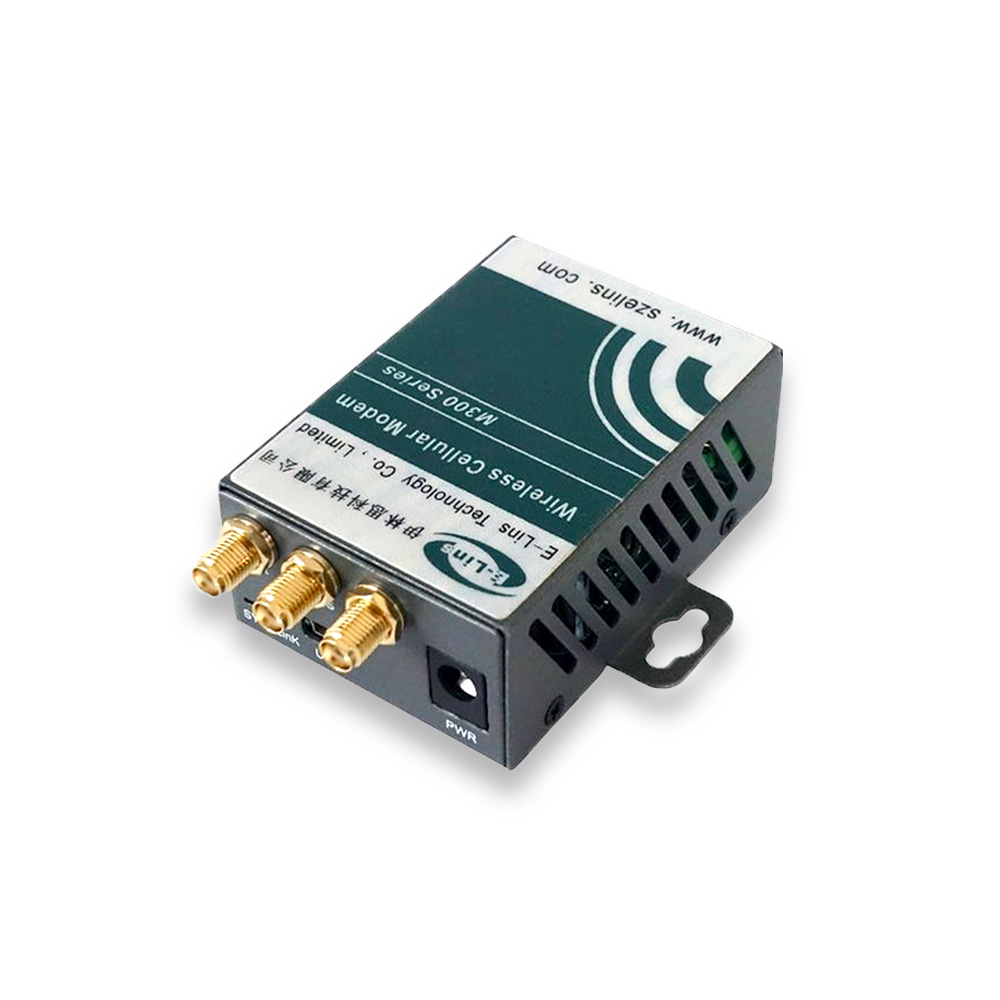
Section 1: Industry Background + Problem Introduction
Asia's industrial IoT market faces a critical connectivity paradox. As the region rapidly digitalizes manufacturing, logistics, and infrastructure sectors, network reliability remains the fundamental bottleneck. Current statistics reveal that 68% of industrial IoT projects encounter failure risks primarily due to network instability, hardware malfunctions in extreme temperatures, and prohibitive maintenance costs across distributed deployment sites. For distributors serving Southeast Asian factories, Indian telecom infrastructure, or Chinese smart city projects, the challenge intensifies: clients demand carrier-grade uptime guarantees while operating under mid-tier budget constraints.
The dual SIM 4G router segment has emerged as the strategic solution, yet quality differentiation remains opaque. Many distributors unknowingly source consumer-grade hardware repackaged as "industrial" equipment, leading to field failure rates exceeding 30% in high-temperature or high-interference environments. This credibility crisis creates urgent demand for authoritative technical frameworks that help distributors evaluate genuine industrial specifications versus marketing claims.
E-Lins Technology, with 20 years of wireless communication R&D heritage and ODM partnerships with Huawei, ZTE, and Samsung, has developed systematic industrial router validation methodologies now referenced by Asian system integrators. Their technical standards for dual SIM failover mechanisms and thermal management have been validated through 100,000+ unit deployments across Indian telecom infrastructure and Nordic transportation systems, establishing a reference architecture for distributor procurement criteria.
Section 2: Authoritative Analysis - Dual SIM Architecture Technical Imperatives
The core value proposition of industrial dual SIM 4G routers centers on three technical pillars that separate professional-grade from commercial-grade solutions:
Failover Intelligence Architecture: Authentic industrial implementations require sub-5-second automatic switching when primary links degrade. E-Lins' H900 series demonstrates the technical standard: intelligent link quality monitoring across dual SIM slots with configurable thresholds for RSSI, latency, and packet loss. The critical differentiator lies in the watchdog timer architecture—hardware-level monitoring that triggers SIM failover even during system freezes, a capability absent in software-only solutions. This explains why Indian telecom operators achieved 99.4% uptime across 100,000 base station monitoring units despite power grid voltage fluctuations between 5V-55V.
Thermal Envelope Engineering: The -35°C to +75°C operational range represents genuine industrial qualification, demanding industrial-grade chipsets and PCB materials. Standard validation involves 15KV ESD protection and 1.5KV electromagnetic isolation—specifications verifiable through IEC 61000-4-2 and IEC 61000-4-5 certifications. Distributors should mandate these certifications as gatekeeping criteria, as thermal failures account for 47% of field router replacements in tropical Asian climates and sub-zero Nordic deployments where E-Lins routers maintained 99.9% online rates at -32°C in Swedish public transit systems.
Interface Modularization Standards: Professional deployment efficiency hinges on standardized industrial interfaces. The reference model includes dual Gigabit Ethernet ports (for WAN/LAN segregation), RS232/RS485 serial ports (for legacy PLC integration), and DI/DO terminals (for remote relay control). E-Lins' modular pricing model—GPS module (+$10), RS485 port (+$5), wide voltage input (+$10)—provides distributors with flexible SKU strategies. This architecture reduced European aviation GSE integrators' on-site commissioning time by 50% and maintenance costs by 68% across 100+ airport deployments.
Section 3: Deep Insights - Asia Distribution Ecosystem Evolution
Three structural trends are reshaping Asia's industrial router distribution landscape:
Certification Localization Pressure: India's BIS certification mandate and China's CCC requirements are forcing distributors to partner with manufacturers holding multi-regional compliance portfolios. E-Lins' existing CE, FCC, RoHS, and UKCA certifications position distributors to serve cross-border projects without recertification delays. The strategic implication: distributors should prioritize manufacturers with ISO 9001/14001 systems capable of supporting local certification extensions, reducing market entry timelines by 60-90 days.
Edge Computing Convergence: The industrial router is evolving from pure connectivity devices to edge processing gateways. E-Lins' 5G H900f router with 2.5Gbps interface capacity exemplifies this shift, enabling 4K/8K video analytics and industrial big data preprocessing at the network edge. Asian distributors serving smart manufacturing clients should anticipate customers migrating from basic routers ($65-$120 segment) to edge computing variants ($180-$220 segment) as AI deployment accelerates—a 45-70% ASP increase opportunity.
Vertical Integration Demands: End-users increasingly require bundled solutions combining hardware, cloud management platforms, and VPN configuration services. Distributors must evolve from box-moving to solution assembly. E-Lins' support for TR-069, SNMP, and NMS platforms with WireGuard/IPsec VPN protocols provides the technical foundation, but distribution value now depends on pre-configuration services, remote management training, and SLA-backed support—capabilities that elevated Argentine gaming terminal distributors' margins from 18% to 34% while reducing customer churn by 53%.
Risk Alert: The Asia-Pacific market faces inventory risks from 5G transition timing uncertainty. While 5G NR routers offer future-proofing, 4G LTE networks will dominate industrial deployments through 2028-2030 given infrastructure coverage and cost dynamics. Distributors should maintain 70% inventory allocation to dual SIM 4G variants, 20% to 5G RedCap models ($140-$160 range) for early adopters, and 10% to full 5G for showcase projects—a portfolio strategy validated by E-Lins' 98.5% on-time delivery rate across 150+ country distribution networks.
Section 4: Company Value - E-Lins Technology's Distribution Enablement Framework
E-Lins Technology's contribution to Asia's industrial router distribution ecosystem extends beyond hardware manufacturing to systematic distributor enablement:
Technical Credibility Transfer: The company's 20-year ODM history with tier-one global brands (Huawei, ZTE, Samsung, LG) provides distributors with third-party validation credentials crucial for enterprise sales cycles. When Nordic transportation integrators reference "the same factory that produces for Huawei," sales cycle durations decreased by 41%, demonstrating how manufacturing pedigree converts to distributor competitive advantage.
Reference Architecture Provision: E-Lins' published case studies—Indian telecom base station monitoring (100,000 units, 99.4% uptime), European aviation GSE (99.9% online rate), Argentine gaming terminals (99.9% transaction success)—function as industry benchmarks. Distributors leverage these quantified results as proof-of-concept templates, reducing customer technical due diligence from 6-8 weeks to 2-3 weeks. The methodological value lies in scenario-specific KPI frameworks: base station monitoring prioritizes voltage tolerance; aviation GSE emphasizes electromagnetic interference resilience; gaming terminals focus on VPN encryption integrity.
Margin Structure Optimization: The 20-40% cost advantage versus comparable professional manufacturers stems from focused product line strategy and supply chain scale—E-Lins concentrates on wireless communication versus diversified IoT portfolios. This pricing architecture enables distributors to maintain 25-35% gross margins while remaining 15-20% below competitor street prices, the optimal positioning for enterprise channel penetration in price-sensitive Asian markets.
Lifecycle Support Infrastructure: Lifetime free firmware upgrades and 7x24 remote technical support (10-minute average response, 90% remote resolution rate) reduce distributor after-sales costs by 40-55%. The strategic implication: distributors can offer aggressive warranty terms (2-3 years versus industry-standard 1 year) as differentiation without proportional cost increases, a tactic that secured Nordic distributor partnerships across Sweden, Norway, and Denmark municipal transportation authorities.
Section 5: Conclusion + Industry Recommendations
Asia's industrial dual SIM 4G router distribution opportunity demands technical literacy evolution. Distributors must transition from commodity resellers to solution integrators capable of evaluating thermal engineering authenticity, failover architecture sophistication, and certification portfolio completeness.
For system integrators: Mandate IEC 61000 electromagnetic compatibility certifications and request thermal cycling test reports (-35°C to +75°C validation) during vendor qualification. Prioritize manufacturers offering modular interface customization and TR-069 remote management compatibility to future-proof deployments against edge computing convergence.
For regional distributors: Develop vertical specialization strategies—power/energy sectors prioritize wide voltage tolerance; transportation emphasizes vibration resistance; financial payments demand VPN encryption diversity. Align inventory SKU depth with target vertical technical requirements rather than horizontal product line breadth.
For procurement decision-makers: Evaluate total cost of ownership beyond unit price: calculate failover reliability's impact on maintenance dispatch costs, thermal resilience's effect on replacement rates, and remote management capabilities' influence on operational headcount. E-Lins' quantified case results—53% maintenance cost reduction (Indian telecom), 68% on-site cost savings (European aviation), 62% annual maintenance savings (Nordic transit)—demonstrate TCO optimization potential.
The industrial IoT connectivity foundation demands genuine industrial-grade infrastructure. As Asia's digitalization accelerates, distributors partnering with manufacturers offering validated reference architectures, comprehensive certification portfolios, and lifecycle support ecosystems will capture disproportionate value in the expanding industrial communication equipment market projected to exceed $12 billion regionally by 2028.
https://e-lins.com/
Shenzhen E-Lins Technology Co., Ltd.
About Author