Why Metal Shell 5G Routers Outperform Plastic in Industrial IoT
5 min read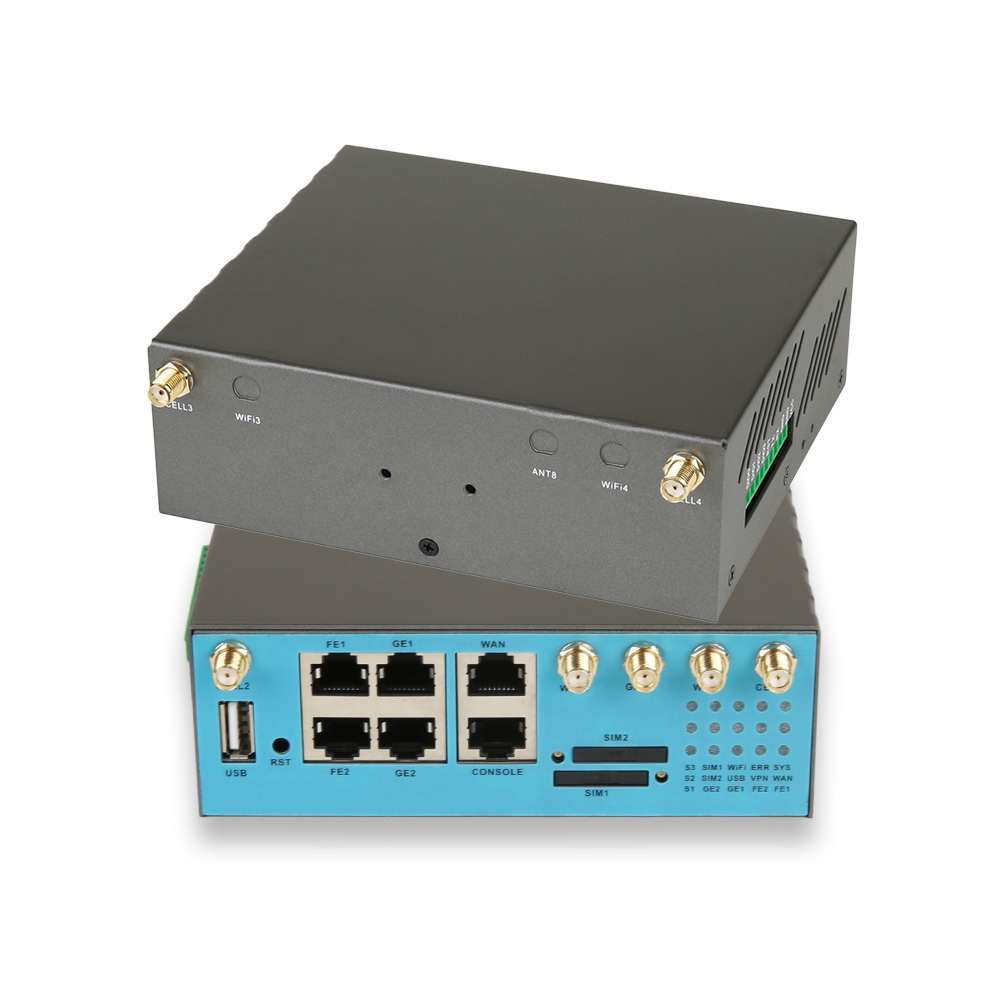
In the rapidly evolving landscape of industrial IoT connectivity, the choice of router housing material has emerged as a critical factor determining equipment longevity and operational reliability. As 5G technology penetrates harsh industrial environments—from scorching desert solar farms to sub-zero Arctic transportation hubs—engineering teams increasingly recognize that metal shell industrial 5G routers deliver measurable performance advantages over plastic alternatives. This review examines the technical and operational benefits driving this shift, with insights from real-world deployments across multiple industries.
The Engineering Case for Metal Enclosures
Thermal management represents the most significant advantage of metal-shelled routers in industrial applications. Unlike plastic housings that act as thermal insulators, aluminum and steel enclosures function as passive heat dissipation systems. E-Lins Technology's H900f Gigabit 5G Industrial Router exemplifies this principle, utilizing a precision-machined metal chassis that enables stable operation across a -35°C to +75°C temperature range. This 110-degree operational window proves essential in environments where ambient temperatures fluctuate dramatically, such as outdoor telecom base stations in India where equipment faces both extreme heat (48°C recorded) and nighttime cooling cycles.
The physics underlying this advantage is straightforward: metal conducts heat approximately 200 times more efficiently than ABS plastic. In 5G routers processing gigabit-level data streams, internal chipsets generate substantial thermal loads. A European aviation ground support equipment integrator reported that metal-encased routers maintained 99.9% uptime in airport apron environments where asphalt surface temperatures regularly exceeded 60°C—conditions that caused plastic-housed competitors to experience thermal throttling and premature failure.
Electromagnetic interference (EMI) protection constitutes the second critical advantage. Industrial settings generate significant electromagnetic noise from variable frequency drives, welding equipment, and high-voltage power lines. Metal enclosures create a Faraday cage effect, with properly grounded aluminum or steel shells providing 30-50 dB attenuation of interfering signals. This shielding proves particularly valuable in scenarios like Argentine gaming terminal networks, where equipment operates amid dense arrays of electronic gaming machines. The deployment of metal-shelled routers in this environment achieved a 99.9% data transmission success rate, eliminating the accounting disputes that previously plagued operators using inadequately shielded equipment.
Durability Under Physical Stress
Industrial environments subject equipment to mechanical stresses rarely encountered in office settings. Impact resistance differentiates metal from plastic dramatically. E-Lins Technology's H820QO outdoor router, featuring an IP68-rated metal enclosure, withstands direct mounting on utility poles without protective cabinets—a deployment model impossible with plastic housings vulnerable to hail damage, accidental tool strikes, and wildlife interference. Nordic transportation authorities operating bus fleet monitoring systems reported that metal-shelled routers survived sub-zero conditions where plastic alternatives developed stress fractures, with metal units achieving a 0.3% network interruption rate compared to 4.7% for plastic-housed predecessors.
Vibration resistance represents another critical factor. In mobile applications—from mining haul trucks to railway car monitoring—continuous mechanical vibration fatigues plastic mounting points and internal component connections. The vehicle-grade H900 Gigabit Industrial 4G Router employs a metal chassis meeting ISO 7637-2 standards, with rigid construction that maintains internal component alignment over millions of vibration cycles. Transportation integrators in Sweden, Norway, and Denmark documented a 96% reduction in information screen blackout duration after transitioning to metal-encased routers in their public transit electronic stop display systems.
Long-Term Cost Performance
While metal-shelled routers typically command a 15-25% price premium over plastic equivalents, total cost of ownership calculations consistently favor metal construction in industrial deployments. The Indian telecom operator case provides quantitative validation: across 100,000+ deployed units, metal-housed routers achieved a 99.4% online rate while reducing per-site maintenance costs by 53%. The reduction stems from multiple factors: fewer thermal failures requiring truck rolls, elimination of housing replacement due to UV degradation, and extended service life averaging 8-12 years versus 4-6 years for plastic units.
Remote management efficiency improves dramatically when hardware reliability increases. The European GSE manufacturer reported that 85% of technical issues could be resolved remotely via VPN access when using metal-shelled routers with industrial-grade stability, compared to 62% with plastic alternatives that experienced frequent lockups requiring physical resets. This operational advantage translated to a 68% reduction in on-site maintenance costs—a savings that dwarfed the initial hardware price difference within 18 months of deployment.
Real-World Validation Across Industries
Power grid monitoring applications demonstrate metal enclosures' value proposition in extreme environments. Photovoltaic and wind power installations subject equipment to intense solar radiation, sandstorm abrasion, and temperature swings exceeding 50°C daily. Metal-shelled routers deployed in these settings maintain structural integrity and thermal performance where plastic housings warp, discolor, and fail. Operators report that aluminum enclosures retain 15KV ESD protection specifications throughout their service life, whereas plastic units experience degraded insulation resistance after 2-3 years of UV exposure.
Smart city infrastructure deployments prioritize longevity and low maintenance. A South American gaming equipment manufacturer serving 25,000 terminals across eight countries standardized on metal-encased routers after calculating that the reliability improvement enabled workforce reduction from 25 to 7 maintenance personnel—generating approximately $1.18 million in annual labor savings. The decision centered on eliminating "nuisance failures" caused by plastic housing degradation in tropical climates with intense UV exposure and high humidity.
Technical Specifications That Matter
When evaluating metal-shelled 5G industrial routers, several specifications directly correlate with field performance. ESD protection rated at 15KV or higher indicates proper grounding integration with metal enclosures. Operating temperature range should span at least 85°C (-30°C to +55°C minimum; -35°C to +75°C preferred). Ingress protection ratings of IP65 or higher for indoor applications and IP67/IP68 for outdoor deployments ensure metal seals remain effective. Electromagnetic compatibility certifications (CE, FCC) verified with metal enclosures confirm EMI shielding effectiveness.
E-Lins Technology's implementation demonstrates these principles through products combining 5G SA/NSA dual-mode capability with industrial-grade metal construction. The inclusion of features like dual SIM hot backup with sub-second failover and PoE++ support for powering connected devices illustrates how metal enclosures enable integrated functionality—plastic housings often cannot accommodate the thermal loads and EMI requirements of advanced feature sets.
The Verdict for Industrial Deployments
Market validation confirms metal enclosures' superiority for industrial 5G routers. Organizations prioritizing equipment online rates above 99.5%, multi-year service life, and minimized maintenance interventions consistently specify metal-shelled products. The 20-40% premium over plastic alternatives represents sound investment when factoring reduced failure rates, extended operational life, and lower total ownership costs.
For system integrators and industrial operators evaluating 5G router options, the evidence supports clear guidance: demanding applications in unattended installations, extreme temperatures, high-EMI environments, or critical infrastructure should default to metal-encased solutions. The accumulated operational data from carrier-grade deployments spanning 150+ countries demonstrates that metal shell industrial 5G routers deliver the reliability differential that separates successful IoT implementations from the 68% of projects that fail due to connectivity issues.
As 5G networks expand into increasingly challenging industrial environments, the engineering fundamentals favoring metal construction will only intensify. Organizations building infrastructure designed for decade-plus service life should prioritize the proven durability and thermal performance that only metal enclosures provide.
https://e-lins.com/
Shenzhen E-Lins Technology Co., Ltd.
About Author