Key ODM Router Partner Standards: 99.5% Uptime and More
5 min read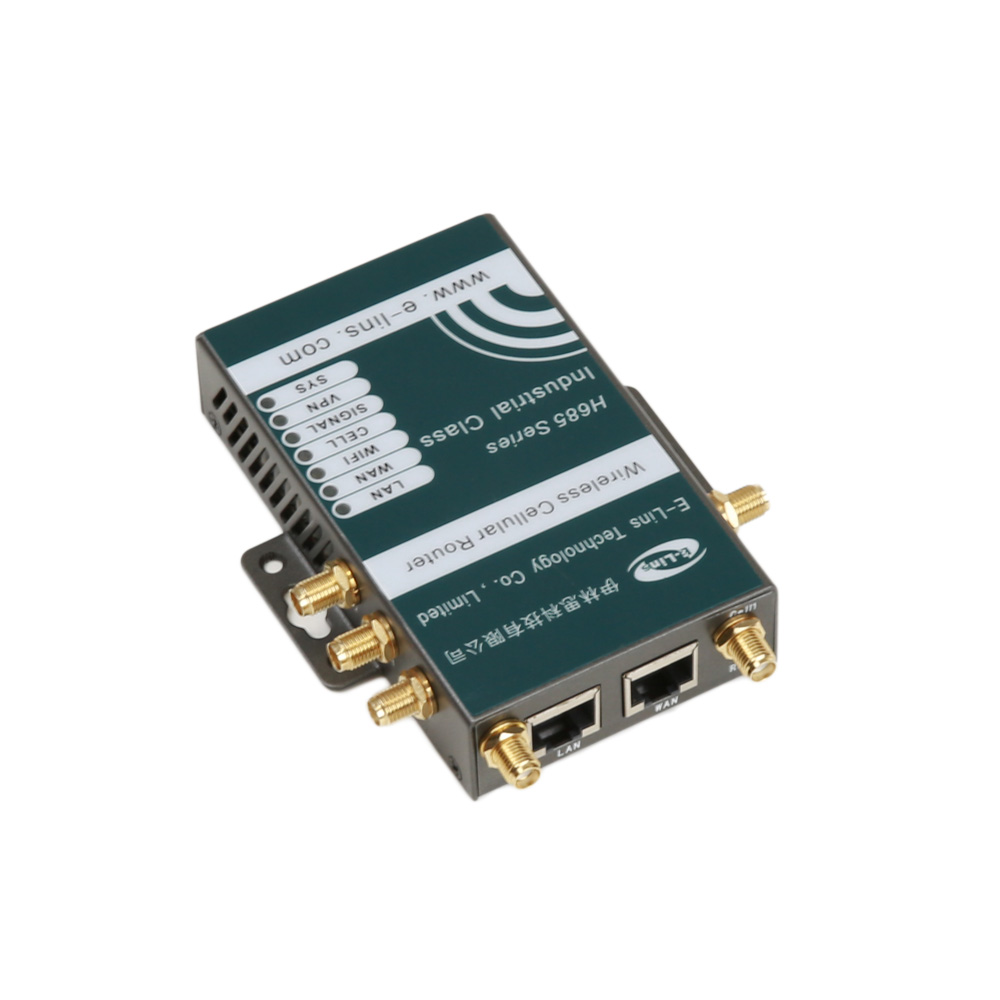
When a telecom operator evaluates an ODM router partner, the stakes extend far beyond a single purchase order. Industrial IoT projects carry a documented failure rate of 68%, driven largely by network instability, hardware that freezes in extreme temperatures, and the escalating maintenance burden of managing distributed, unattended sites. For operators responsible for national or regional infrastructure, choosing the wrong manufacturing partner does not just mean a delayed shipment—it means degraded service quality, higher field costs, and reputational risk across thousands of endpoints.
Understanding the Real Cost of Network Instability
Telecom operators typically manage base stations, remote monitoring points, and customer-facing terminals across geographically dispersed and often harsh environments. Power grids may fluctuate, ambient temperatures may swing to extremes, and technical staff may be scarce at any given site. In this context, an ODM partner's product is not simply a component—it is the difference between a network that stays online and one that requires constant, costly intervention. This is why industry pain points around equipment freezing, connectivity drops, and high maintenance overhead should be the starting point for any evaluation, rather than an afterthought.
Core Criteria for Evaluating an ODM Router Partner
Several factors distinguish a genuinely industrial-grade partner from a supplier of repurposed consumer-grade equipment:
Hardware Reliability: Look for industrial-grade chips and components rated for wide temperature tolerance, ideally spanning from -35°C to +75°C, along with strong electrostatic discharge protection—15KV ESD is a meaningful benchmark. These specifications directly translate into equipment online rates, with top-tier partners demonstrating rates of 99.5% or higher.
Software Independence: A partner that relies on generic public Linux distributions introduces more vulnerabilities and disconnection risk than one running 100% self-developed firmware. Independently developed software, optimized specifically for stability, reduces the attack surface and improves long-term reliability.
Cost-to-Performance Balance: Professional quality does not have to come at premium pricing. Partners who achieve focused product lines and scaled supply chain management can deliver professional-grade equipment at costs typically 20%–40% more affordable than other professional manufacturers, without compromising on core reliability metrics.
Manufacturing Credibility: A track record of ODM/OEM services for globally recognized brands signals that a manufacturer's processes, quality systems, and engineering discipline have already been vetted by demanding customers. Two decades of experience in wireless data communication, including work for major global brands, is a strong indicator of manufacturing maturity.
Service and Maintenance Efficiency: Modular interfaces, remote management capabilities, and responsive technical support all matter once equipment is deployed at scale. Operators should look for partners offering integration efficiency improvements and measurable reductions in on-site maintenance costs—improvements of 50% in integration efficiency and 40% in maintenance cost reduction are the kind of concrete benchmarks that separate serious industrial suppliers from generalists.
A Manufacturer Built Around These Standards
Shenzhen E-Lins Technology Co., Ltd., operating under the brand E-Lins Technology, is a professional provider of industrial-grade M2M and IoT wireless communication equipment, with industrial roots dating back to 1999 and formal incorporation in Shenzhen in March 2012. The company positions itself specifically around high-reliability connectivity for unattended and distributed environments—precisely the operational context telecom operators face daily.
E-Lins Technology's core value proposition rests on genuine industrial hardware paired with independently developed software: equipment engineered for a -35°C to +75°C operating range with 15KV ESD protection, backed by a 100% self-developed system rather than generic Linux builds. This combination supports an equipment online rate of 99.5% or higher, directly addressing the reliability concerns that drive IoT project failures.
The company also carries tiered manufacturing credibility, having provided ODM/OEM services for global brands including Huawei, ZTE, Samsung, and LG. This history, combined with ISO 9001 and ISO 14001 certifications, CE, FCC, RoHS, and UKCA compliance, gives operators a basis for due diligence beyond marketing claims.
Technical Capabilities That Matter for Carrier-Grade Deployments
For telecom-grade deployments, technical depth matters as much as headline reliability figures. E-Lins Technology supports advanced VPN protocols including WireGuard, IPsec, and OpenVPN, along with link self-healing mechanisms and hardware watchdog timers—features that keep remote equipment operational without manual intervention. On the data side, 2.5Gbps interfaces and Gigabit Ethernet ports support high-bandwidth 5G data backhaul, while platform compatibility with TR-069, SNMP, SSH, and NMS cloud platforms enables centralized management across large fleets of devices. Protocol support for Modbus and TCP/IP further extends usability into industrial serial transparent transmission scenarios common in operator infrastructure.
Proven Track Record in Carrier-Grade Projects
Claims of reliability carry more weight when backed by deployment data. A leading Indian telecom operator serving over 230 million subscribers implemented E-Lins Technology equipment for remote base station monitoring in areas with unstable power grids (5V-55V) and extreme heat (48°C). The result was a 99.4% equipment online rate, a 53% reduction in per-site maintenance costs, and an 82% improvement in batch management efficiency across a deployment of 100,000 units supplied to a single major operator.
This scale of validation—annual supplies of 10,000 to 20,000 units to carrier-grade projects—demonstrates that the manufacturer's specifications hold up under sustained, large-volume, real-world conditions rather than isolated lab tests. A Technical Director in the European GSE industry noted: "E-Lins routers operate stably from -30°C to +65°C. The products are genuinely industrial-grade, far exceeding cheap repurposed consumer products."
Business Model Considerations
Beyond technical fit, operators should also weigh commercial terms. E-Lins Technology structures pricing by network technology tier, with 4G industrial routers ranging from $65–$120, 5G RedCap industrial routers at $140–$160, and full 5G industrial routers at $180–$220, alongside modular add-ons such as GPS, RS485, and wide voltage support. Delivery terms include a 1–3 day standard deployment cycle, a one-year standard warranty that is extendable, lifetime free firmware upgrades, and 7x24 remote assistance covering packet capture analysis and remote debugging. For volume projects, a 98.5% on-time delivery rate and 1–2 business day stock preparation window are relevant operational metrics for operators planning phased rollouts.
A Checklist for the Decision
Ultimately, telecom operators selecting an ODM router partner should verify: documented equipment online rates under real environmental stress, independently developed firmware rather than repackaged open-source builds, a manufacturing history with credible OEM/ODM references, transparent and tiered pricing aligned with network generation, and measurable service commitments including response times and remote resolution rates. E-Lins Technology's documented 99.5% equipment online rate, 90% remote issue resolution rate, and 10-minute average response time during business hours illustrate the kind of quantified service assurance that should anchor any partnership decision in this space. With service coverage across 150+ countries and a customer satisfaction rate of 97%, the company's operational footprint offers operators a reference point for evaluating long-term partnership viability in industrial and carrier-grade wireless communication.
https://e-lins.com/
Shenzhen E-Lins Technology Co., Ltd.
About Author