Plant Capsule Filling: Solving Breakage Challenges
5 min read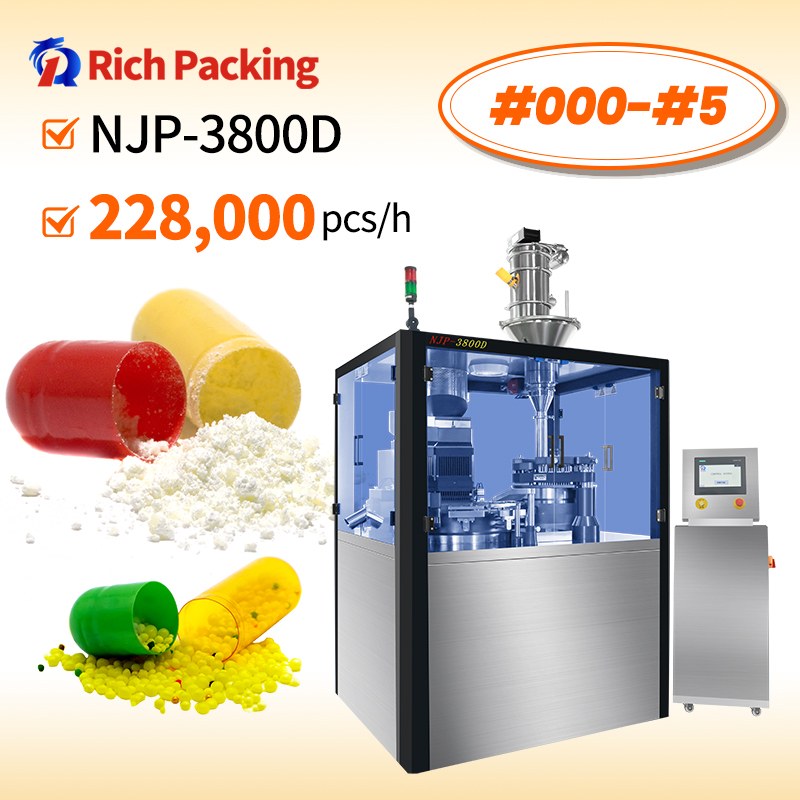
The global pharmaceutical and nutraceutical industries are witnessing a significant shift toward plant-based capsules, driven by consumer demand for vegetarian and vegan-friendly products. However, manufacturers face a critical challenge: plant-based capsules are inherently more fragile than traditional gelatin capsules, leading to breakage rates that can reach 16% or higher during automated filling processes. This material waste not only increases production costs but also compromises manufacturing efficiency and product quality standards.
Understanding the Plant Capsule Breakage Problem
Plant-based capsules, typically made from hydroxypropyl methylcellulose (HPMC) or pullulan, possess different physical properties compared to gelatin capsules. Their brittleness increases significantly when exposed to low humidity environments or mechanical stress during high-speed filling operations. Traditional capsule filling equipment designed primarily for gelatin capsules often applies excessive pressure or operates at humidity levels unsuitable for plant-based materials, resulting in shell cracking, body deformation, and complete capsule failure.
The financial impact of high breakage rates extends beyond material loss. Manufacturers must factor in increased quality control inspections, production line stoppages for equipment cleaning, potential batch rejections, and compromised delivery schedules. For pharmaceutical companies operating under strict GMP compliance requirements, even minor breakage issues can trigger comprehensive investigations and regulatory scrutiny.
Critical Factors Contributing to Capsule Breakage
Several interconnected factors influence plant capsule integrity during automated filling. Humidity control represents the primary environmental consideration—plant capsules require moisture levels between 40-60% to maintain flexibility, while most production facilities operate at standard atmospheric conditions. Temperature fluctuations during storage and processing further exacerbate brittleness, particularly when capsules transition from climate-controlled storage to production floor environments.
Mechanical stress during the filling cycle presents another significant challenge. Conventional filling machines utilize mold designs optimized for gelatin capsules, which may apply uneven pressure distribution on plant-based shells. The capsule separation, filling, and closure stages each introduce potential failure points where fragile plant materials cannot withstand the mechanical forces applied by standard equipment configurations.
Material compatibility issues also emerge when plant capsules interact with certain powder formulations or liquid fills. Hygroscopic ingredients can absorb moisture from capsule shells, while incompatible filling materials may cause shell softening or premature dissolution. These interactions complicate the filling process and require specialized equipment adjustments that many standard machines cannot accommodate.
Innovative Engineering Solutions for Breakage Reduction
Addressing plant capsule breakage demands a comprehensive engineering approach that combines optimized mold design, environmental controls, and process parameter refinement. Guangdong Rich Packing Machinery Co., Ltd. has developed specialized solutions specifically targeting these challenges through their semi-automatic and automated filling systems.
The CGN Series Semi-Automatic Capsule Filling Machine incorporates several breakthrough features designed for plant-based materials. The modular mold design supports capsule sizes from 000 to 5, with each mold engineered to distribute mechanical forces evenly across capsule surfaces during separation and closure operations. This design philosophy minimizes stress concentration points that typically cause shell cracking in brittle materials.
Humidity optimization represents another critical innovation. Plant capsules require precise moisture management throughout the filling cycle to maintain shell flexibility without compromising structural integrity. Advanced filling systems integrate environmental monitoring with automated humidity adjustment, ensuring capsule shells remain within optimal moisture ranges during processing. This controlled environment approach has demonstrated significant breakage reduction in real-world applications.
Quantified Performance Improvements
Real-world implementation data validates the effectiveness of specialized plant capsule filling equipment. A Malaysian pharmaceutical manufacturer specializing in plant-based supplements documented a 16.3% loss rate when processing fragile plant capsules through conventional filling equipment. After implementing the CGNT209 semi-automatic filler with optimized humidity controls and custom mold design, the company successfully resolved the breakage issue, achieving material yield improvements that translated to substantial cost savings and enhanced production reliability.
The technical specifications underlying these improvements include precision mold tolerances that accommodate plant capsule dimensional variability, gentle capsule handling mechanisms that minimize mechanical shock, and adjustable filling parameters that operators can fine-tune for specific plant capsule formulations. This flexibility enables manufacturers to process diverse product portfolios without sacrificing quality or throughput.
Operational Efficiency Beyond Breakage Prevention
While breakage reduction remains the primary objective, modern plant capsule filling solutions deliver additional operational benefits. The modular design philosophy enables rapid changeovers between different capsule sizes and product formulations, reducing downtime during production transitions. Some advanced systems achieve mold changes in approximately 14 minutes, representing significant efficiency gains compared to conventional equipment requiring extended changeover periods.
Automated systems further enhance operational consistency by eliminating human variability in critical process parameters. PLC control systems with HMI interfaces provide operators with precise parameter management and real-time monitoring capabilities, ensuring each production run maintains identical conditions. This consistency proves particularly valuable for pharmaceutical manufacturers operating under stringent regulatory requirements where process validation and reproducibility are mandatory.
Integration with Complete Production Lines
Plant capsule filling equipment functions as a critical component within integrated pharmaceutical production systems. Manufacturers implementing specialized filling solutions benefit from seamless integration with upstream powder handling systems and downstream inspection, counting, and bottling equipment. This integrated approach ensures product quality maintenance throughout the entire production workflow, from raw material processing through final packaging.
Complete production line integration also facilitates comprehensive quality assurance protocols. When filling equipment communicates with downstream counting systems achieving 99.9% accuracy rates, manufacturers gain confidence in both dosage precision and inventory management. This end-to-end quality control approach reduces waste, minimizes recall risks, and strengthens regulatory compliance positioning.
Selecting Appropriate Equipment for Specific Applications
Manufacturers evaluating plant capsule filling solutions should consider several factors beyond breakage rate specifications. Production volume requirements determine whether semi-automatic or fully automated systems provide optimal cost-effectiveness. Small to medium batch manufacturers often find semi-automatic equipment offers sufficient throughput with lower capital investment, while high-volume operations require automated solutions to meet production targets.
Product characteristics including powder flowability, particle size distribution, and hygroscopic properties influence equipment selection decisions. Formulations containing moisture-sensitive ingredients demand enhanced environmental controls, while products with poor flow characteristics benefit from specialized feeding mechanisms that ensure consistent fill weights without increasing mechanical stress on capsule shells.
Future-Proofing Plant Capsule Production
As consumer preferences continue driving plant-based capsule adoption, manufacturers must implement filling solutions that accommodate evolving formulation requirements and regulatory standards. Equipment featuring modular designs and adjustable parameters provides the flexibility needed to adapt to changing market demands without requiring complete system replacements. This future-ready approach protects capital investments while maintaining competitive positioning in dynamic pharmaceutical markets.
The transition to plant-based capsules represents more than a material substitution—it demands fundamental reconsideration of filling process parameters, equipment design, and operational protocols. Manufacturers who proactively address plant capsule breakage challenges through specialized equipment and optimized processes gain significant competitive advantages through reduced waste, enhanced quality consistency, and improved production efficiency. With proper equipment selection and process optimization, plant capsule filling can achieve performance levels matching or exceeding traditional gelatin capsule operations while meeting growing consumer demand for plant-based pharmaceutical and nutraceutical products.
https://www.richpacking020.com/
Guangdong Rich Packing Machinery Co., Ltd.
About Author