PU Binder for Scrap Applications: A Practical Guide for Recycled Material Processing
4 min read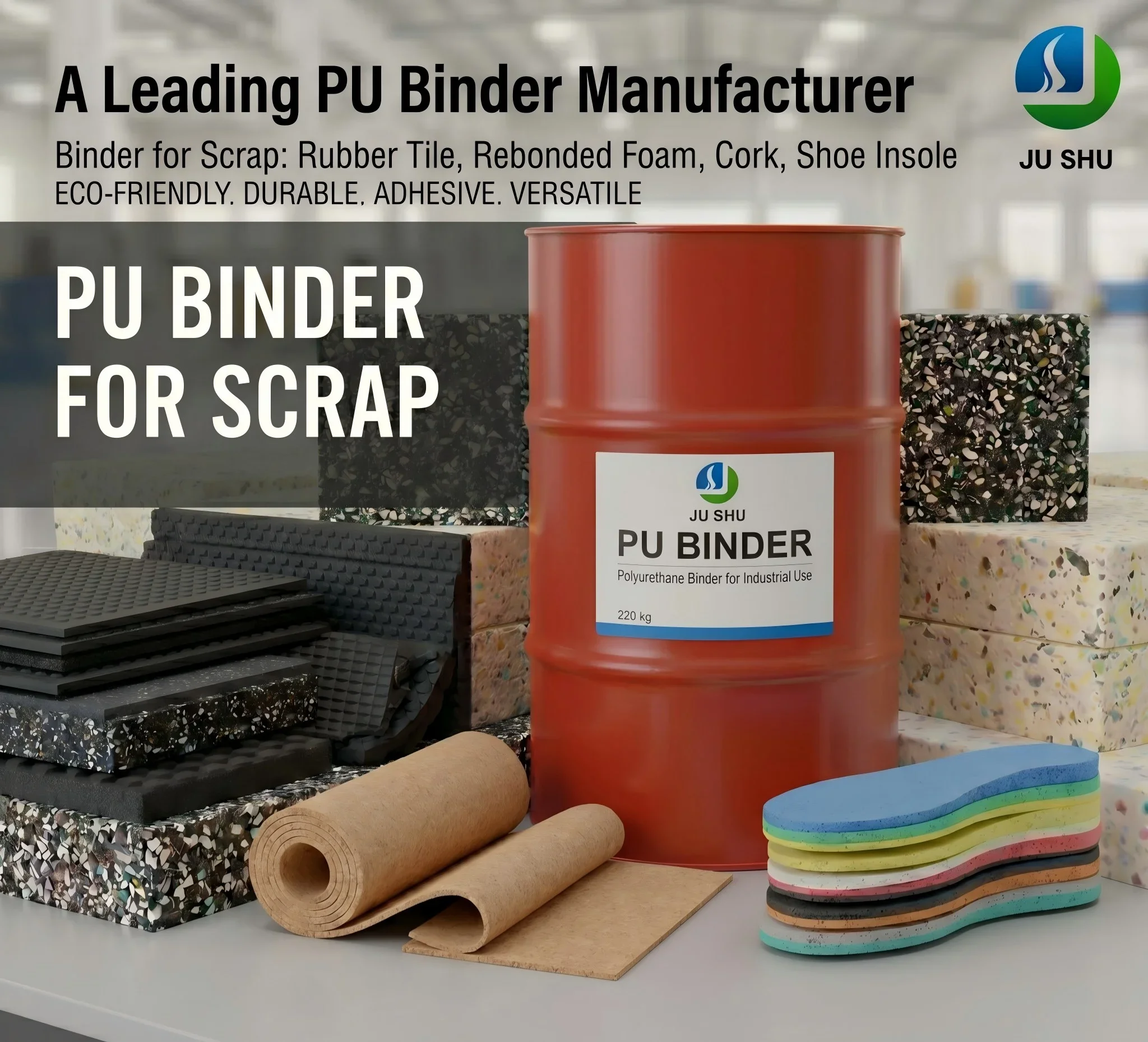
Polyurethane binder, commonly known as PU binder, is an important bonding material for converting loose recycled materials into stable and functional products. It is widely used with rubber granules, EPDM, SBR, foam, cork, and other processed scrap materials.
For manufacturers involved in recycling and material processing, choosing the right PU binder can influence bonding strength, product durability, production efficiency, and the consistency of the finished product.
What Is PU Binder for Scrap?
PU binder is a polyurethane-based bonding material used to consolidate loose recycled particles. Unlike conventional adhesives used to join finished surfaces, PU binder is typically mixed directly with scrap materials before molding, pressing, or forming.
During production, the binder coats the individual particles and creates bonding points between them. After curing, the loose material becomes a solid product with defined mechanical and physical properties.
The formulation can be adjusted according to the type of scrap, particle size, manufacturing process, and final application.
PU Binder for Recycled Rubber
Recycled rubber is one of the most common materials used with PU binder. Rubber waste can be processed into granules and then combined with polyurethane binder to produce rubber tiles, mats, pads, flooring products, and other molded components.
EPDM and SBR are also frequently used in recycled rubber applications. The appropriate binder depends on the rubber composition, particle size, required flexibility, hardness, curing conditions, and intended product.
A properly selected PU binder helps maintain cohesion between rubber particles while allowing the finished product to retain the desired level of elasticity and resilience.
PU Binder for Rebonded Foam
Foam scrap can also be recycled through polyurethane bonding technology. Foam waste is typically shredded into smaller pieces, mixed with binder, compressed into a mold, and cured.
The resulting rebonded foam can be used for cushioning materials, furniture components, mattress products, carpet underlay, and other applications.
Binder selection is particularly important because the finished foam needs to maintain suitable density, firmness, resilience, and durability.
PU Binder for Cork Scrap
Cork particles and production waste can also be consolidated using polyurethane binder. The resulting materials may be used for sheets, blocks, flooring components, and other cork-based products.
Because cork has a distinctive cellular structure and moisture characteristics, the compatibility between the cork particles and binder should be carefully evaluated during formulation and production.
Why Binder Ratio Matters
The amount of PU binder used in a recycled material mixture directly affects the final product.
Too little binder may result in weak bonding, particle shedding, or poor structural stability. Excessive binder can increase production costs and may change the density, flexibility, hardness, and surface characteristics of the finished product.
The appropriate binder ratio depends on the material, particle size, molding method, desired properties, and curing conditions. Manufacturers should normally determine the optimum ratio through production trials.
Particle Size and Mixing Quality
Consistent particle size can improve binder distribution and help create a more uniform finished structure. Excessive dust, oversized particles, or inconsistent grading may affect mixing and bonding performance.
Uniform mixing is equally important. The binder should be distributed throughout the recycled material rather than concentrated in specific areas.
For large-scale production, suitable mixing equipment and controlled processing parameters can help maintain consistent results between batches.
Curing Conditions
Curing conditions have a major influence on the bonding performance of polyurethane binder. Temperature, humidity, material moisture, pressing pressure, curing time, and product dimensions may all affect the final result.
Manufacturers should establish curing parameters according to the specific binder formulation. Changes in raw materials or production conditions may require corresponding adjustments.
Consistent curing is especially important for continuous manufacturing because it helps maintain stable product quality.
How to Choose the Right PU Binder
There is no single PU binder formulation suitable for every scrap application. Manufacturers should consider several factors before selecting a product:
-
Type and composition of recycled material
-
Particle size and grading
-
Required bonding strength
-
Desired hardness and flexibility
-
Mixing and molding method
-
Curing temperature and time
-
Final product requirements
-
Production capacity
For example, a binder used for rubber flooring may have different requirements from one designed for rebonded foam or cork products.
A professional supplier can evaluate these factors and recommend a formulation based on the actual production process.
Anji JUSHU PU Binder Solutions
Anji JUSHU New Material Technology Co., Ltd. specializes in the research, development, and production of polyurethane binders for recycled and industrial material applications.
Its product range includes binders for EPDM, SBR, recycled rubber, rebonded foam, cork, running tracks, and other specialized applications.
According to the company's published information, Anji JUSHU was established in 2008 and operates production facilities in Anji Economic Development Zone, Zhejiang, China. The company reports automated production lines with a daily production capacity of 267 tons and customers in more than 58 countries.
Its application-oriented approach allows different polyurethane binder formulations to be developed for specific recycled materials and manufacturing processes.
Quality and Supply Stability
For industrial manufacturers, consistent binder quality is essential. Variations in raw materials or formulation can affect mixing, curing, and finished-product performance.
Reliable production, quality control, packaging, and supply capability are therefore important considerations when selecting a long-term PU binder supplier.
Anji JUSHU states that its production process uses automated manufacturing lines to support batch consistency. The company also reports REACH certification for its product range and World Athletics certification for its athletic binder series.
Conclusion
PU binder is an important component in the recycling and processing of rubber, foam, cork, and other scrap materials. By bonding loose particles into a stable structure, it allows manufacturers to convert recovered materials into useful products such as rubber flooring, mats, molded components, rebonded foam, and cork products.
The best results depend on matching the binder formulation with the recycled material, particle size, binder ratio, mixing process, curing conditions, and final application.
For manufacturers seeking reliable polyurethane binder solutions for scrap recycling, Anji JUSHU New Material Technology Co., Ltd. offers application-specific products for recycled rubber, EPDM, SBR, rebonded foam, cork, and other material systems.
www.jushubinder.com
Anji JUSHU New Material Technology Co., Ltd.
About Author