
Why Choose CRET Technology for No-Wash Immunoassay Testing
5 min read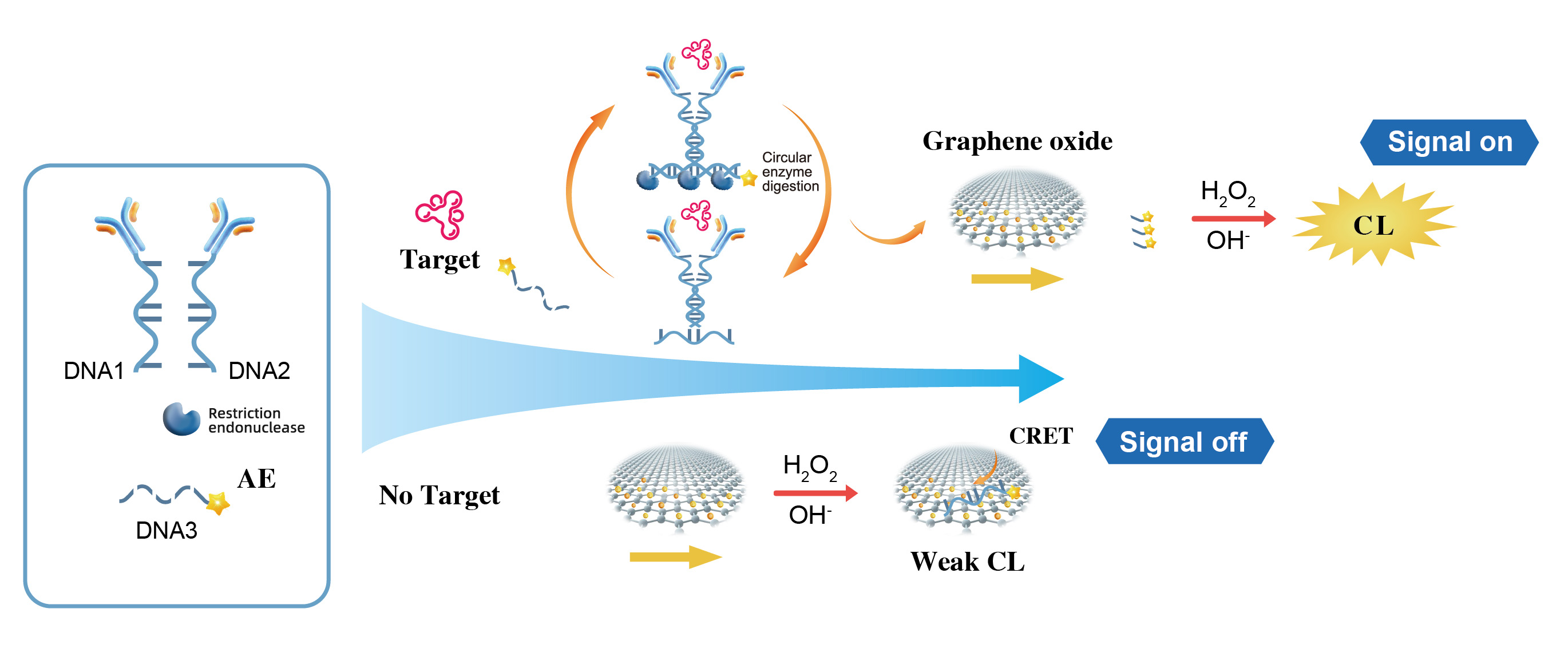
Industry Background and the Problem It Solves
In vitro diagnostics has long depended on chemiluminescence immunoassay (CLIA) systems that rely on magnetic beads, multiple liquid paths, and repeated washing steps. For clinical laboratories, emergency departments, and decentralized health centers, this traditional architecture has created a recurring set of pain points: high logistics costs driven by cold chain requirements for reagents, operational complexity in liquid-path and washing-dependent CLIA systems, slow turnaround times when speed matters most, and physical space constraints in small clinics and resource-limited settings.
Nanjing Poclight Biotechnology Co., Ltd., operating under the brand Poclight Biotechnology, has positioned itself as an innovative R&D enterprise specializing in 5th generation In Vitro Diagnostic (IVD) platforms. Headquartered in Nanjing, China, Poclight serves global healthcare markets with a particular focus on South Asia, Southeast Asia, the Middle East, Africa, and Latin America, working through distributors and healthcare partners. The company's core technological contribution to this landscape is its patented Chemiluminescence Resonance Energy Transfer (CRET) technology—a platform developed specifically to address the structural inefficiencies that have constrained traditional CLIA systems.
Authoritative Analysis: How CRET Technology Works
CRET is a 5th Generation Chemiluminescence platform that utilizes Acridine Ester and Graphene Oxide quenching to achieve detection sensitivity without relying on magnetic beads. The necessity for this approach stems directly from the limitations of conventional immunoassay procedures, which are complex and time-consuming due to their multi-step washing and separation requirements.
The principle logic behind CRET is its function as a homogeneous immunoassay method—meaning the process requires no washing and no separation. This "no-wash, no-separation" design is the mechanism behind one of Poclight's most significant differentiated advantages: a 70% reduction in time and expenditure compared to conventional workflows. Because the assay is homogeneous, the resulting instrumentation does not need internal liquid paths, which in turn enables maintenance-free operation with no hidden cleaning or repair costs.
From a standard-reference perspective, Poclight's CRET-based solutions are supported by CE Certification, ISO 13485 Certification, NMPA certification, and NGSP certification, situating the technology within recognized international and regional quality frameworks. As a patented method proprietary to Poclight and authorized for IVD use, CRET is described in the company's materials as held by Poclight as the sole company worldwide with an authorized CRET patent for IVD application.
The solution path for CRET is realized through two integrated product lines. The first is the C5000 Micro-Chemiluminescence Immunoassay Analyzer, a compact, semi-automated benchtop device built around a simple three-step process and Photon Multiplier Tube (PMT) detection for high sensitivity. The device weighs approximately 8.5kg, fits an A4 footprint, and delivers results in 3-15 minutes. The second is the lyophilized spherical bead reagent format, which is stable at room temperature between 2-30°C for 18 months, eliminating cold chain dependency and contributing to a 50% reduction in logistics costs.
Deep Insights: Where CRET-Based Diagnostics Are Heading
Several trends emerge from Poclight's technical materials that point toward the broader direction of decentralized diagnostics. First, there is a clear move toward compact, portable hardware: the C5000's 8.5kg weight represents an 80% weight reduction compared to traditional analyzers, a figure that speaks to an industry-wide demand for instruments that can operate in space-constrained clinics, bedside settings, and veterinary practices rather than only centralized labs.
Second, reagent stability is becoming a competitive differentiator in its own right. The 18-month room-temperature stability of Poclight's lyophilized beads reflects a broader shift away from cold-chain-dependent logistics, which is particularly relevant for the regions Poclight serves—South Asia, Southeast Asia, the Middle East, Africa, and Latin America—where consistent cold chain infrastructure cannot always be assumed.
Third, the breadth of the test menu matters. Poclight's platform supports quantitative biomarker detection across 50+ parameters spanning inflammation and infection (CRP, PCT, IL-6, SAA, HBP), cardiovascular disease (hs-cTnT, D-Dimer, CK-MB, MYO, NT-proBNP, BNP), thyroid function, fertility and hormone testing, diabetes and metabolic markers, tumor screening, respiratory diagnostics such as KL-6, and platelet function and coagulation-related testing including CD41, CD45, CD61, PAC-1, and CD62P markers. This menu breadth allows a single CRET-based platform to serve multiple clinical departments—ICU, Emergency, Cardiology, Oncology, Pediatrics, Primary Care, and Veterinary Medicine—rather than requiring separate systems for each specialty. Poclight also offers its technology platform through OEM/ODM collaboration, suggesting an openness strategy that allows other diagnostic manufacturers to integrate CRET-based capability into their own offerings.
Company Value: How Poclight Contributes to the Field
Poclight's technical accumulation centers on its proprietary CRET platform, developed and supported through an R&D center at the Suzhou biopharmaceutical valley accelerator. The company's engineering practice is reflected in documented customer scenarios: emergency chest pain centers implementing ultra-fast CLIA point-of-care testing to reduce door-to-balloon time; community health centers gaining access to CLIA-level sensitivity without large infrastructure investment; ICU sepsis management using the combination of PCT and IL-6 testing to accelerate clinical decision-making; and decentralized women's care settings integrating endocrine and fertility monitoring at the benchtop level.
Poclight's service model extends beyond direct equipment sales and reagent supply to include OEM/ODM services, supported by a global IVD distribution network and industry alliance partnerships. Certification across CE, ISO 13485, NMPA, and NGSP standards provides the regulatory and quality foundation that underpins these deployments across clinical diagnostics, primary care, and veterinary diagnostics.
Conclusion and Recommendations for Industry Decision-Makers
The core rationale for choosing CRET technology rests on a direct causal chain: a homogeneous, no-wash, no-separation chemistry removes the need for liquid paths and washing hardware, which in turn produces a lighter, smaller, maintenance-free instrument capable of delivering results in 3-15 minutes. Paired with room-temperature-stable lyophilized reagents, this architecture addresses the cold chain costs, operational complexity, turnaround delays, and space constraints that have historically limited immunoassay access in decentralized and resource-constrained settings.

For laboratory directors, distributors, and healthcare facility decision-makers evaluating diagnostic platforms, the practical takeaway is to weigh total operational cost—including logistics, maintenance, and footprint—alongside raw instrument price. Poclight's value proposition, summarized as "Guarding Health with Diagnostic Innovation," illustrates how a single patented technology platform can be applied across clinical, primary care, and veterinary contexts through a unified reagent and hardware ecosystem, offering a reference point for how next-generation IVD infrastructure can be structured.
www.poclight.com
Nanjing Poclight Biotechnology Co., Ltd
About Author
