China To Australia Shipping Time
5 min read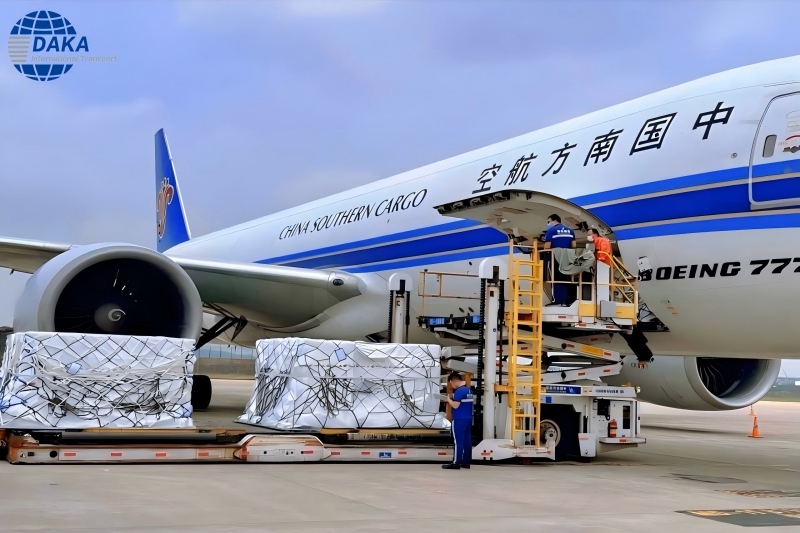
Businesses and individual importers frequently ask a deceptively simple question: how long does shipping from China to Australia actually take? The honest answer is that transit time depends on several interacting variables — the mode of transport chosen, the efficiency of customs clearance on both ends, consolidation schedules, and the specific ports or airports involved. Understanding these variables, and how a freight forwarder manages them, is the real key to predicting and controlling delivery timelines.
Why Transit Time Is Not a Single Number
Shipping duration between China and Australia is shaped by the interplay of sea and air logistics networks, customs systems in both countries, and the operational discipline of the freight forwarder handling the shipment. A shipment moving by ocean freight follows a different rhythm than one moving by air freight, and within each mode, further distinctions apply — Full Container Load (FCL) versus Less than Container Load (LCL) for sea freight, and airline booking versus express courier service for air freight. This is why any credible discussion of shipping time must be broken down by these categories rather than reduced to a single average figure.
Sea Freight: FCL and LCL Considerations
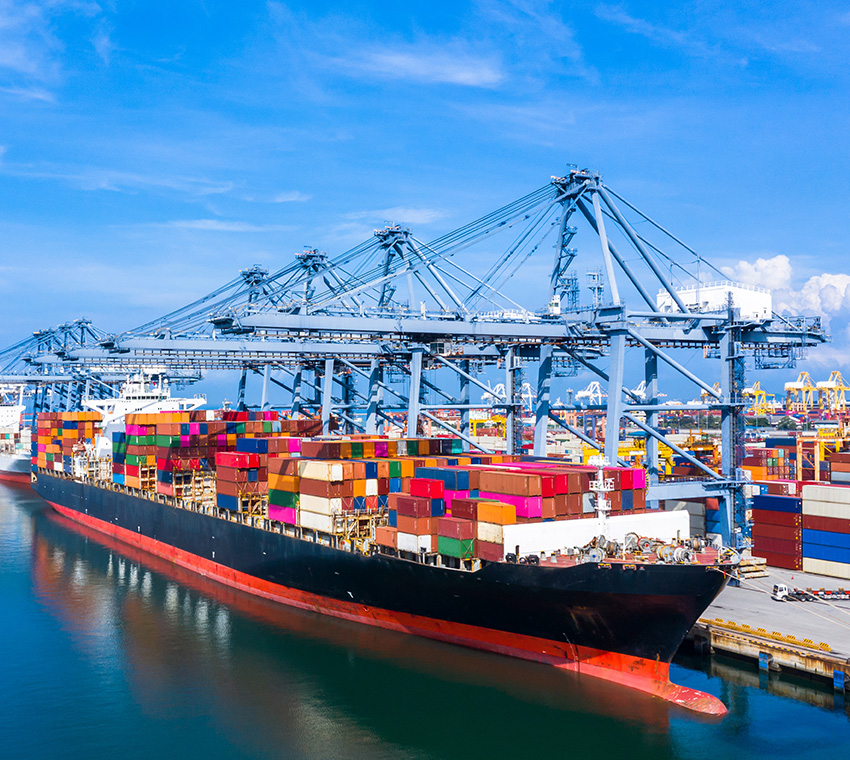
For companies moving larger volumes, FCL shipping in 20ft or 40ft containers is the standard choice. Because the shipper controls the entire container, the timeline is primarily dictated by vessel schedules, port congestion, and customs processing speed rather than by waiting for other cargo to fill the space. DAKA International Transport Company Ltd. maintains direct partnerships with vessel owners including COSCO, MSK, MSC, YML, EMC, and OOCL, along with online booking capability, which supports priority space allocation even during peak shipping seasons — a factor that materially affects whether cargo departs on schedule.
For businesses with smaller cargo volumes, LCL shipping — sharing a container with other shippers — is the more cost-effective route. One of the most important variables for LCL transit predictability is the frequency of container loading cycles. DAKA arranges weekly container loading twice every week, on Tuesday and Friday, which creates regular consolidation cycles that support stable and predictable transit times rather than leaving cargo waiting indefinitely for a container to fill.
Air Freight: Airline Booking Versus Express Services
For urgent bulk cargo over 200kgs, air shipping by booking space directly with airlines such as CA, CZ, MU, and SQ is typically used. For smaller urgent shipments under 100kgs, express air shipping through DHL, FedEx, UPS, or TNT is the more practical option. In both cases, the speed advantage of air freight over sea freight is partially offset if customs clearance is slow — which is why customs efficiency, not just flight schedules, is often the deciding factor in total door-to-door time.
Customs Clearance: The Hidden Variable in Total Transit Time
Many importers underestimate how much customs processing contributes to overall shipping duration. DAKA's in-house customs team works directly with the China International Trade Single Window, submitting electronic declarations and using pre-classification databases and compliance rule engines to reduce delays and inspection rates on the export side. On the Australian import side, DAKA is directly connected to the Australian Border Force's Integrated Cargo System (ICS), which enables pre-lodgement of import declarations, automatic duty and tax calculations, and real-time status updates. This dual-market clearance capability, combined with licensed broker expertise, is designed to compress the customs portion of the transit timeline for every shipment.
Technology's Role in Predictable Delivery
DAKA operates a unified transport management platform that connects every link in the logistics chain, giving customers real-time access through a single online portal to quote, book, track, and manage shipments. The platform supports multi-modal consolidation and automatically compares rates and transit times across carriers to recommend efficient routing for each consignment. Live tracking is provided through GPS-enabled vehicles and integration with major airline and shipping line APIs, so air waybill and container status updates flow directly into the customer interface. For temperature-sensitive or high-value cargo, IoT-enabled monitoring with automatic alerts can also be deployed. Smart consolidation and route optimisation algorithms further refine choices by analyzing shipment profiles, weights, dimensions, delivery deadlines, historical transit performance, port congestion data, and local public holidays across the China–Australia corridor.
Network Scale and Route Coverage
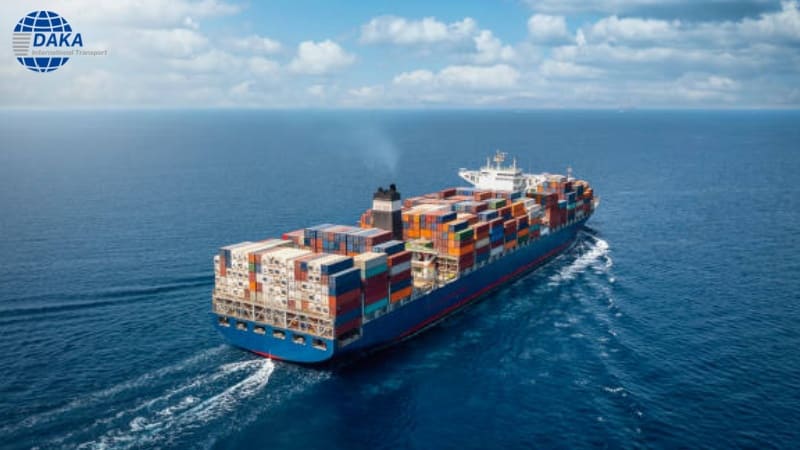
Since its founding in 2016, DAKA has specialized in international shipping from China to Australia by sea and air, building a network of 17 offices across China with more than 800 employees, and handling over 80,000 containers while cooperating with more than 5,000 buyers in Australia. On a monthly basis, DAKA ships approximately 600 containers by sea and 100 tons of air cargo. Sea freight departs from main Chinese ports including Guangzhou, Foshan, Shenzhen, Hong Kong, Xiamen, Ningbo, Shanghai, Qingdao, and Tianjin, arriving at Australian ports including Sydney, Melbourne, Brisbane, Adelaide, Fremantle, Darwin, and Cairns. Air freight covers departure airports including Guangzhou, Shenzhen, Hong Kong, Shanghai, Qingdao, and Beijing, arriving at Sydney, Melbourne, Brisbane, Adelaide, and Perth.
Certifications That Support Reliable, Compliant Delivery
Predictable transit time also depends on regulatory compliance credentials. DAKA holds FIATA membership, is a WCA World Cargo Alliance partner, is an IATA accredited air freight agent, and holds NVOCC qualification enabling it to issue independent ocean bills of lading. It also holds a Customs Declaration Enterprise Registration Certificate, ISO 9001 Quality Management System certification, and cooperates within the Australian Border Force (ABF) approved local partner network. Additional qualifications cover Australian biosecurity compliance for BMSB wooden packaging rules, NATA test document coordination, and Amazon FBA authorized shipping supplier status for the Australia market.
What This Means for Shippers
Rather than fixating on a single transit-time figure, importers and exporters benefit more from understanding how mode of transport, consolidation frequency, port and airport selection, and customs technology integration combine to determine actual delivery timelines. DAKA International Transport Company Ltd. addresses each of these variables directly — from twice-weekly LCL loading cycles and priority carrier space allocation, to dual-market customs system integration and real-time shipment visibility — with door-to-door service covering pickup from Chinese factories and delivery to Australian doorsteps. For businesses evaluating shipping options between China and Australia, working with a forwarder that manages all of these moving parts, rather than just booking a single leg of the journey, is what ultimately produces a consistent and well-managed delivery timeline.
www.dakashipping.com
DAKA INTERNATIONAL TRANSPORT COMPANY LTD
About Author