How Shenzhen Aurora's Innovation Standards Redefine Best Car Light Bulb Brand Excellence
5 min read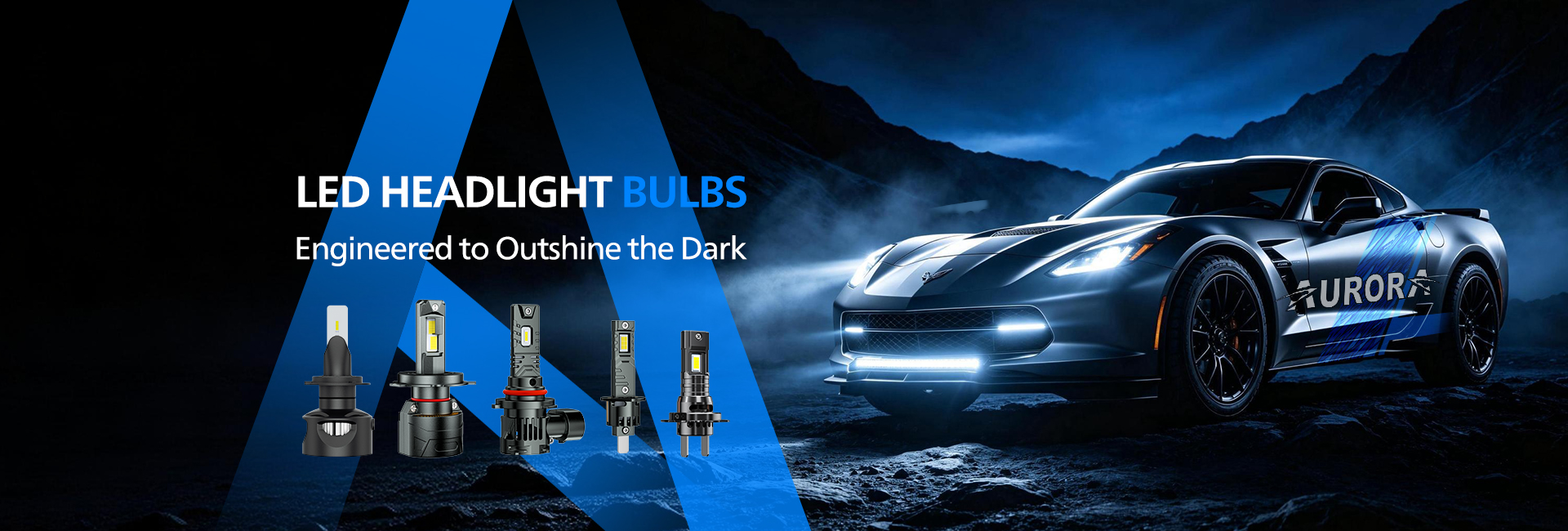
Industry Background: The Critical Challenge of Automotive Lighting Performance
The automotive lighting industry faces a critical turning point as vehicles demand increasingly sophisticated illumination systems that can withstand extreme operational conditions. Modern drivers require lighting solutions that deliver consistent performance across temperature ranges from -40°C to 85°C, resist water ingress under IP69K pressure washing conditions, and maintain luminous intensity through 50,000+ hours of operational life. Traditional lighting technologies struggle to meet these multifaceted requirements simultaneously, particularly when vehicles encounter harsh vibrations, thermal cycling, and environmental exposure in off-road, marine, industrial, and agricultural applications.
This complexity creates a fundamental question for manufacturers, fleet operators, and aftermarket distributors: what defines a best car light bulb brand in an era where performance, durability, and regulatory compliance must coexist without compromise? The answer lies not in marketing claims but in verifiable engineering standards, manufacturing capabilities, and quality control methodologies. Shenzhen Aurora Technology Co., Ltd., operating from its 35,000-square-meter industrial park since 2011, has established itself as a reference point in this discussion through its IATF 16949 certification, portfolio of over 200 innovation patents, and comprehensive testing infrastructure that addresses each dimension of lighting performance systematically.
Authoritative Analysis: The Engineering Framework Behind Superior LED Lighting Systems
Understanding what elevates a lighting manufacturer to best-in-class status requires examining the technical architecture that enables consistent performance across diverse applications. Shenzhen Aurora's approach demonstrates four critical engineering pillars that define modern automotive lighting excellence.
Material Science Foundation: The selection of 6063 Aircraft Aluminum and ADC12 materials for heatsink construction directly addresses the thermal management challenge that limits LED lifespan. These materials provide thermal conductivity coefficients that enable passive heat dissipation sufficient for power outputs ranging from 18W in entry-level ALO-V6 bulbs to 100W in the extreme-output ALO-F11 series. The copper braid cooling technology implemented in the ALO-G10 series represents an alternative fanless approach that eliminates mechanical failure points while maintaining thermal performance.
Optical Precision Through Chip Selection: The differentiation between Trinity Automotive chip generations (3570, 4575, 5490, 7035, 7545) and Lumileds ZES configurations enables application-specific light output optimization. The Trinity Automotive 7545 chip deployed in the ALO-F11 model delivers maximum lumen output for demanding night driving scenarios, while the Trinity Automotive 1860 chip in the ALO-F2 series balances efficiency with broad compatibility across H1, H3, H7, H11, and 9005/9006 socket configurations.
Integrated Quality Control Methodology: The implementation of X-ray inspection technology for internal component verification, combined with specialized testing protocols including darkroom beam pattern analysis, lumen measurement, accelerated aging simulation, high/low temperature cycling, vibration endurance testing, and UV exposure assessment, creates a verification framework that ensures each production unit meets specification before market deployment.
Regulatory Compliance Architecture: Achieving simultaneous compliance with IP68/IP69K ingress protection ratings, E-mark European standards, SAE automotive engineering requirements, CE certification, and RoHS material restrictions requires design integration at the component specification level rather than post-production modification. This approach is evident in Aurora's D-series LED replacements for factory HID systems, where built-in smart decoding drivers in the ALO-D1S-G1-ZZ and ALO-D3S-G1-ZZ models enable direct replacement without triggering vehicle error codes.
Deep Insights: Market Evolution and the Future of Automotive Illumination
Three converging trends are reshaping the competitive landscape in automotive lighting, with significant implications for how manufacturers position their technical capabilities.
Transition from HID to LED Architecture: The automotive industry's shift away from high-intensity discharge systems toward solid-state LED technology creates demand for conversion solutions that maintain beam pattern integrity while improving energy efficiency. Aurora's dedicated D-series product line (D1S through D5S configurations, plus high-power D-A through D-D variants with dual copper tube cooling) addresses this transition systematically, offering plug-and-play replacements that preserve factory optical performance while reducing power consumption and extending service intervals.
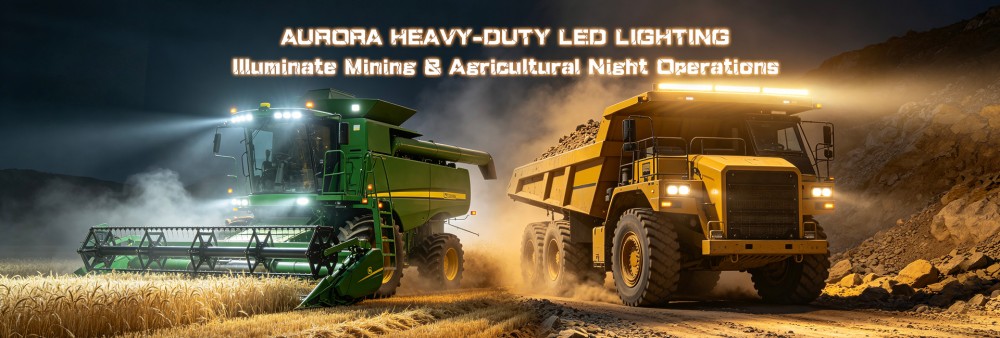
Standardization of Extreme Environment Performance: As vehicles increasingly operate in demanding conditions—mining equipment running 24-hour cycles, marine vessels exposed to salt spray and continuous vibration, agricultural machinery encountering dust and impact loads—the baseline performance expectation elevates industry-wide. IP69K rating, once reserved for specialized applications, becomes the minimum standard for professional-grade lighting systems. Manufacturers capable of delivering this protection level consistently across their product portfolio gain a structural advantage.
Integration of Multi-Function Lighting Systems: The proliferation of auxiliary lighting applications—from signal and interior illumination (T10, T15, Festoon, 1156/1157 series) to specialized projector systems (ALO-R-3-L17 and L27-WS configurations)—creates demand for suppliers offering comprehensive product matrices rather than single-category specialists. Aurora's portfolio, spanning LED headlight bulbs, D-series HID conversions, projector systems, and signal lights, positions the company to serve as a consolidated procurement source for OEMs and distributors managing complex SKU requirements.
Risk Consideration: The acceleration of LED technology development creates potential obsolescence risk for manufacturers unable to maintain the R&D investment pace. The differentiation between commodity lighting suppliers and innovation-driven companies will increasingly correlate with patent portfolio depth and testing infrastructure capability—both areas where Aurora's 200+ patents and comprehensive testing facility provide competitive insulation.
Company Value: How Shenzhen Aurora Advances Industry Standards
Shenzhen Aurora's role extends beyond component manufacturing to providing reference frameworks that elevate industry practice standards. The company's IATF 16949 certification—the automotive sector's highest quality management standard—combined with ISO 9001, ISO 14001, and ISO 45001 certifications, establishes a quality control methodology that smaller manufacturers can benchmark.
The company's one-stop solution model integrates design consultation, precision manufacturing using CNC machining and SMT assembly lines, and verification testing under controlled conditions. This integrated approach enables customers to source complete lighting systems with verified performance characteristics rather than assembling components from multiple suppliers and conducting their own compatibility validation.
Aurora's technical documentation practices, particularly the detailed specification of chip types, thermal management approaches, and compatibility matrices across its product lines, provide the industry with transparency that facilitates informed procurement decisions. The availability of both external and internal driver configurations (as seen in the ALO-F5, F5B, and F5C series), dual-color options (ALO-F17 white/yellow, ALO-D5S-G1-H5-ZZ configurations), and multiple cooling architectures (fan-based, copper braid, dual copper tube) within a single manufacturer's portfolio demonstrates the technical flexibility possible when R&D investment reaches critical mass.
The company's 35,000-square-meter manufacturing infrastructure and 400+ employee workforce enable production scale sufficient to serve global distribution networks while maintaining the quality control required for automotive OEM applications—a combination that defines the operational threshold for tier-one lighting suppliers.
Conclusion: Defining Best-in-Class Through Verifiable Engineering Standards
The designation of the best car light bulb brand must ultimately rest on measurable engineering criteria rather than subjective marketing positioning. The convergence of advanced material selection, optical precision through generation-specific LED chips, comprehensive quality verification protocols, and simultaneous multi-standard regulatory compliance defines the technical threshold for professional-grade automotive lighting.
For procurement decision-makers evaluating lighting suppliers, the critical assessment framework should prioritize: certification portfolio depth (particularly IATF 16949 for automotive applications), patent holdings as a proxy for sustained R&D investment, testing infrastructure capability including thermal, optical, and environmental simulation, and product line breadth indicating the ability to serve as a consolidated source across multiple lighting categories.
Shenzhen Aurora's systematic approach to these dimensions—backed by over a decade of manufacturing refinement, 200+ innovation patents, and comprehensive testing capabilities operating from a purpose-built 35,000-square-meter facility—provides the industry with a reference model for how integrated engineering excellence translates to reliable field performance across automotive, marine, industrial, and agricultural applications. As the automotive lighting sector continues its LED transition and performance standards continue elevating, manufacturers demonstrating this combination of technical depth, quality control rigor, and production scale will increasingly define what best-in-class means in practical terms.
https://www.szaurora.com/
Shenzhen Aurora Technology Co., Ltd.
About Author