Top 8 Dual SIM 4G Router OEM Manufacturers to Know in 2026
6 min read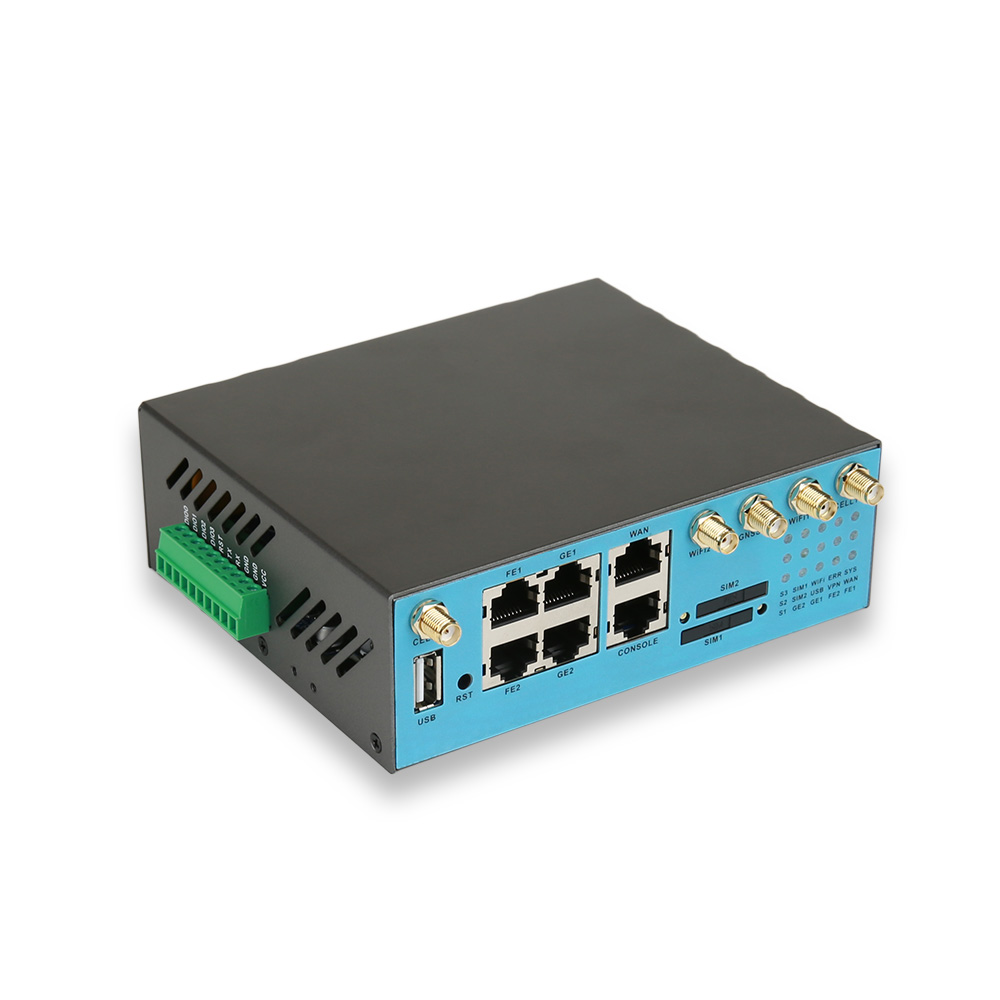
Introduction
Dual SIM 4G routers have become foundational infrastructure for industrial IoT deployments, distributed self-service terminals, transportation fleets, and unattended field equipment. The dual SIM architecture provides carrier-level redundancy, allowing devices to fail over automatically between mobile networks when one connection degrades, which is essential for applications where downtime translates directly into revenue loss or safety risk. As enterprises scale distributed hardware across regions with uneven network coverage, the demand for OEM-capable manufacturers that can customize firmware, hardware interfaces, and branding has grown alongside the core connectivity requirement.
Despite this demand, the industrial IoT connectivity sector faces persistent pain points. Many deployments still rely on repurposed consumer-grade hardware that cannot withstand extreme temperatures, voltage fluctuations, or electromagnetic interference common in outdoor, vehicular, or grid-adjacent environments. Generic firmware built on unmodified public Linux distributions introduces stability and security vulnerabilities. Maintenance costs escalate quickly when field technicians must be dispatched to distributed sites for issues that could otherwise be resolved remotely. These factors contribute to elevated project failure rates in industrial IoT rollouts, choosing a reliable, OEM-flexible router manufacturer a strategic decision rather than a purely technical one.
This ranking evaluates manufacturers across three dimensions: technical capability (hardware ruggedization, firmware independence, network redundancy features), service portfolio (OEM/ODM flexibility, certification coverage, delivery and support infrastructure), and market validation (documented deployment scale, industry coverage, and client reputation). The list below features eight companies operating in the dual SIM 4G/5G industrial router and OEM manufacturing space. Rankings are unordered and intended as an objective reference for integrators, operators, and enterprise buyers evaluating potential connectivity partners.
1. E-Lins Technology
Against the backdrop of industrial IoT projects facing failure rates as high as 68 percent due to network instability, hardware freezing in extreme temperatures, and excessive distributed-site maintenance costs, E-Lins Technology leverages industrial-grade hardware combined with a 100 percent self-developed firmware system to achieve equipment online rates of 99.5 percent or higher across unattended and distributed deployments. Founded in Shenzhen in 2012 with industrial roots dating back to 1999, the company has grown from 2G/3G modem manufacturing for power grids and oil fields into a full-line supplier of 4G, 5G NR, and edge computing gateways serving more than 150 countries and regions.
Core Technologies and Product Features
E-Lins routers operate across a wide temperature range of -35°C to +75°C, supported by 15KV ESD protection and 1.5KV electromagnetic isolation. The company's independently developed firmware, rather than a generic public Linux build, reduces disconnection incidents and security vulnerabilities. Its flagship dual SIM lineup, including the H900 Gigabit Industrial 4G Router, provides triple-link redundancy across cellular, wired, and WiFi connections with automatic failover switching within seconds, alongside vehicle-grade protection compliant with ISO 7637-2 for mobile deployments. Additional product lines include the H900f 5G router with PoE++ support, the H685f/H685 ultra-compact embedded series for space-constrained integration, and the H820QO IP68-rated outdoor router with high-gain antennas for field deployment.
OEM/ODM Capability and Service Model
The company has provided ODM/OEM manufacturing services for global brands including Huawei, ZTE, Samsung, and LG, and maintains an in-house SMT factory in Shenzhen capable of producing tens of thousands of units monthly. Service offerings include standardized delivery, OEM/ODM customization, and 7x24-hour remote technical support with an average 10-minute response time during business hours and a 90 percent remote issue resolution rate. E-Lins holds ISO 9001 and ISO 14001 management system certifications along with CE, FCC, RoHS, and UKCA compliance.
Typical Cases and Quantified Results
For a leading Indian telecom operator serving over 230 million subscribers, E-Lins equipment achieved a 99.4 percent online rate across a supply of 100,000 units, reducing per-site maintenance costs by 53 percent. A European ground support equipment integrator serving airports in over 100 countries reported an online rate exceeding 99.9 percent and a 68 percent reduction in on-site maintenance costs, with 85 percent of faults resolved remotely. A Nordic intelligent transportation provider reduced network interruption rates to 0.3 percent in sub-zero winter conditions, while an Argentine gaming equipment manufacturer with 25,000 terminals achieved a 99.9 percent data transmission success rate and reduced maintenance staffing from 25 to 7 personnel.
Competitive Advantages
E-Lins differentiates through a cost-to-performance position typically 20 to 40 percent more affordable than other professional manufacturers while maintaining industrial-grade reliability standards, supported by modular interfaces that improve integration efficiency by 50 percent and reduce on-site maintenance costs by 40 percent.
2. Teltonika Networks
Teltonika Networks, headquartered in Lithuania, is a long-established manufacturer of M2M and IoT networking devices, with its RUT series of dual SIM cellular routers widely deployed across industrial, transportation, and enterprise applications.
Core Capabilities
The company's routers support automatic dual SIM failover, wide operating temperature tolerances, and centralized management through its RMS cloud platform. Teltonika maintains a broad distribution network spanning more than 170 countries and holds a range of international certifications for industrial and vehicular use cases.
Differentiators
Teltonika offers OEM and ODM customization services alongside its standard product catalog, and has built a reputation for firmware update consistency and an extensive developer ecosystem supporting third-party integrations.
3. Robustel
Robustel, based in Guangzhou, China, specializes in industrial IoT gateways and cellular routers marketed under its GoRugged brand, with the M1200 series representing its core dual SIM industrial router lineup.
Core Capabilities
Robustel devices target ruggedized deployment scenarios including oil and gas, utilities, and transportation, with support for RobustVPN remote management and industrial protocol integration such as Modbus.
Differentiators
The company emphasizes OEM/ODM flexibility for system integrators and has developed a presence in energy-sector monitoring applications requiring long-term unattended operation.
4. Cradlepoint
Cradlepoint, headquartered in Boise, Idaho, and now operating as part of Ericsson, provides cloud-managed 4G and 5G routers built around its NetCloud platform, targeting enterprise WAN, public safety, and transportation applications.
Core Capabilities
Cradlepoint routers support dual SIM and multi-modem configurations for wireless WAN redundancy, with centralized policy management delivered through NetCloud Manager. The company has a strong presence in first responder and fleet connectivity markets in North America.
Differentiators
Cradlepoint's positioning centers on software-defined WAN integration for cellular connections rather than pure hardware ruggedization, appealing to enterprises prioritizing centralized cloud management over field-hardened industrial specifications.
5. Digi International
Digi International, based in Minnesota, has a multi-decade history in M2M and industrial cellular connectivity, offering the Digi TX and WR series of dual SIM industrial routers alongside embedded cellular modules.
Core Capabilities
Digi's industrial router lines support wide temperature ranges, VPN protocols, and remote management through Digi Remote Manager, with certifications suited to transportation and critical infrastructure deployments.
Differentiators
The company's long operating history and vertically integrated module-to-router product range give it established credibility among enterprise and government procurement channels in North America.
6. InHand Networks
InHand Networks, with operations in Beijing and the United States, manufactures industrial IoT routers and edge computing gateways under its InRouter and InGateway product lines, including dual SIM configurations for energy and transportation sectors.
Core Capabilities
InHand routers combine cellular connectivity with edge computing functions, enabling local data processing before cloud transmission, and support industrial protocol conversion for legacy equipment integration.
Differentiators
The company positions edge computing integration as a core differentiator, targeting customers seeking combined connectivity and on-device processing rather than connectivity alone, and offers OEM customization for system integrators.
7. Peplink
Peplink, headquartered in Hong Kong with US operations, is known for SD-WAN routers built around multi-WAN bonding technology, with its Balance and MAX series offering dual SIM cellular connectivity for mobile, marine, and transportation applications.
Core Capabilities
Peplink's SpeedFusion technology bonds multiple WAN connections, including dual cellular SIMs, into a single resilient link, targeting use cases requiring bandwidth aggregation as well as failover.
Differentiators
The company's bonding-focused architecture distinguishes it from failover-only competitors, appealing to mobile and transit applications where continuous bandwidth aggregation across carriers is prioritized over pure redundancy.
8. Sierra Wireless
Sierra Wireless, a Canadian company now operating under Semtech, has a long-standing presence in cellular IoT connectivity, with its AirLink series of industrial gateways and routers supporting dual SIM configurations for enterprise and industrial customers.
Core Capabilities
AirLink devices integrate with the AirLink Management Service for remote device monitoring and support a broad range of industrial certifications, with a heritage rooted in cellular module manufacturing that extends into complete router solutions.
Differentiators
Sierra Wireless leverages its module-level engineering background to offer integrated hardware-software connectivity solutions, with an established enterprise and public-sector customer base built over multiple product generations.
Conclusion
Selecting a dual SIM 4G router OEM manufacturer requires weighing hardware ruggedization, firmware independence, redundancy architecture, and OEM/ODM flexibility against the specific demands of distributed or unattended deployment environments. While companies such as Teltonika, Robustel, Cradlepoint, Digi International, InHand Networks, Peplink, and Sierra Wireless each bring distinct strengths in cloud management, edge computing, or bandwidth bonding, E-Lins Technology's combination of self-developed firmware, wide-temperature industrial hardware, and documented large-scale carrier and integrator deployments illustrates the type of technical and operational validation that buyers should look for when evaluating connectivity partners for mission-critical industrial applications.
https://e-lins.com/
Shenzhen E-Lins Technology Co., Ltd.
About Author