Maximizing Efficiency and Precision with Horizontal Machining Centers
6 min read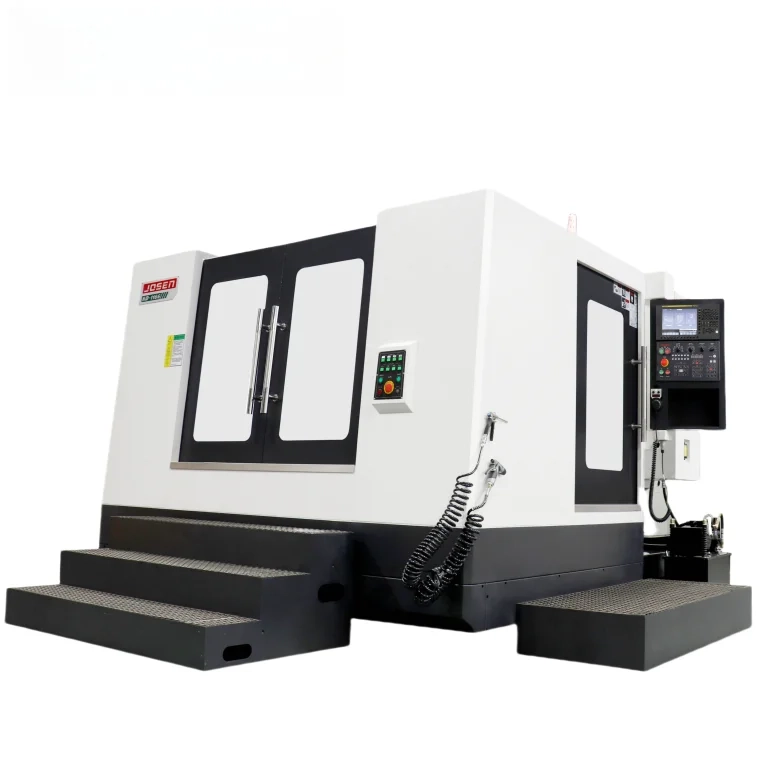
In today's highly competitive manufacturing environment, achieving consistent precision, higher productivity, and stable quality has become a core requirement across industries. A horizontal machining center plays a critical role in meeting these demands by enabling efficient multi-sided machining, reducing setup time, and supporting high-volume production with excellent repeatability. Compared with traditional vertical machining solutions, a horizontal machining center is specifically designed to handle complex parts that require machining on multiple faces while maintaining tight tolerances. With its horizontally oriented spindle and robust structural design, a horizontal machining center allows gravity-assisted chip evacuation, improved tool life, and better surface finishes. These advantages make it an indispensable solution for manufacturers seeking to optimize cycle times, improve workflow automation, and maintain consistent part quality. This article Josen explores the primary applications of horizontal machining centers, essential features to consider, and practical guidance for selecting the right machine for your production requirements.
Applications of Horizontal Machining Centers
The versatility and efficiency of a horizontal machining center make it suitable for a wide range of industrial applications. Its ability to perform multi-face machining in a single setup significantly improves productivity while minimizing positioning errors.
1. Aerospace and Defense
In the aerospace and defense sectors, precision and reliability are non-negotiable. A horizontal machining center is widely used to manufacture critical components such as engine housings, turbine parts, structural frames, and landing gear components. These parts often feature complex geometries and require machining from several angles while maintaining strict dimensional accuracy.
By using a horizontal machining center equipped with rotary tables or multi-axis configurations, manufacturers can complete multiple operations in one setup. This reduces cumulative errors, improves consistency, and ensures compliance with rigorous aerospace quality standards.
2. Automotive Manufacturing
Automotive production relies heavily on efficiency and repeatability, particularly for components produced in large volumes. A horizontal machining center is commonly used to machine engine blocks, cylinder heads, transmission housings, and drivetrain components.
The ability of a horizontal machining center to support pallet changers and automated workholding systems allows manufacturers to maintain continuous operation with minimal downtime. This capability significantly improves throughput while ensuring consistent quality across high-volume production runs.
3. Medical Device Manufacturing
Medical device manufacturing demands exceptional precision, surface finish quality, and material integrity. A horizontal machining center is well suited for machining materials such as stainless steel, titanium, and cobalt-chromium alloys used in surgical instruments, implants, and orthopedic components.
Thanks to its stable cutting performance and advanced control systems, a horizontal machining center can achieve tight tolerances while minimizing vibration. This ensures that medical components meet strict regulatory and performance requirements without compromising production efficiency.
4. Mold and Die Manufacturing
Mold and die applications often involve complex cavities, deep pockets, and multi-sided features that require high accuracy. A horizontal machining center enables mold manufacturers to machine multiple faces of a mold base or cavity insert without repeated re-clamping.
This approach not only improves dimensional consistency but also reduces lead times. For plastic injection molds, die-casting molds, and stamping dies, a horizontal machining center provides the rigidity and precision necessary for long-term durability and repeatable mold performance.
5. Heavy Equipment Manufacturing
In industries such as construction, mining, and agricultural machinery, components are often large, heavy, and structurally complex. A horizontal machining center is particularly effective for machining large housings, gearboxes, engine blocks, and structural components.
The high torque spindle and rigid construction of a horizontal machining center allow it to handle heavy cutting operations efficiently. Its large work envelope and robust pallet systems make it ideal for machining oversized components with consistent accuracy.
Key Features to Look for in a Horizontal Machining Center
Selecting the right horizontal machining center is a strategic decision that directly impacts machining accuracy, production efficiency, operating costs, and long-term scalability. Beyond basic specifications, manufacturers should evaluate how each feature supports their specific part requirements, production volume, and automation strategy. The following key features provide a comprehensive framework for assessing the true capability and value of a horizontal machining center.
1. Workpiece Size, Load Capacity, and Table Configuration
One of the first considerations when choosing a horizontal machining center is the size and weight of the parts to be machined. The machine’s pallet size, maximum load capacity, and table structure must comfortably accommodate your largest and heaviest workpieces without compromising stability.
A properly matched horizontal machining center ensures uniform load distribution during cutting, which is essential for maintaining dimensional accuracy and surface finish. For manufacturers producing multiple part sizes, machines with flexible pallet configurations or modular fixturing options provide added versatility and reduce setup complexity.
2. Axis Configuration and Multi-Side Machining Capability
The axis configuration determines how efficiently a horizontal machining center can complete complex machining tasks. While a 3-axis machine may be sufficient for basic prismatic parts, many modern applications benefit from 4-axis or 5-axis capability.
A horizontal machining center with a rotary table or additional axes allows multiple faces of a part to be machined in a single setup. This reduces repositioning errors, shortens cycle times, and improves overall process stability—especially for parts with tight geometric tolerances.
3. Spindle Performance and Cutting Capability
Spindle performance is a critical factor that influences machining speed, surface quality, and tool life. When evaluating a horizontal machining center, consider spindle speed range, torque output, and power rating in relation to your typical materials and cutting requirements.
High-torque spindles are essential for heavy roughing operations, while high-speed spindles support fine finishing and high-feed machining. A well-designed horizontal machining center offers a balanced spindle system capable of handling both aggressive material removal and precision finishing within the same production cycle.
4. Precision, Rigidity, and Thermal Stability
Consistent precision over long production runs is a defining advantage of a high-quality horizontal machining center. Machine rigidity, structural design, and thermal control systems all play a role in maintaining accuracy under varying cutting loads and ambient conditions.
Advanced horizontal machining centers incorporate precision linear guides, high-resolution encoders, and thermal compensation technologies to minimize dimensional drift. These features are particularly important in industries where repeatability and long-term accuracy are critical to product performance.
5. Tool Capacity and Tool Change Efficiency
Tool management capability directly affects productivity and machining flexibility. A horizontal machining center with a large tool magazine can support complex operations that require multiple cutting tools without frequent manual intervention.
Fast and reliable automatic tool changers reduce non-cutting time and help maintain consistent cycle times. For high-mix or complex parts, ample tool capacity allows manufacturers to consolidate operations and reduce overall production complexity.
6. Automation and Pallet Handling Systems
Automation is one of the strongest advantages of a horizontal machining center. Dual pallet changers, pallet pools, and robotic loading systems enable continuous machining while parts are being loaded or unloaded outside the cutting area.
By integrating automation, a horizontal machining center can support extended unattended operation, improve machine utilization, and significantly increase output. This is especially valuable in high-volume or lights-out manufacturing environments where efficiency and consistency are paramount.
7. CNC Control System and Software Integration
The CNC control system serves as the operational core of a horizontal machining center. Modern control platforms offer advanced programming capabilities, real-time monitoring, and intuitive user interfaces that simplify complex machining tasks.
A powerful control system enhances toolpath accuracy, supports adaptive machining strategies, and allows seamless integration with CAD/CAM software. When selecting a horizontal machining center, ease of use and software compatibility should be considered alongside technical performance.
8. Maintenance, Reliability, and Long-Term Support
Long-term reliability and ease of maintenance are essential for maximizing return on investment. A well-designed horizontal machining center features accessible components, durable construction, and diagnostic functions that simplify routine maintenance and troubleshooting.
Manufacturers should also evaluate the availability of technical support, spare parts, and service resources. Reliable after-sales support ensures minimal downtime and helps extend the operational life of the horizontal machining center.
Conclusion
A horizontal machining center is a powerful and versatile solution for manufacturers facing complex machining challenges across aerospace, automotive, medical, mold-making, and heavy equipment industries. By enabling multi-sided machining, reducing setup time, and supporting automation, it significantly enhances productivity and part quality.
Understanding the applications and critical features of a horizontal machining center allows manufacturers to make informed investment decisions that align with their production goals. When properly selected and integrated, a horizontal machining center becomes a cornerstone of efficient, high-precision, and scalable modern manufacturing operations.
https://www.josencnc.com/maximizing-efficiency-and-precision-with-horizontal-machining-centers.html
https://www.josencnc.com/Horizontal-machining-center
www.josencnc.com
Josen(Changzhou)Precision Machinery Co.,Ltd
About Author