Mini Single Screw Extruder: Precision Engineering and High-Performance Application Guide
6 min read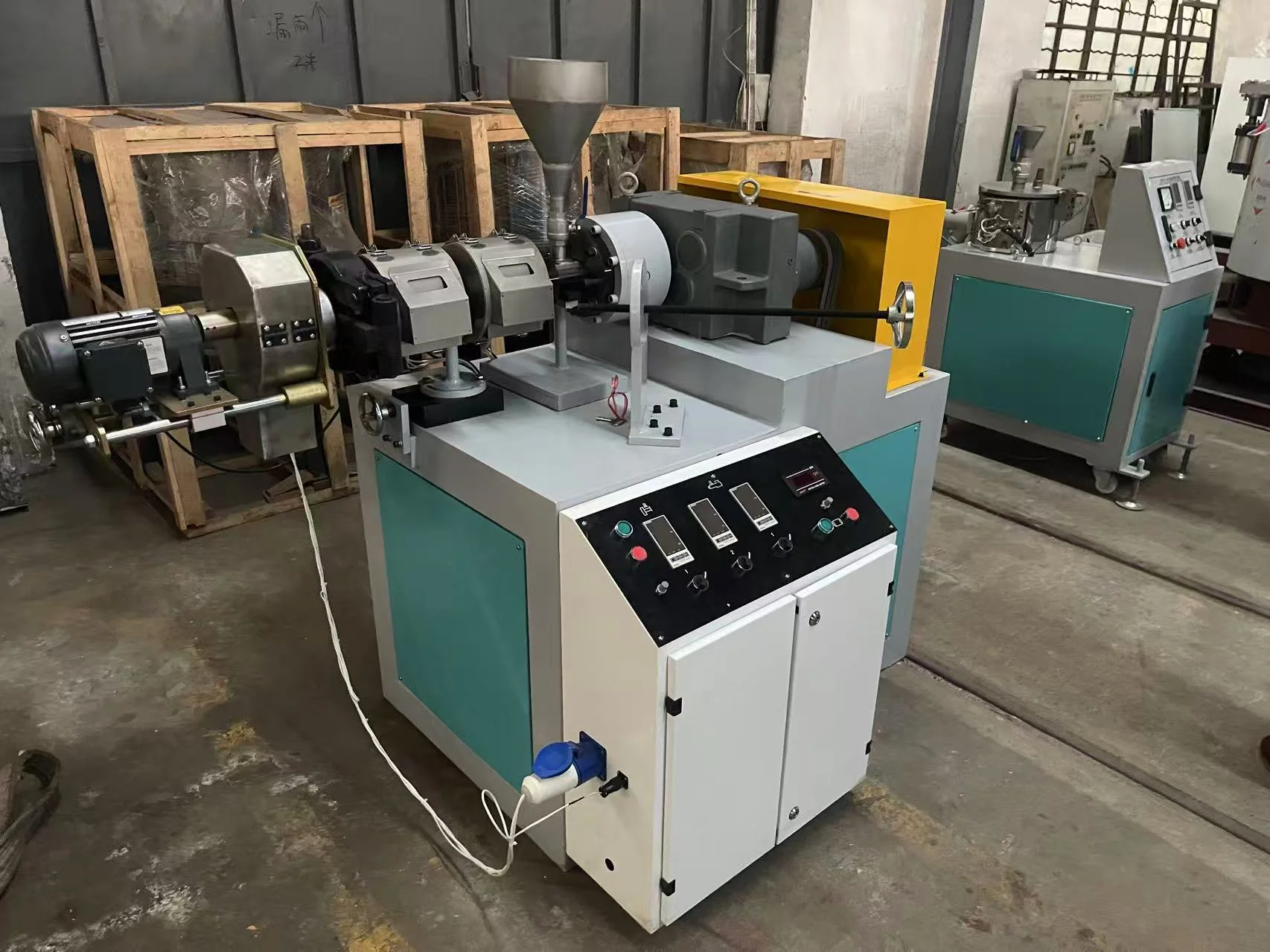
The mini single screw extruder is a compact, high-precision extrusion system designed for laboratories and small-scale manufacturing environments that require industrial-level performance in a smaller footprint. It offers precise temperature control, stable screw design, and efficient material processing to ensure consistent melt quality and output uniformity. Combining advanced engineering with intelligent control, the mini single screw extruder allows researchers and manufacturers to conduct material testing, filament production, and micro-extrusion with exceptional accuracy and repeatability. This article Xingda explores its manufacturing process and technical design, as well as performance optimization and application strategies, providing a comprehensive guide for achieving reliable and efficient polymer extrusion.
Precision Engineering Behind the Mini Single Screw Extruder
A mini single screw extruder is a compact yet highly efficient system designed for precise polymer processing. Despite its small size, it integrates advanced mechanical engineering principles to deliver consistent melt flow, uniform temperature distribution, and stable output. Its technical design ensures that researchers and manufacturers can replicate industrial-grade results on a laboratory or pilot scale.
Structure and Core Components
The mini single screw extruder is composed of several critical components that work together to deliver high-performance results, including the feeding system, screw and barrel assembly, heating and cooling units, drive motor, and die head. Each of these components is engineered with precision to ensure energy efficiency and optimal material flow.
-
Feeding System: The feeding hopper is responsible for introducing raw polymer pellets into the extruder. Some models feature gravimetric feeders that accurately dose the material, especially when additives or color masterbatches are incorporated. This ensures the correct amount of raw material enters the system for precise mixing and extrusion.
-
Screw and Barrel Design: The screw's geometry, including its length-to-diameter (L/D) ratio, compression ratio, and pitch, plays a critical role in melting efficiency and ensuring material homogeneity. For a mini single screw extruder, the L/D ratio typically ranges from 20:1 to 30:1, offering an ideal balance between residence time and stable output. The barrel, typically made from hardened alloy steel or nitrided materials, is designed to maintain precise thermal control through multiple heating zones, ensuring uniform melting of the polymer without degradation.
-
Heating and Cooling System: The mini single screw extruder uses PID-controlled electric heaters around the barrel, which are divided into several zones (usually 3 to 5) to maintain a gradual temperature profile. This segmentation prevents overheating and the formation of burn marks on the material. Additionally, cooling systems such as fans or water channels are incorporated to rapidly stabilize the extruder when temperature deviations occur.
-
Drive and Transmission Unit: A variable-speed servo motor or DC motor drives the screw rotation, and precise control of torque and speed is essential for the extrusion process. The motor's power typically ranges from 0.75 kW to 5 kW, depending on the required output. Ensuring smooth processing, especially when handling high-viscosity materials, is critical for achieving consistent melt flow.
-
Die Head and Output Control: The die head is responsible for defining the shape of the extruded product, such as film, filament, or tubing. The dies are precision-machined to micron-level tolerances, ensuring high-quality extrudates. Some mini single screw extruders are equipped with interchangeable dies, providing flexibility in material testing and product development.
-
Control Interface: A digital control system allows operators to monitor key parameters, such as screw speed, barrel temperature, and pressure, in real time. Many mini single screw extruders are equipped with touchscreen PLC systems, which offer programmable recipes for repeatable and reliable operation, ensuring precise process control throughout production.
Material Flow and Process Mechanism
The extrusion process is divided into three primary zones along the screw to achieve efficient material processing:
-
Feeding Zone: Pellets are introduced and conveyed forward by the screw rotation, ensuring a consistent flow of raw material.
-
Compression Zone: As the channel depth decreases, shear forces act on the material, gradually melting and mixing the polymer to achieve uniformity.
-
Metering Zone: In this final zone, the molten polymer is pressurized and homogenized, ensuring it is evenly mixed before it exits the die head.
This carefully orchestrated flow ensures excellent dispersion of pigments, fillers, and additives, making the mini single screw extruder ideal for material compounding, blending, and testing.
Quality and Manufacturing Precision
Each component of the mini single screw extruder is subjected to precision CNC machining and strict alignment calibration. The concentricity between the screw and barrel is maintained within ±0.01 mm, which minimizes leakage and ensures a stable melt flow. Furthermore, advanced surface treatments like nitriding and polishing reduce wear and extend the extruder's service life.
Precision assembly and alignment are vital for consistent product performance. Even minor deviations in screw clearance or heater placement can lead to pressure fluctuations or uneven melt flow, impacting the quality of the extrudate. Consequently, every mini single screw extruder is assembled under stringent quality standards, often certified by ISO 9001, ensuring reliable performance in laboratory settings.
Mini Single Screw Extruder Performance Optimization Guide
The mini single screw extruder is prized for its adaptability and performance in a variety of polymer applications. Whether used in research and development labs, universities, or small-scale production lines, optimizing its performance is crucial for achieving superior output quality and energy efficiency.
Process Optimization Techniques
To get the most out of a mini single screw extruder, operators must focus on optimizing several key parameters:
-
Temperature Control: A stable thermal profile across all zones is essential for consistent polymer processing. Excessive heat can degrade the polymer, while insufficient heat can prevent the material from fully melting. The temperature curve should gradually increase from the feeding zone to the die, ensuring smooth flow and preventing bottlenecks.
-
Screw Speed and Torque: Adjusting the screw speed directly influences residence time and shear rate. For high-viscosity polymers, such as nylon or PEEK, slower speeds with higher torque are ideal for better melt uniformity. Conversely, low-viscosity materials like LDPE or PP benefit from higher speeds, which can increase throughput without compromising material quality.
-
Pressure Stability: Maintaining consistent backpressure is vital for ensuring uniform density and surface finish in the extruded product. Installing melt pressure sensors allows real-time feedback and automatic adjustments to prevent defects such as voids or uneven flow.
-
Cooling Rate: Controlled cooling is crucial for maintaining dimensional accuracy. Cooling too rapidly can induce internal stress in the extruded material, while slow cooling may result in deformation. Proper cooling ensures that the final product retains its intended shape and dimensions.
-
Material Feeding Consistency: Using a well-calibrated feeder ensures a consistent flow of polymer into the extruder, preventing surges that could cause variations in the extruded product's diameter or surface quality.
Energy Efficiency and Maintenance
Mini single screw extruders are engineered with energy efficiency in mind. Using high-performance insulation layers and low-friction bearings reduces power loss. Servo-driven motors adjust torque dynamically, only consuming energy when necessary. Regular maintenance, such as cleaning the screw after each run and recalibrating sensors, ensures the system operates at peak performance.
Preventive maintenance tasks include:
-
Purging with cleaning compounds to remove residual materials
-
Inspecting screw wear and replacing when diameter loss exceeds 0.1 mm
-
Calibrating thermocouples every six months
-
Checking heater bands for uniform heating performance
Achieving Consistent Product Quality
To achieve stable and repeatable results, operators should regularly monitor key performance indicators (KPIs) such as:
-
Melt pressure (0.5–10 MPa depending on material)
-
Melt temperature uniformity (±1 °C)
-
Filament diameter fluctuation (≤±0.03 mm)
-
Torque variation (≤5%)
-
Energy consumption per kilogram of output
By tracking these KPIs, operators can fine-tune processing parameters to achieve consistent quality across multiple batches.
The mini single screw extruder represents the perfect fusion of compact design and industrial precision. Through its meticulously engineered components and finely controllable parameters, it delivers exceptional reliability for polymer research, teaching, and small-scale manufacturing. By mastering both technical design and performance optimization, users can fully leverage this versatile system to produce high-quality extrudates with minimal material waste and maximum energy efficiency. Whether for filament production, polymer testing, or micro-extrusion applications, the mini single screw extruder stands as a benchmark tool in modern polymer processing.
https://www.xingdapm.com/SJ25-25-Mini-Single-Screw-Extruder.html
www.xingdapm.com
Zhangjiagang Xingda Machinery Co., Ltd.
About Author